How Casino Managers Use Analytics to Improve
Analytics is an invaluable tool to ensure a company's development and growth. The metrics they produce are the driving force behind successful advertising campaign strategies. They can often be the savior in discovering why things are going wrong.
Nowadays, almost every business will use analytical tools to aid their business model, from social media platforms such as Gab and Telegram, for instance. No matter what the industry, extracting data intelligence has a myriad of benefits.
Analytic data in the casino industry has many uses. It has been used for decades in brick and mortar establishments to improve and expand. Thanks to the advancement in analytic technology, casino science is now revolutionizing online operations.
Below, we'll explore how casino managers use analytics to improve their businesses.

Analytics Explained
Analytics is the systematic gathering of data. The data can involve all manner of things obtainable by outside interactions. For example, you can collect metrics on the number of clicks an ad receives or your visitors' average age.
The data is then converted to statistics that support the discovery of meaningful patterns. Patterns can then be interpreted by managers to aid effective business decision making.
The Benefits to Analytics-Based Business Decisions
Through casino analytics, managers have an insight into customer behaviors, habits, and interactions. For example, predictive analytics can be used for forecasting trends. You can then promote specific titles and remodel promotions in line with and ahead of these predictions.
Online casino managers can also use analytic metrics to track web traffic flow. If any casino analytics issues are flagged, managers can pinpoint the problems and adjust operations.

Big Data in Casino Analytics
Standard analytics are single strings of data. The data is turned into statistics and cross-referenced. The process is not very complex, and neither are the results. However, big data analytics allows operators to gather vast amounts of more complex information. Big data is often based on customer interactions. Big data in casino analytics can also sweep information on competitors and build in-depth customer profiles. A customer profile may include details of age, gender, demographics, browsing movements. All of the above can create personalized advertising campaigns that, in return, create a more loyal customer base.
Big data in casinos can also monitor player preferences and discover gaming trends. Online casino operators face the challenge of organizing extensive libraries of titles. Big data takes out the guesswork of which to promote. By tracking click rates, payouts, and time spent playing, managers can conclude which games are more popular. They can then use gaming analytics to attract new players and avoid using less popular titles during advertising.
Customer retention will also improve through displaying only attractive games. Plus, the insight into the competition will help you stay one step ahead of rivals on the market.
How to Use Specific Analytics in the Gaming Industry
As you now understand, analytics data can be collated on a vast amount of things. Yet, interpreting the information into workable ideas is the final step in using this tool to improve your business.
The ways in which casino managers can use this data are endless. You just need to have a little business-related imagination. Some of the most common include:
- Use a customer's date of birth to send personalized birthday well-wishes. Make it even more rewarding by including an exclusive promotion or free spin gifts.
- Promote relatable demographically themed games to members residing in that location.
- Understand the unusual behaviors of your customers, which could signal their dissatisfaction. React by offering player specific promotions.
- If your members are predominantly a particular gender, begin an advertising campaign to attract the opposite sex.

Operational Optimization Through Casino Floor Analytics
Casinos generate enormous volumes of operational data every minute—from slot machine activity to table game performance—and advanced analytics can transform this information into actionable insights. By analyzing patterns in foot traffic, dwell time, and machine utilization, operators can identify which areas of the gaming floor attract the most engagement. This allows them to reposition underperforming machines, optimize table placement, and refine the overall layout to maximize revenue. Tools such as heat‑mapping analytics help visualize crowd movement, enabling managers to detect bottlenecks, improve signage, and adjust staffing levels based on real‑time demand. Over time, these optimizations create a more efficient and profitable gaming environment.
Player Behavior Modeling and Personalization
Understanding player behavior is one of the most powerful applications of casino analytics. By examining betting patterns, visit frequency, game preferences, and loyalty program activity, casinos can build detailed behavioral profiles for each customer. These profiles support highly targeted marketing campaigns, personalized promotions, and customized gaming experiences. For example, analytics can identify players who prefer low‑volatility slot machines, high‑stakes table games, or skill‑based experiences. With this information, casinos can deliver tailored offers that increase engagement and retention. Predictive models also help forecast when a player is likely to return, how long they will stay, and which incentives will be most effective—making player segmentation a core competitive advantage.
Fraud Detection and Risk Management
Casinos face constant threats from fraud, collusion, and suspicious betting activity. Analytics systems can monitor gameplay in real time to detect anomalies that may indicate cheating or rule violations. For table games, algorithms can analyze betting sequences, chip movements, and dealer interactions to identify patterns inconsistent with normal play. For slot machines, analytics can flag unusual payout frequencies or machine tampering indicators. Risk models also help detect money laundering by analyzing transaction patterns, buy‑ins, and cash‑out behaviors. By integrating surveillance data, transaction logs, and gameplay metrics, casinos can build comprehensive fraud detection frameworks that protect both revenue and regulatory compliance.

Revenue Forecasting and Yield Management
Accurate forecasting is essential for managing casino profitability. Analytics can predict revenue across gaming categories—slots, tables, sports betting, and digital gaming—by examining historical trends, seasonal patterns, and promotional impacts. Casinos can also use yield management techniques similar to those in hospitality and airlines. For example, analytics can determine optimal table limits during peak hours, adjust slot machine denominations based on demand, or forecast the financial impact of new game introductions. These insights help casinos allocate resources more effectively, plan staffing schedules, and optimize marketing spend. With advanced forecasting models, operators can simulate different scenarios and choose strategies that maximize expected returns.
Marketing Optimization and Campaign Performance
Marketing analytics allow casinos to evaluate the effectiveness of promotions, loyalty programs, and advertising campaigns. By tracking redemption rates, incremental revenue, and customer engagement, casinos can determine which offers generate the highest ROI. Machine learning models can also predict which customers are most likely to respond to specific promotions, enabling more efficient targeting. For example, a campaign offering free play credits may resonate with frequent slot players but be less effective for table‑game enthusiasts. Analytics also help measure cross‑channel performance—email, SMS, mobile apps, and on‑property signage—to refine messaging and timing. This data‑driven approach ensures that marketing budgets are allocated to the most impactful initiatives.
Casino Security and Surveillance Enhancement
Modern casinos rely heavily on surveillance systems, and analytics can significantly enhance their effectiveness. Video analytics can detect unusual movements, identify banned individuals, and monitor high‑risk areas in real time. When combined with access control logs and incident reports, these systems create a comprehensive security intelligence platform. Analytics can also help identify patterns in disputes, theft attempts, or behavioral anomalies, allowing security teams to intervene proactively. By integrating surveillance data with operational metrics, casinos can build predictive security models that reduce risk and improve guest safety.
Staffing Efficiency and Workforce Management
Labor is one of the largest expenses in casino operations, and analytics can optimize staffing levels across departments. By analyzing peak gaming hours, customer service demand, and event schedules, casinos can forecast when additional dealers, hosts, or security personnel are needed. Workforce analytics also help evaluate employee performance, identify training needs, and reduce turnover. For example, casinos can analyze dealer speed, error rates, and customer satisfaction scores to improve training programs. Predictive scheduling models ensure that staffing aligns with demand, reducing overtime costs and improving the guest experience.
Food, Beverage, and Hospitality Integration
Casinos often operate restaurants, bars, hotels, and entertainment venues, creating opportunities for cross‑department analytics. By analyzing guest spending patterns, visit sequences, and loyalty data, casinos can identify opportunities to increase non‑gaming revenue. For example, analytics may reveal that certain player segments frequently visit the steakhouse after long gaming sessions, enabling targeted dining promotions. Hospitality analytics can also optimize room pricing, forecast occupancy, and improve event planning. When gaming and hospitality data are integrated, casinos gain a holistic view of guest behavior, enabling more effective cross‑selling strategies.
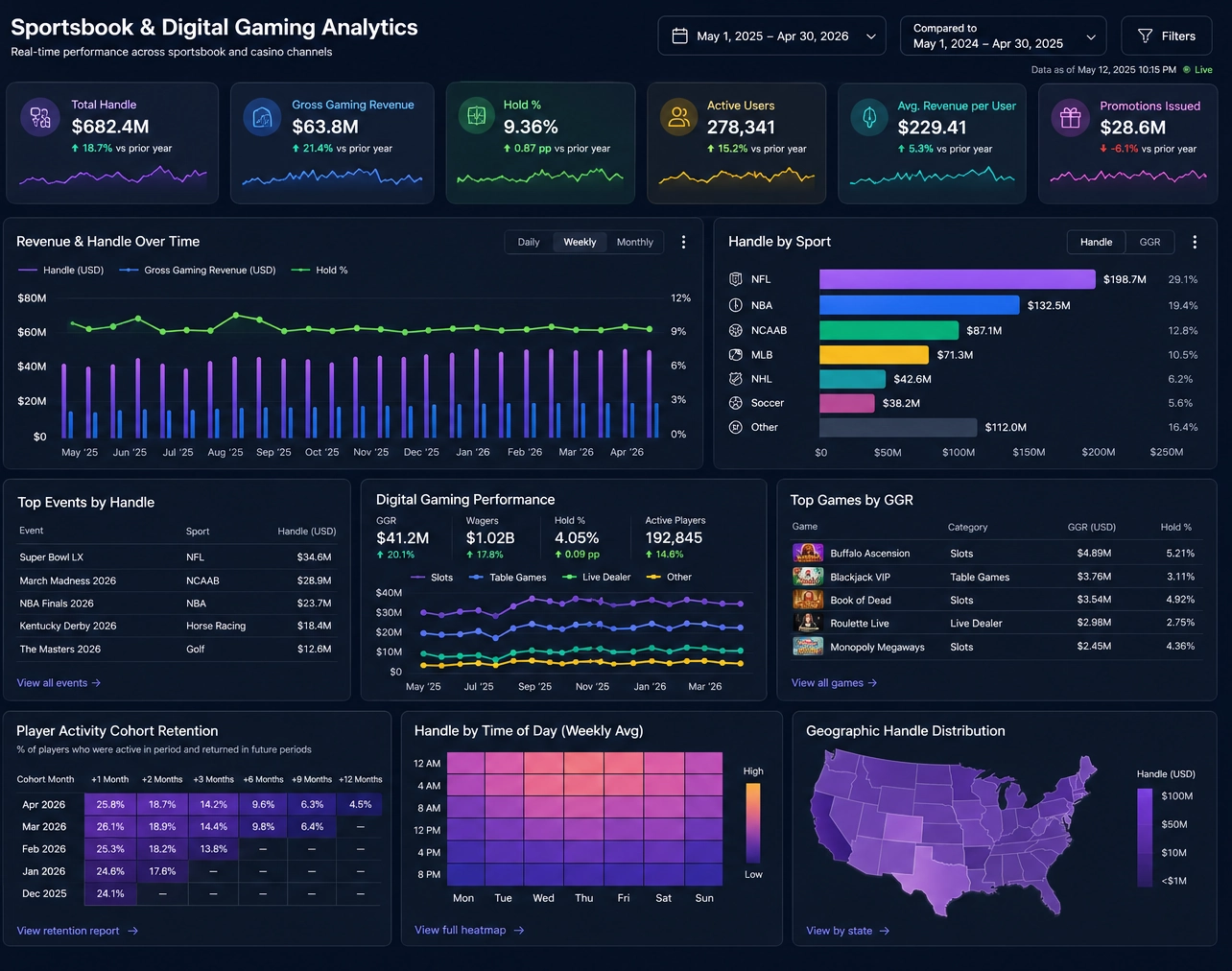
Sportsbook and Digital Gaming Analytics
With the rapid growth of sports betting and online gaming, analytics play a crucial role in managing digital platforms. Sportsbook analytics can evaluate betting trends, identify risky wagers, and optimize odds to balance exposure. Digital gaming analytics track user engagement, session duration, game performance, and churn indicators. These insights help operators refine game offerings, improve user interfaces, and design retention strategies. Predictive models can also identify players at risk of problem gambling, enabling responsible gaming interventions that protect both customers and regulatory compliance.

Responsible Gaming and Regulatory Compliance
Casinos must comply with strict regulations, and analytics can support responsible gaming initiatives by identifying early signs of problematic behavior. By monitoring betting frequency, deposit patterns, and session duration, casinos can detect players who may be at risk. Automated alerts can notify responsible gaming teams, who can then intervene with support resources or account restrictions. Compliance analytics also help track reporting requirements, audit trails, and regulatory submissions. This ensures that casinos maintain transparency and meet legal obligations while promoting a safe gaming environment.
Casino managers must stay in tune with these advancements. They need to optimize their analytics to stay ahead of the competition.
About the Author
Alex Lysak is the CEO of ScanTeam. I am working in online marketing since 2011, my main areas of expertise are marketing research, social media marketing, and SEO. During 9 years of experience, I have helped many products and startups to develop marketing strategies and to implement them further. https://twitter.com/lysak_aleksandr