eCommerce Bounce Rate as an Analytics Metric
Bounce rate is a primary engagement signal in eCommerce analytics because it measures the percentage of sessions that terminate after a single page view. High traffic volume has limited commercial value when session depth, product exploration, and conversion progression remain low.
The main causes of elevated bounce rate can be grouped into four domains:
- Technology
- Marketing
- Web Design
- Content
Each domain influences abandonment through a distinct technical mechanism.
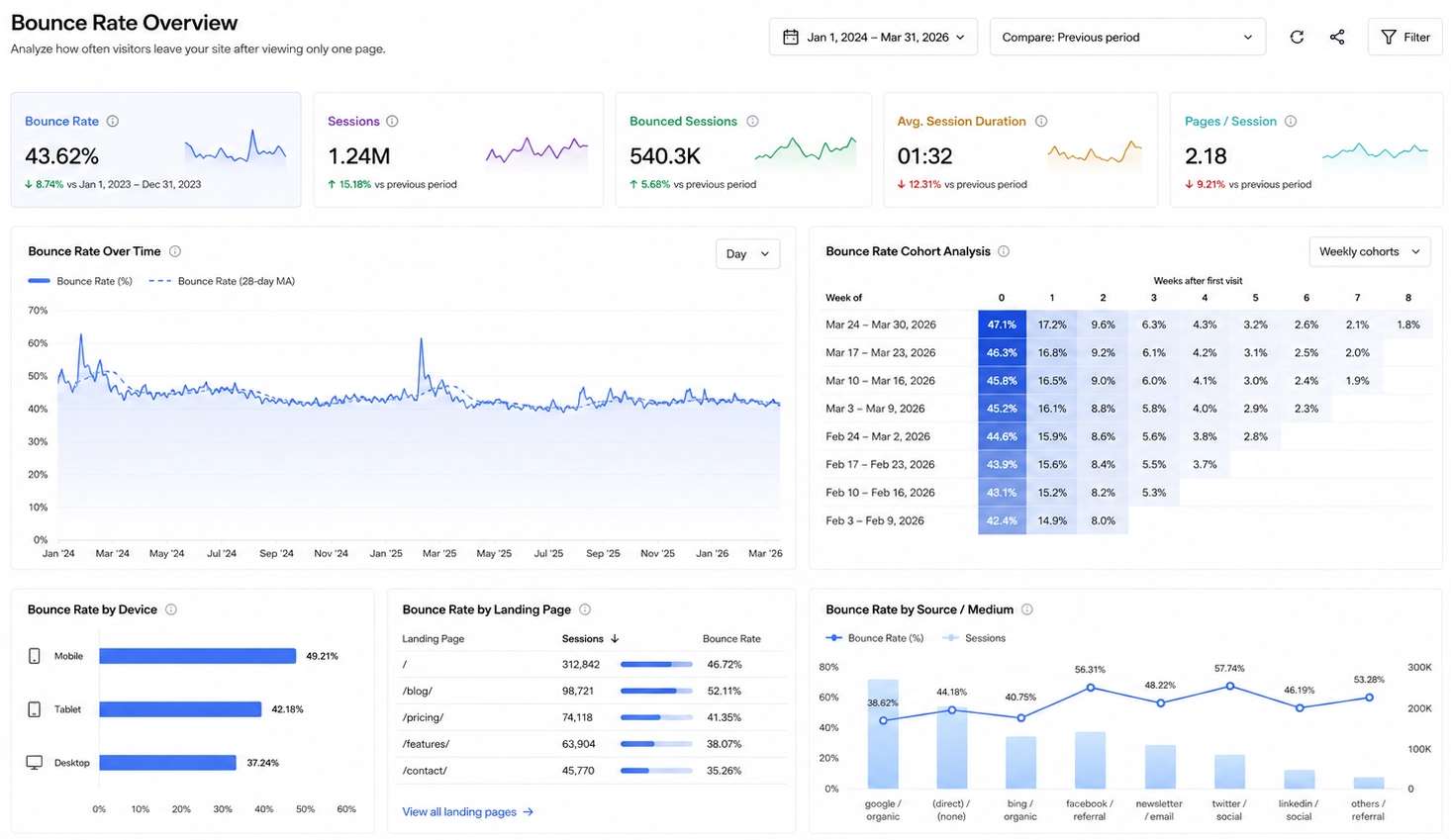

Technical Reliability and Latency Directly Increase Bounce Probability
Production defects such as HTTP 5xx responses, client-side JavaScript exceptions, broken media assets, and dependency timeouts create immediate user drop-off. Performance degradation has a similar effect: elevated time-to-first-byte, poor Largest Contentful Paint, and delayed interaction readiness correlate strongly with early exits. In competitive shopping workflows, users frequently open multiple vendor tabs, and the slowest experience is commonly abandoned first. Reliable rendering, stable runtime behavior, and low-latency delivery are baseline requirements for retaining acquisition traffic.
Technical quality must also include consistent cross-device execution. Responsive layouts, touch target sizing, viewport scaling, and browser compatibility all affect whether users can complete product discovery and checkout tasks on mobile and tablet environments.
Weak Intent Mapping and CTA Architecture Reduce Session Progression
Acquisition channels can deliver qualified visitors, but conversion flow fails when landing pages do not align with query intent or campaign promise. Ambiguous call-to-action hierarchy, weak value communication, and fragmented next-step paths create decision friction. Effective pages define a primary action, instrument that action, and guide users through predictable conversion states. Clear interaction design, consistent message match, and measurable micro-conversions are required for reducing bounce at scale.

Information Architecture and Trust Signals Influence Retention
Visual and structural design quality affects perceived credibility and transactional confidence. Inconsistent typography, low-contrast hierarchy, and unclear navigation increase cognitive load during browsing and checkout. Commerce interfaces should present stable navigation, clear category taxonomy, and visible trust indicators such as payment security, return policy, and fulfillment transparency. These elements reduce uncertainty and improve progression beyond the landing page.
Content Depth and Relevance Determine Session Continuation
Low-content pages frequently fail to sustain engagement because users cannot resolve evaluation questions. Effective product pages provide technical specifications, comparison context, rich media, and usage guidance that support purchase decisions. Content architecture should expose relevant internal links so users can move from discovery to evaluation without dead ends. Excessive intrusive overlays, repeated popups, and disruptive interstitials should be minimized because they increase abandonment and degrade usability metrics.

More eCommerce and Web Analytics Resources
E-Commerce Dashboarding for Revenue and Conversion Visibility
This article focuses on how a dedicated e-commerce analytics dashboard helps teams monitor sales, sessions, and conversion behavior in one place. It emphasizes mashup-driven analytics so users can combine cloud and on-premises sources into consistent reporting views. The content highlights interactive filtering that helps teams compare traffic, conversion types, dates, and regions without rebuilding reports. It also points to self-service capabilities that reduce dependence on technical staff for daily analysis. Overall, the article frames dashboard standardization as a practical way to speed decisions and improve online-store performance.
Interactive eCommerce Dashboard Tool for Sales Optimization
This resource explains how interactive eCommerce dashboards make order, traffic, and campaign performance easier to interpret. It walks through common dashboard controls such as filters, sliders, and category selectors that let users investigate trends quickly. The page also lays out major metric groups including revenue, acquisition, retention, conversion, fulfillment, and profitability. By unifying these metrics, teams can connect customer behavior with business outcomes and spot bottlenecks sooner. The overall benefit is faster operational insight for merchandising, marketing, and management roles.
Nine Essential eCommerce KPIs Beyond Topline Sales
This article identifies nine core online retail KPIs, including conversion rate, CAC, AOV, CLV, retention, and cart abandonment. It argues that sales alone can hide underlying issues in acquisition cost, customer quality, and purchase behavior. The article encourages teams to monitor KPI relationships so they can protect margin while still scaling growth. It also connects social engagement and ROI metrics to broader decision-making about channel mix and campaign spend. The summary takeaway is that balanced KPI tracking enables more sustainable e-commerce growth.
Practical Guide to Building an Ecommerce Dashboard
This guide describes how to structure an ecommerce dashboard around clear KPIs, usable layouts, and reliable source data. It explains that dashboards should bring operational, marketing, and sales signals together so leaders can react quickly. The content emphasizes choosing metrics that map directly to business goals instead of collecting data for its own sake. It also discusses extracting actionable insights from trend changes, customer behavior, and campaign shifts. In practice, the page positions dashboard design as an iterative process that improves with regular review.
Analyzing Google Shopping Ads for Better Performance
This article focuses on evaluating Google Shopping campaigns with a deeper KPI framework than simple click counts. It covers campaign segmentation, shopping-specific indicators, and continuous optimization through structured testing. The page also recommends using GA4 analysis and competitive comparisons to improve bid strategy and audience targeting. It highlights the value of centralizing ad and analytics metrics in one dashboard for ongoing decision cycles. The core benefit is more efficient paid acquisition through evidence-based refinements.
How eCommerce Businesses Use Big Data Effectively
This resource explains how ecommerce teams can turn large and varied data streams into practical business intelligence. It points to combining site events, behavioral traces, and external inputs to improve forecasting and planning quality. The article stresses that better data use can offset classic online retail disadvantages such as weak in-person customer context. It also notes privacy responsibilities and governance concerns when processing high-volume customer information. The overall message is that strategic analytics maturity creates better decisions across merchandising, marketing, and operations.
Reducing eCommerce Fraud Through Advanced Analytics Signals
This article discusses how predictive analytics and broad data coverage improve fraud detection in online commerce. It contrasts older sample-based methods with richer, pattern-oriented approaches that catch risky behaviors earlier. The content includes examples of fraud pattern analysis that can reduce bad orders before fulfillment costs accrue. It also explains that stronger analytics can improve both loss prevention and operational confidence. The result is a safer transaction environment with fewer avoidable chargeback and abuse incidents.
Five Data Analytics Tips for eCommerce Owners
This article presents practical ways store owners can use analytics to compete in crowded digital marketplaces. It highlights personalization and behavior-based analysis as methods to improve product relevance and customer experience. The page emphasizes that data can guide better offers, stronger recommendations, and more targeted engagement. It also frames analytics as a way to convert growing consumer choice into clearer decision advantage. The major benefit is turning raw commerce data into repeatable tactics that increase customer value.
Understanding the Strategic Value of eCommerce Analytics
This article argues that many online stores underutilize analytics despite having rich behavioral and transaction data. It outlines foundational analyses such as conversion monitoring, traffic quality review, and checkout-stage diagnostics. The content encourages frequent, disciplined tracking to identify revenue leaks and performance shifts early. It also underscores the importance of measuring shopping cart abandonment as a recurring risk area. The key takeaway is that consistent analytics practice drives clearer prioritization and stronger revenue outcomes.
How to Create a Powerful E-Commerce Metrics Dashboard
This guide helps teams decide which ecommerce metrics matter most based on business model and growth goals. It explains how to start with core KPIs and expand measurement depth as analytical confidence improves. The page calls out conversion-related figures as critical for understanding whether visitors become buyers. It also recommends checking daily and weekly patterns to connect timing effects with sales movement. The practical benefit is a more intentional dashboard that supports continuous optimization rather than ad hoc reporting.
Integrating Web Analytics with Business Intelligence Platforms
This resource explains why combining web analytics and BI creates a fuller view of user behavior and business impact. It highlights mashup capabilities that join web traffic data with CRM, sales, and operational datasets. The page also covers API integration, real-time monitoring, and customizable dashboards for self-service exploration. It points to predictive use cases where teams can anticipate campaign performance and customer behavior changes. The net result is faster, context-rich analysis for marketing, product, and executive stakeholders.
Google Ads and Analytics Dashboards for Marketing Insights
This article shows how unified Google Ads and Google Analytics dashboards can reveal deeper marketing performance signals. It explains that native tools are useful but limited when teams need multi-source analysis and derived business metrics. The article emphasizes combining paid and organic traffic views to evaluate conversion quality and funnel impact. It also highlights mashups with CRM, financial, and ERP data to connect campaign activity to revenue outcomes. The central benefit is more complete attribution and better optimization decisions across digital channels.