How to Use AI Machine Learning Software in Your Business
To many people, AI and Machine Learning are only concepts, things of the distant future, something that we have to wait years for. However, the truth is that we're already on the verge of AI revolution, and the increase in the ease of use of machine learning software has been rapidly increasing its impact in a number of industries.
From simple AI-powered chatbots using natural language processing technology to complex autonomous driving systems and warehouse management systems able to deliver a huge increase in efficiency and effectiveness, the world has been using AI-powered tools for quite a while now.
For businesses, AI and machine learning software represents a great opportunity to gain competitive advantage, increase sales, and remain relevant for years to come. Many well-known companies are already using machine learning to achieve their goals; for example, DHL deploys it to increase effectiveness and efficiency of their logistics chains and warehouse management, UPS uses machine learning to determine the fastest routes for drivers, and Tesla has AI-powered platforms for self-driving cars.
In other words, the future is much closer than you think. Adopting AI to improve operations is something that you have to do as soon as possible to become an early adopter and outperform your competition. Here are some potential uses of machine learning software to advance your business and meet the challenges of the future.
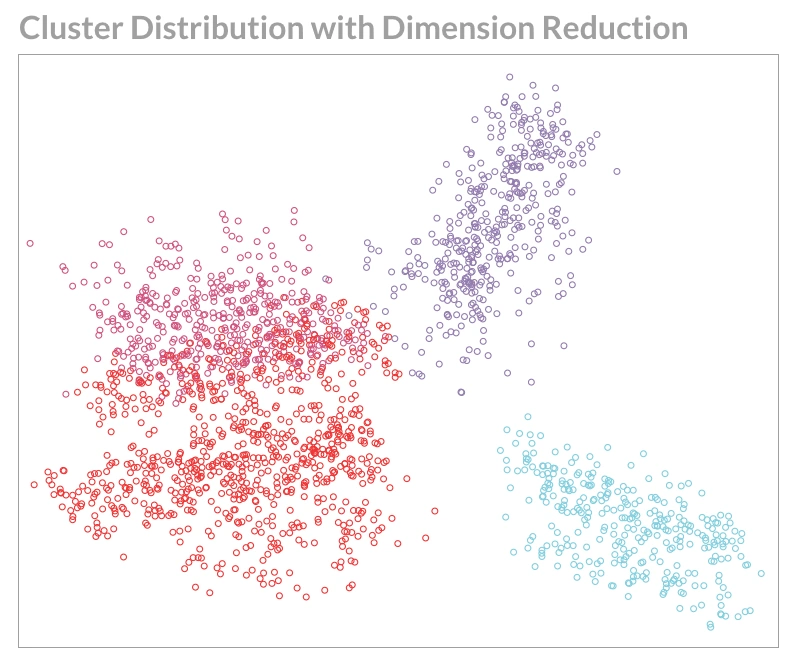

1. Process Massive Amounts of Data and Make Good Predictions
Machine learning-based applications employ algorithms that can deliver an excellent analysis of vast amounts of data and create predictions, even when you continue to feed them with updated data and information.
- Improve logistics and satisfy a larger demand by using smart cameras and supply chain solutions
- Predict customer behavior based on data related to prices, economic conditions, and season
- Analyze unprecedented amounts of data and identify the strengths and weaknesses of your business
- Scale your business and improve customer service by getting insights from the data provided by leads and customers
- Predict demand based on historical data.
2. Create Better Ads
Machine learning is capable of some sophisticated analysis, which companies can use to determine the best audience for their online advertising. One of the best examples of this technology is Facebook's Lookalike Audiences, which expands an online campaign's reach by including people who have similar characteristics.
It works as follows: a brand provides Facebook with a list of their customers and the platform's machine learning software creates similar audiences based on the data from the list.
By using Lookalike Audiences for our company Essayontime, we improved the effectiveness of our digital marketing campaigns by having the right individuals viewing your ads on social media," says Martin Mills, a social media marketer.

3. Find Product-Market Fit Faster
Just a decade ago, businesses had to manually collect tons of customer feedback and look for patterns to identify people who are most attracted to their value proposition. Now, however, AI-powered technologies such as machine learning, audience segmentation, and natural language processing can help to accelerate this task.
For example, they allow businesses to get raw customer feedback through special platforms, analyze the results, and get neatly categorized customer sentiments.
4. Improve Customer Service
AI-powered chatbots can be incredibly useful for companies looking to increase the speed of customer service and transform customer experience. For example, they can help businesses save on customer service costs by speeding up response times and providing answers to about 80 percent of routine questions!
Moreover, the same source also described that 64 percent of customers thought that the main benefit of chatbots was the ability to provide 24-hour service while 55 percent appreciated a quick response.
So, this means that developing a chatbot for your own business can help you improve customer service by answering more requests and providing 24-hour service. Moreover, while conversing with customers, chatbots can provide them with promotions, discounts, news, and other helpful information, thus increasing their engagement.

An important extension of modern scorecard design is the shift toward multi‑layered KPI hierarchies that reflect how real organizations operate. Instead of presenting KPIs as isolated metrics, advanced scorecards now map them into parent‑child structures that show how operational activities roll up into strategic outcomes. For example, a top‑level objective like “Improve Customer Fulfillment Efficiency” may contain supporting KPIs such as order cycle time, pick accuracy, dock‑to‑stock time, and carrier performance. By structuring scorecards this way, teams can immediately see which operational levers influence strategic goals, making the scorecard not just a reporting tool but a roadmap for action.
Another evolution in scorecard usage is the integration of trend‑based analytics directly into the scorecard interface. Rather than displaying static values, organizations increasingly embed sparkline charts, rolling averages, and variance indicators next to each KPI. This allows users to understand not only the current performance level but also the trajectory—whether the metric is improving, declining, or stabilizing. These micro‑visualizations reduce the cognitive load on users by eliminating the need to navigate to separate dashboards just to understand context. When combined with conditional formatting, trend‑aware scorecards become powerful early‑warning systems.
Scorecards are also becoming more interactive, enabling users to drill into the underlying data behind each KPI. This capability transforms scorecards from passive displays into analytical gateways. For instance, clicking on a “Production Yield” KPI might open a breakdown by shift, machine, or material batch. Similarly, a “Customer Satisfaction Index” KPI could expand into survey categories, response distributions, or sentiment analysis. This level of interactivity ensures that scorecards support both high‑level monitoring and root‑cause investigation without forcing users to switch tools or lose context.
A growing best practice is the incorporation of predictive indicators alongside traditional lagging KPIs. While lagging metrics such as revenue, defect rate, or on‑time delivery reflect what has already happened, predictive indicators estimate what is likely to occur next. Examples include forecasted backlog, predicted equipment failure probability, or projected customer churn. Embedding these forward‑looking metrics into scorecards helps organizations shift from reactive management to proactive planning. Developers implementing these features often rely on machine learning models or statistical forecasting engines, which can be seamlessly integrated into BI platforms to update predictive KPIs automatically.

Finally, modern scorecards increasingly support role‑based personalization, ensuring that each user sees the KPIs most relevant to their responsibilities. Executives may focus on financial and strategic indicators, while operations managers prioritize throughput, quality, and resource utilization. Frontline supervisors may require shift‑level metrics and real‑time alerts. By tailoring scorecards to each role, organizations reduce noise, improve adoption, and ensure that every user has a clear view of what success looks like for their part of the business. This personalization is often driven by metadata‑based security rules and dynamic layout logic within the BI platform, allowing developers to maintain a single scorecard framework that adapts intelligently to each viewer.