How to Use Artificial Intelligence for Customer Support
It's common knowledge that customer support is currently among the top priorities for most companies today. Thus, they are constantly looking for new ways to level up customer support and improve customer experience.
It's no secret that customer services often have to deal with tons of inquiries a day, making a job of a customer support representative one of the most stressful. However, with the introduction of artificial intelligence (AI), we received features like machine learning and automation that fundamentally change the way how customer support works.
Implementing AI in customer support is not money spent in vain. Evidently, more and more companies are ready to invest in AI-powered customer services. It is expected that investments in AI will increase by more than 300% during this year and eight out of ten businesses have already adopted AI-powered customer services or are planning to do so.

Apparently, AI in customer support is an investment worth its money, bringing tons of benefits to both businesses and their customers, including:
- Reduced waiting time. What customers hate the most is waiting too long to receive a solution for their problem, especially if the issue isn't complicated. Introduced by AI, machine learning helps track similar issues, categorize them and search for solutions faster, reducing the time for resolving a ticket.
- Automated search. With the help of machine learning, customer service can create guides for their clients faster, referencing similar cases and offering quick solutions.
- Improved predictability. AI-powered features automate customer support to the point that a customer support representative can predict what the issue is from the very first clues, helping find a solution faster.
With these AI-powered features, your company will be able to reach stronger customer engagement, which will also positively influence customer experience and increase sales.
But what are the ways that AI can be implemented in customer support? Let's take a look at your options.
1. AI-Powered Customer Support Chatbots
The biggest achievement of customer support is introducing AI-powered chatbots. A chatbot conducts a
conversation with the help of auditory or textual methods. Using machine learning and
neuro-linguistic processing, chatbots have already changed the mechanism of how customer services
operate.
Different statistics speak in favor of introducing chatbots to customer service:
- 95% of consumers believe that customer support services will benefit from implementing chatbots;
- 38% of consumers worldwide claim they are already using chatbots to resolve their inquiries;
- Millennials and Gen Z love chatbots due to the high speed of communication.
Customer support professionals often have to deal with tons of tickets a day, and not all of them can be resolved quickly. Sometimes a ticket can be received at nighttime when customer service doesn't work. Here's where chatbots can save the day. Based on cognitive technology, they are able to offer the correct solution within a short period of time.
Pro tip: to create a chatbot for your business, you don't always have to know how to code. Online resources like Botsify or Chatfuel can either help you create a bot for your website or a specifically designed bot for your Facebook page.
2. AI-Controlled Multi-Channel Support
There were times when one phone line and an email address were enough to contact customer support.
However, it's not our reality anymore, as with the rise of social media, the approach of how
customers contact businesses has changed.
According to Sprinklr, 80% of consumers use social media to communicate with brands and 54% of
customers prefer engaging with brands through social media rather than over email or phone.
This leads us to our main point: your business needs to start operating multi-channel customer support. Although this might seem a lot of work, AI-powered solutions can help out.
While chatbots can tackle your website and social media, AI-based machine learning can help you create automated user guides. Customer needs regarding different customer support channels might vary depending on their needs. "According to our recent survey, customers want a mix of automated and human customer service, depending on what the nature of their inquiry is", says Martin Jefferson, a customer support representative at Flatfy. Thus, having AI-based solutions, like automation and machine learning, can help you tackle customer support via several channels.
3. AI-Powered NLP for Call Classification and Routing
If you have a big company, working with millions of customers on a daily basis, you might also have a customer service that consists of different departments. Here's where you can face the issue of the right person getting the right ticket to solve.
This problem can be resolved through the AI-powered feature called neuro-linguistic processing. This feature works with the inquiries to help customer service sort out, classify and rout written messages as well as calls. This is a helpful feature that gets a customer's message to the right department to resolve it quicker.
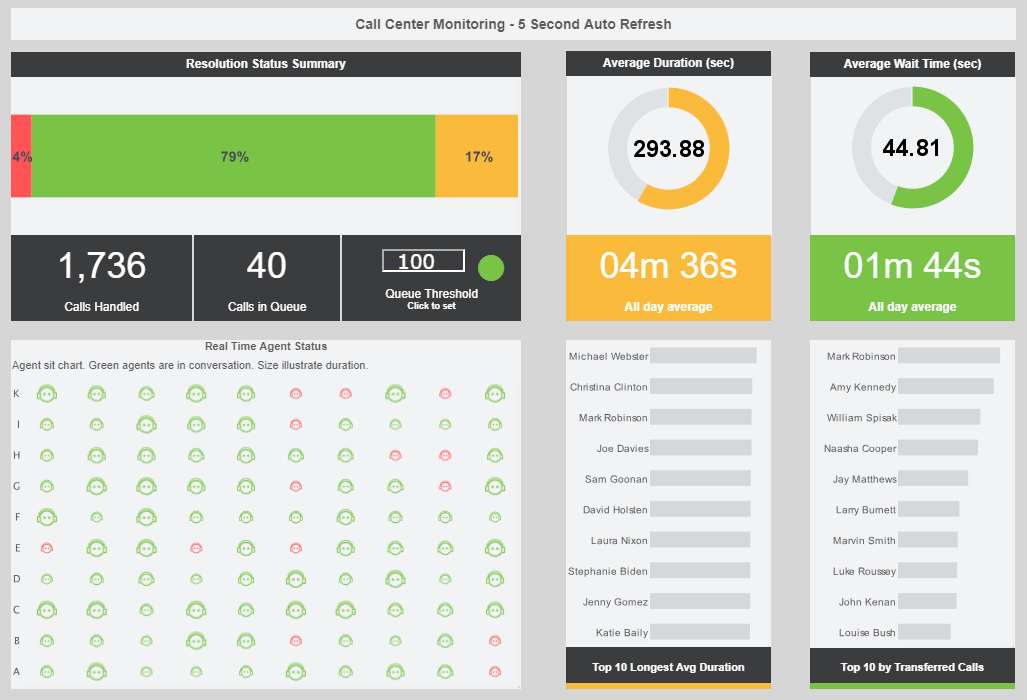
This AI-based feature usually works as a tracking system that can be compared to data visualization platforms, as it shows the route of every ticket customer service gets. It is a very helpful feature that helps increase ticket resolution time and lower average response time.

AI-Driven Sentiment Analysis for Real-Time Escalation
AI-powered sentiment analysis tools can evaluate the tone, urgency, and emotional state of a customer message the moment it arrives. By analyzing keywords, phrasing, punctuation, and historical interaction patterns, AI can flag messages that indicate frustration, confusion, or potential churn. This allows customer support teams to prioritize high‑risk interactions and route them to senior agents or specialized retention teams. Real-time sentiment scoring also helps managers monitor overall customer mood across channels, enabling proactive interventions before issues escalate.
AI-Based Proactive Issue Detection and Outreach
Artificial intelligence can identify emerging customer issues before customers even submit a ticket. By monitoring product usage data, error logs, behavioral anomalies, and trends in incoming inquiries, AI systems can detect patterns that signal a developing problem. When these signals appear, AI can automatically trigger proactive outreach—sending alerts, guidance, or troubleshooting steps to affected users. This reduces inbound ticket volume, improves customer satisfaction, and positions the support organization as a proactive partner rather than a reactive problem solver.

Customer Stories of Choosing InetSoft and StyleBI
Why SwapEase Chose InetSoft
SwapEase picked InetSoft because manual aggregation and basic reporting were slowing decisions. The team needed to blend user, transaction, and support data without waiting on engineering for every change. InetSoft's data mashup and interactive dashboards gave business users direct access to trusted insights. Real-time metric customization helped the company react faster to market shifts and fraud signals. The result was faster decisions, better cross-team alignment, and improved operational visibility.
Why PrairieLivestock Chose InetSoft's Serverless StyleBI
PrairieLivestock moved to StyleBI to replace fragmented reporting and spreadsheet-heavy livestock analysis. The company needed one place to combine ERP records, IoT feeds, and operational metrics. StyleBI's serverless architecture reduced infrastructure overhead while scaling for seasonal demand. Role-based dashboards improved monitoring of feed conversion, mortality, and breeding outcomes across locations. Teams gained clearer performance visibility and made decisions faster with less IT delay.
Why the Company Chose InetSoft
The environmental testing company switched because Sisense became difficult to scale for complex compliance data. It needed governed metric definitions so every team used the same turnaround and compliance KPIs. InetSoft unified lab, field, ERP, and CRM sources without repeated model rebuilds. Non-technical managers finally gained practical self-service dashboards for daily operations. The organization reduced reporting friction and improved both client transparency and decision speed.
Why the Company Chose StyleBI
The satellite services operator chose StyleBI to fix inconsistent metrics and limited drill-down in legacy tools. It required multidimensional analysis across sites, antennas, regions, and satellite passes. StyleBI's semantic layer standardized KPI logic for engineering, operations, and leadership teams. Data blending let teams correlate telemetry, schedule, and weather conditions in one view. This improved root-cause analysis speed and made operational decisions more reliable.

Why Orion Chose StyleBI
Orion selected StyleBI after its Sisense setup became hard to maintain and slow to adapt. The firm needed governed metrics with flexibility for different forensic practice groups. StyleBI supported narrative dashboards that matched case lifecycles from intake to testimony. Non-technical leaders could explore scenarios without breaking core KPI definitions. Orion improved consistency, shortened iteration cycles, and increased visibility into performance bottlenecks.
Why HydroForce Chose StyleBI
HydroForce switched to StyleBI to reduce dependence on specialists for everyday analytics changes. Operations teams needed self-service dashboards that reflected dispatch, maintenance, safety, and financial performance together. StyleBI made data mashups and role-based views easier for frontline managers to use directly. Faster dashboard iteration helped teams react to overruns and utilization issues during critical work windows. The company increased productivity by turning analytics into a daily operational tool.
Why the Company Chose StyleBI
The laundry services firm moved from Tipboard because static wallboards and custom scripts were no longer enough. It needed governed KPI definitions that stayed consistent across plants, routes, and roles. StyleBI delivered a reusable semantic layer plus deeper interactivity and drill-down analysis. Teams kept large-screen operational visibility while gaining self-service exploration for supervisors and managers. The migration improved scalability, data consistency, and decision quality across the network.
Why the Company Chose StyleBI
The decontamination services provider replaced icCube to unify fragmented performance workflows. Leadership wanted one platform for dashboards, reporting, and business performance management instead of disconnected tools. StyleBI enabled governed KPI standards while giving non-technical managers usable self-service analytics. Embedded delivery and row-level security also supported customer-facing performance views in portals. The company gained better transparency, reduced reporting bottlenecks, and stronger cross-functional accountability.

Why SafeQuell Chose StyleBI
SafeQuell adopted StyleBI after Holistics proved too rigid for complex R and D and compliance workflows. Teams needed flexible parameter controls and responsive dashboards for formulation, quality, and regulatory analysis. StyleBI's designer made it easier to build interactive views that mapped to real decisions. Non-technical users could explore data independently while governance stayed intact. The switch improved adoption, reduced backlog, and accelerated product and compliance decisions.
Why EnviroScrub Chose StyleBI Over Posthog for BI
EnviroScrub chose StyleBI when event analytics alone could not support operational and compliance intelligence needs. The company had to blend emissions sensors, maintenance logs, compliance events, and financial data. StyleBI provided stronger modeling, governed dashboards, and formal reporting for external stakeholders. Managers gained role-based visibility into risk, performance, and service efficiency without heavy manual data stitching. This created a more complete intelligence layer for internal operations and client reporting.
How a Regulatory Information Management Platform in Life Sciences Chose InetSoft for Embedded SaaS BI
The RIM platform chose InetSoft to embed analytics natively inside its life sciences workflows. It needed scalable dashboards, strong embedding flexibility, and predictable costs for a SaaS business model. InetSoft's data mashup capabilities helped combine fragmented regulatory and submission data quickly. Business users gained easier self-service analysis without relying on technical teams for every report change. The platform improved customer satisfaction, strengthened differentiation, and expanded analytics-driven revenue opportunities.
How a Music Equipment Maker Switched to InetSoft's Analysis and Reporting Microservice App
HarmonyTech switched because fragmented systems and static reports prevented timely decisions. The company wanted real-time dashboards with role-specific views for executives, marketing, and product teams. InetSoft provided customizable analytics with scalable integration across legacy ERP and CRM data. The phased rollout with training improved adoption while reducing transition risk. HarmonyTech gained better forecasting, tighter inventory control, and stronger data-driven collaboration.