KPI Dashboard Examples
Fermentation Operations Dashboard
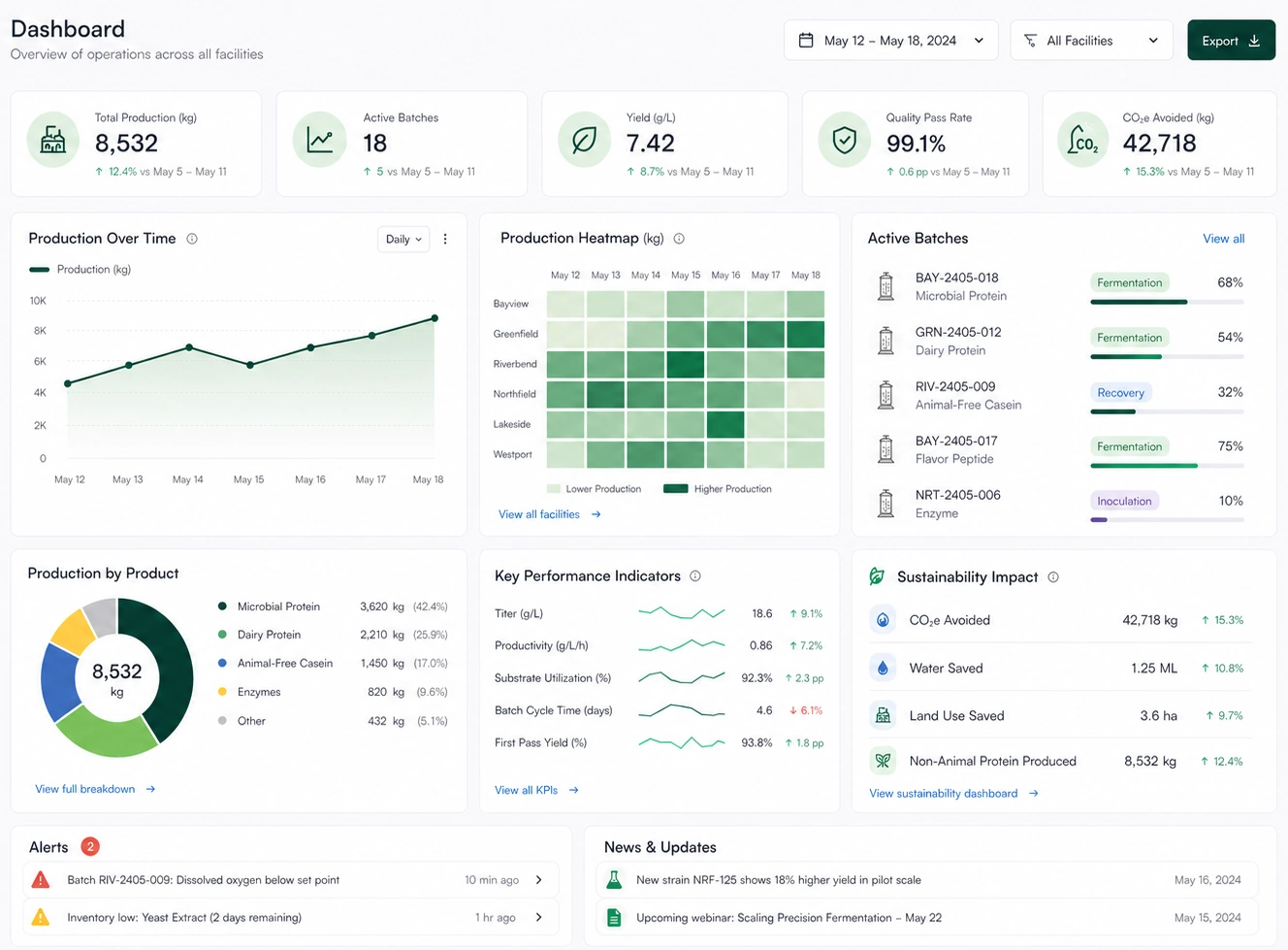
This dashboard tracks fermentation vessel status, batch progression, and throughput in one view. Operators can quickly spot deviations in temperature, pH, and dissolved oxygen before quality slips. Supervisors use trend panels to compare shifts and tune process consistency. The layout supports faster interventions that reduce scrap and improve yield.
Reverse Logistics Dashboard
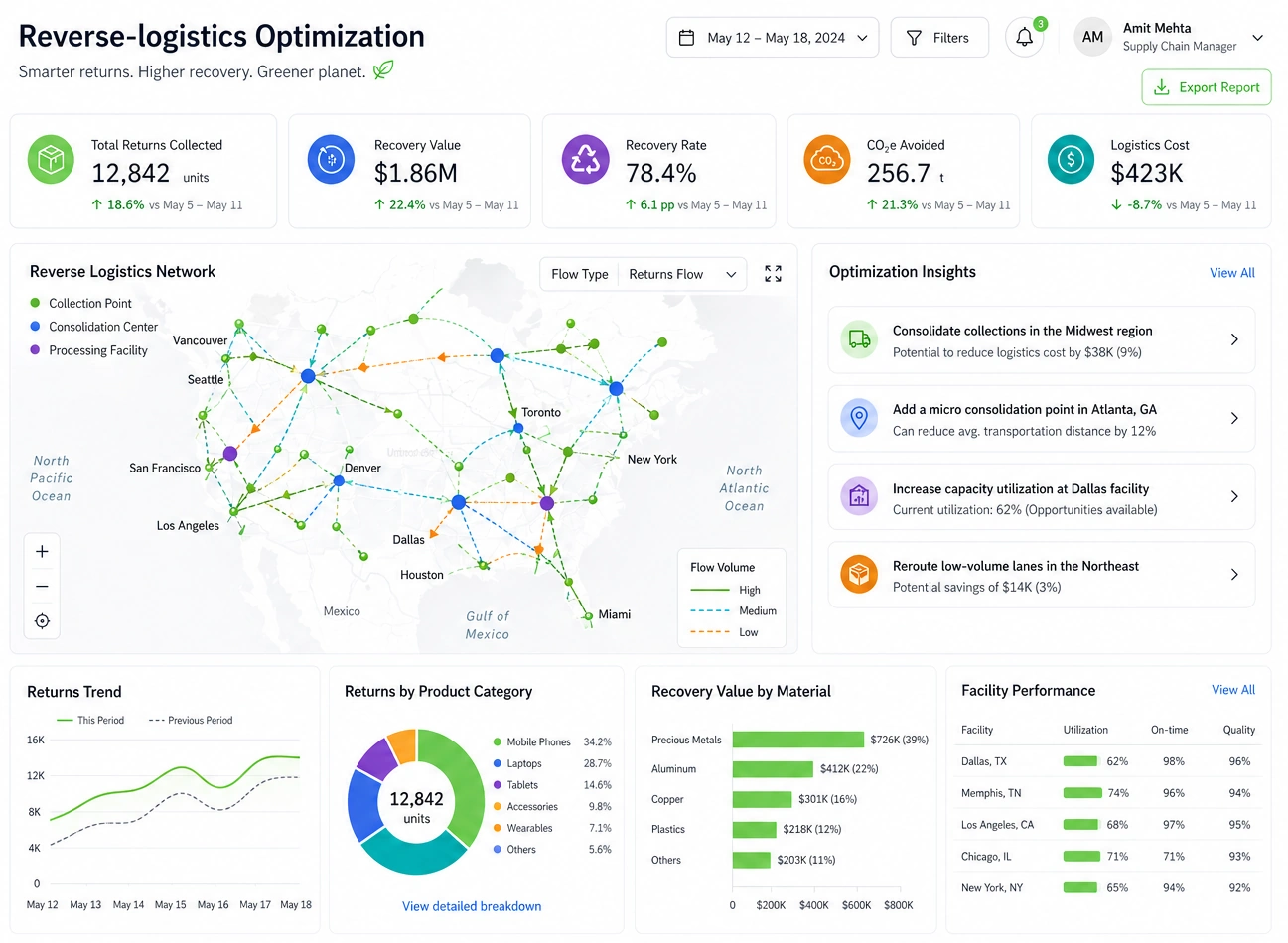
This dashboard focuses on returns volume, cycle time, and disposition outcomes across facilities. Teams can monitor refurbishment rates, recovery value, and transit bottlenecks in real time. Exception indicators highlight delayed inspections and aging inventory requiring action. The result is better cost control and a smoother customer return experience.
LLM Performance Analytics Dashboard
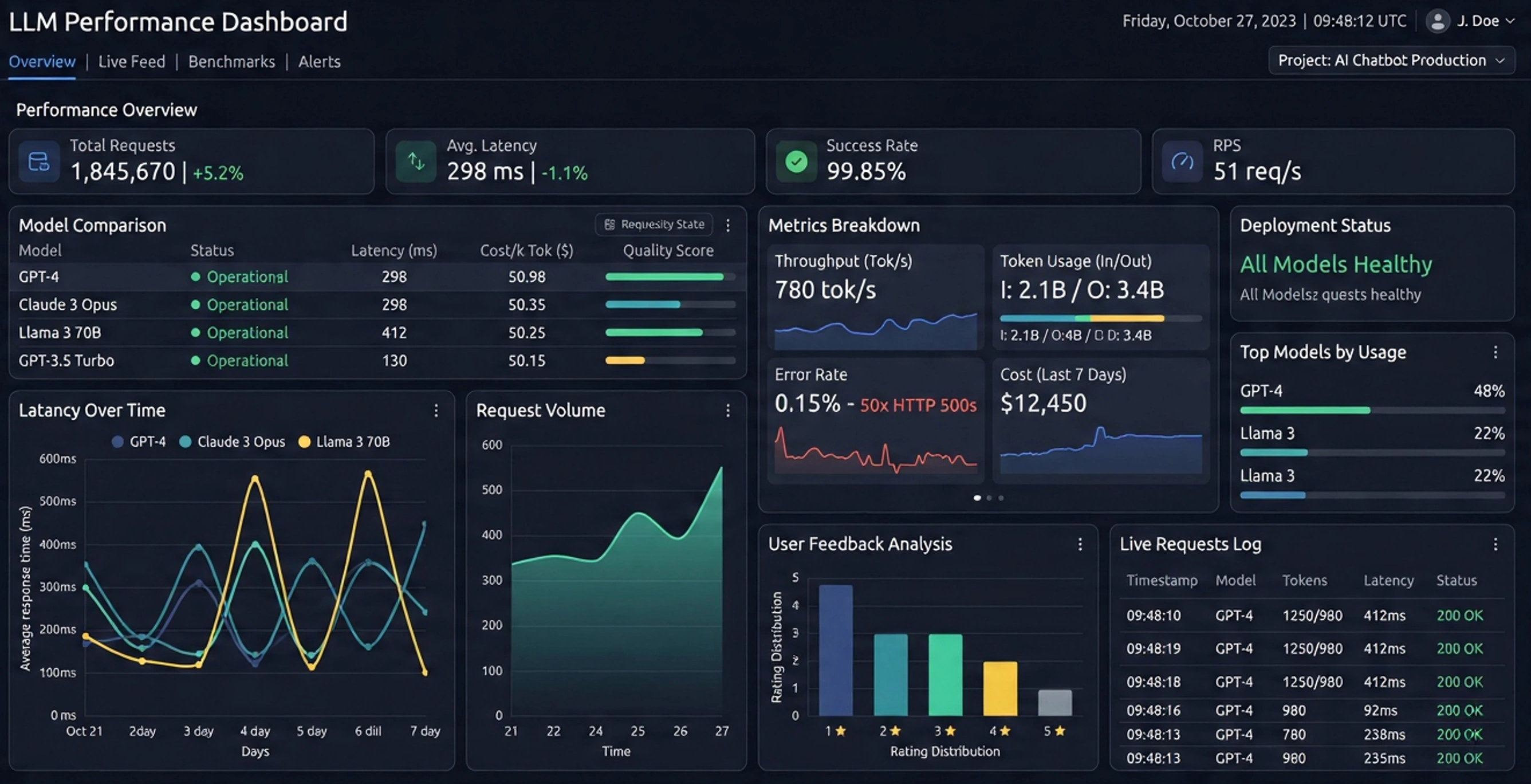
This dashboard measures token usage, latency, and answer quality across language model workloads. Product teams can segment performance by model family, endpoint, and business workflow. Drilldowns reveal where prompt design or retrieval strategy is hurting response accuracy. These insights help teams optimize quality while controlling inference spend.
LLM Performance Dashboard
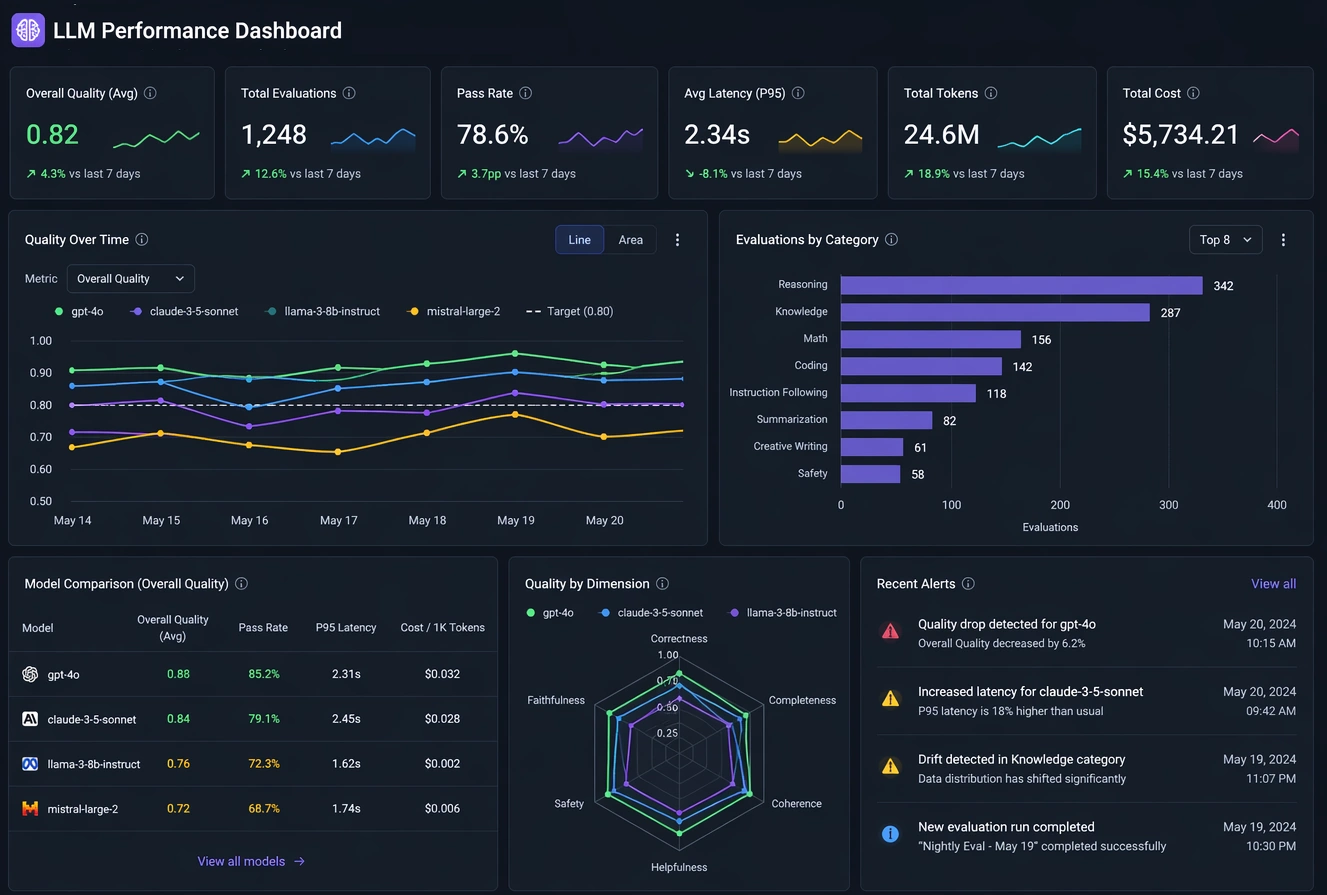
This dashboard presents a live operations view for production LLM services and model health. Engineers can watch request load, error rates, and response behavior minute by minute. Alert tiles surface regressions after releases or model routing changes. The page enables quick triage to maintain reliable user-facing AI experiences.
Industrial Water Reclamation Dashboard
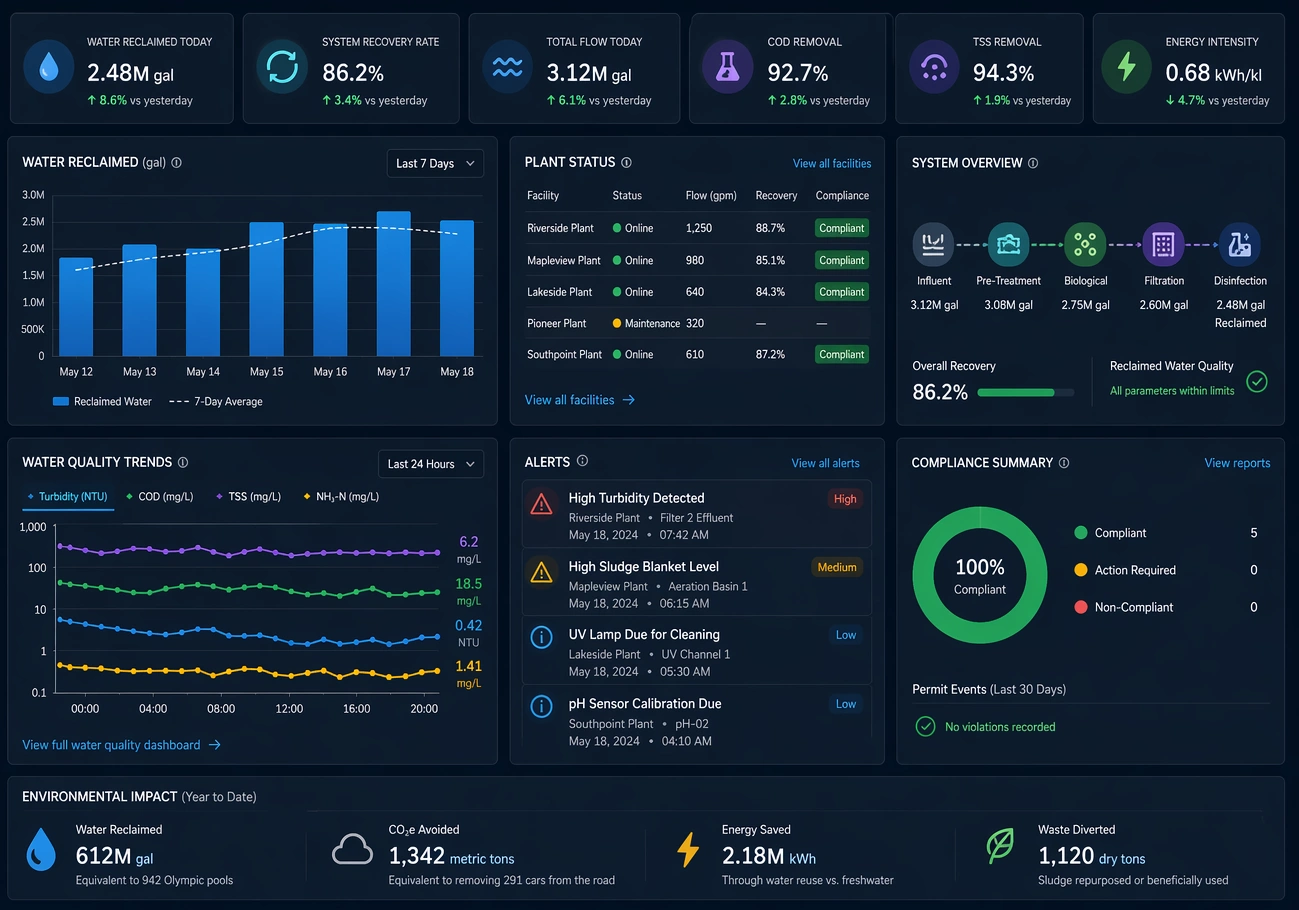
This dashboard tracks intake, treatment, and reuse metrics for industrial water systems. Plant teams can see filtration performance, chemical dosing, and compliance indicators together. Historical comparisons make it easier to verify conservation targets and operating efficiency. Decision makers use the data to reduce freshwater demand and discharge risk.
Urban Aquaculture Dashboard
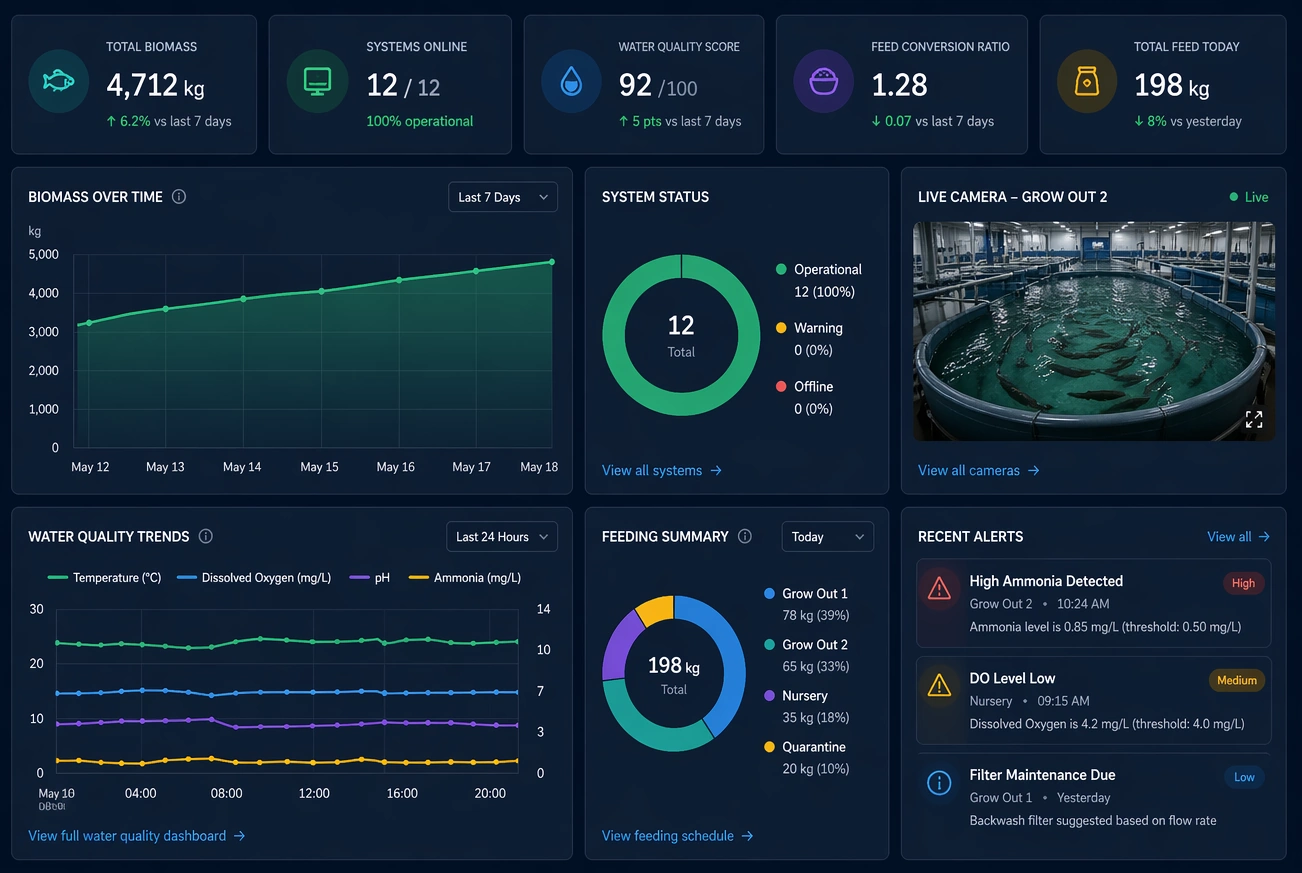
This dashboard visualizes tank conditions, feeding patterns, and stock health in urban aquaculture sites. Managers can monitor dissolved oxygen, ammonia, and growth rates from a single screen. Early warning cards identify stress events that could impact survival and harvest planning. The unified view supports healthier systems and more predictable output.
Regenerative Agriculture Embedded Dashboard
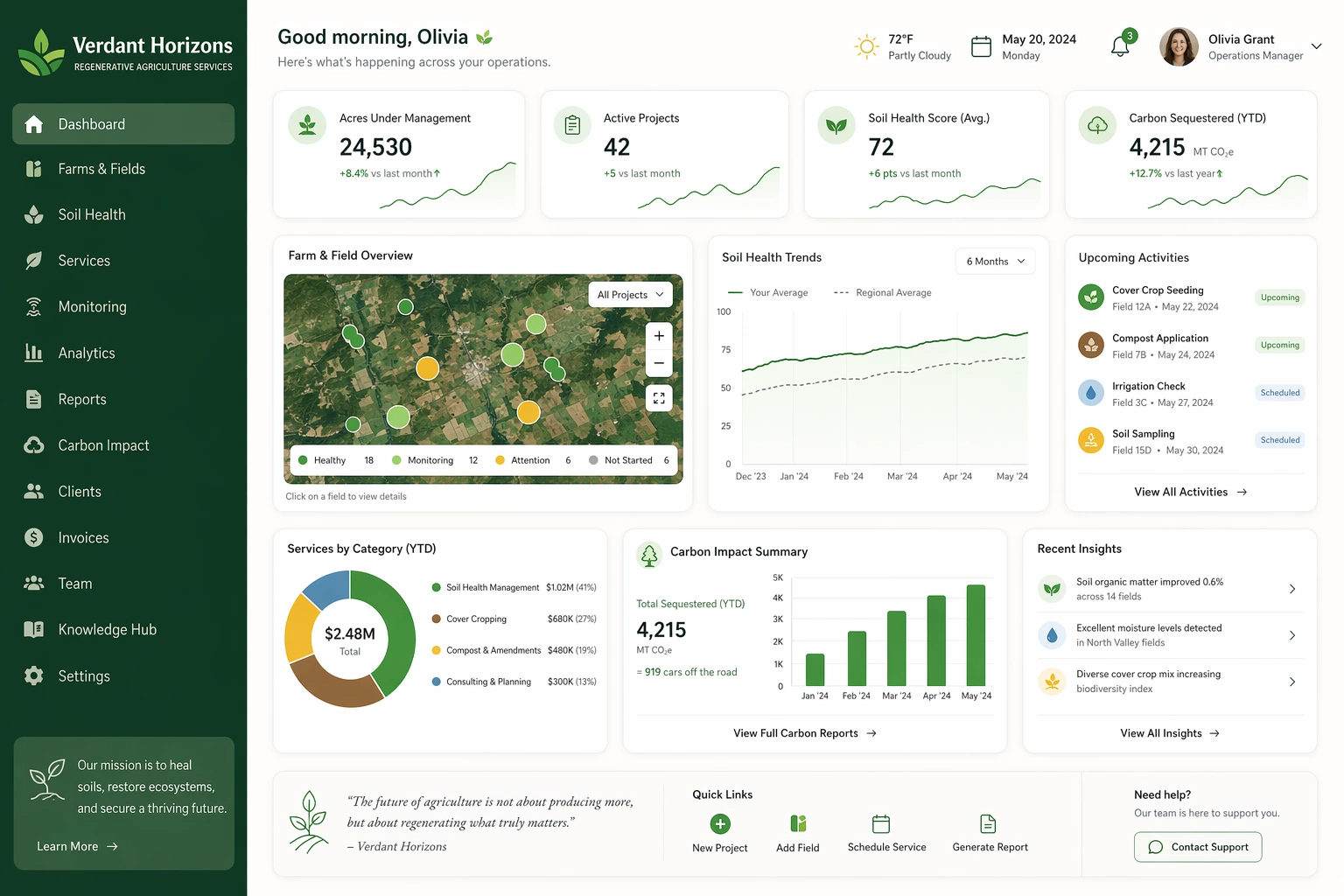
This embedded dashboard reports soil, biodiversity, and field performance metrics for regenerative programs. Agronomy teams can evaluate cover crop impact, moisture retention, and nutrient balance by parcel. Progress indicators connect sustainable practices to yield and cost outcomes over time. The interface helps stakeholders validate environmental and business results together.
Specialty Sand Proppant Dashboard
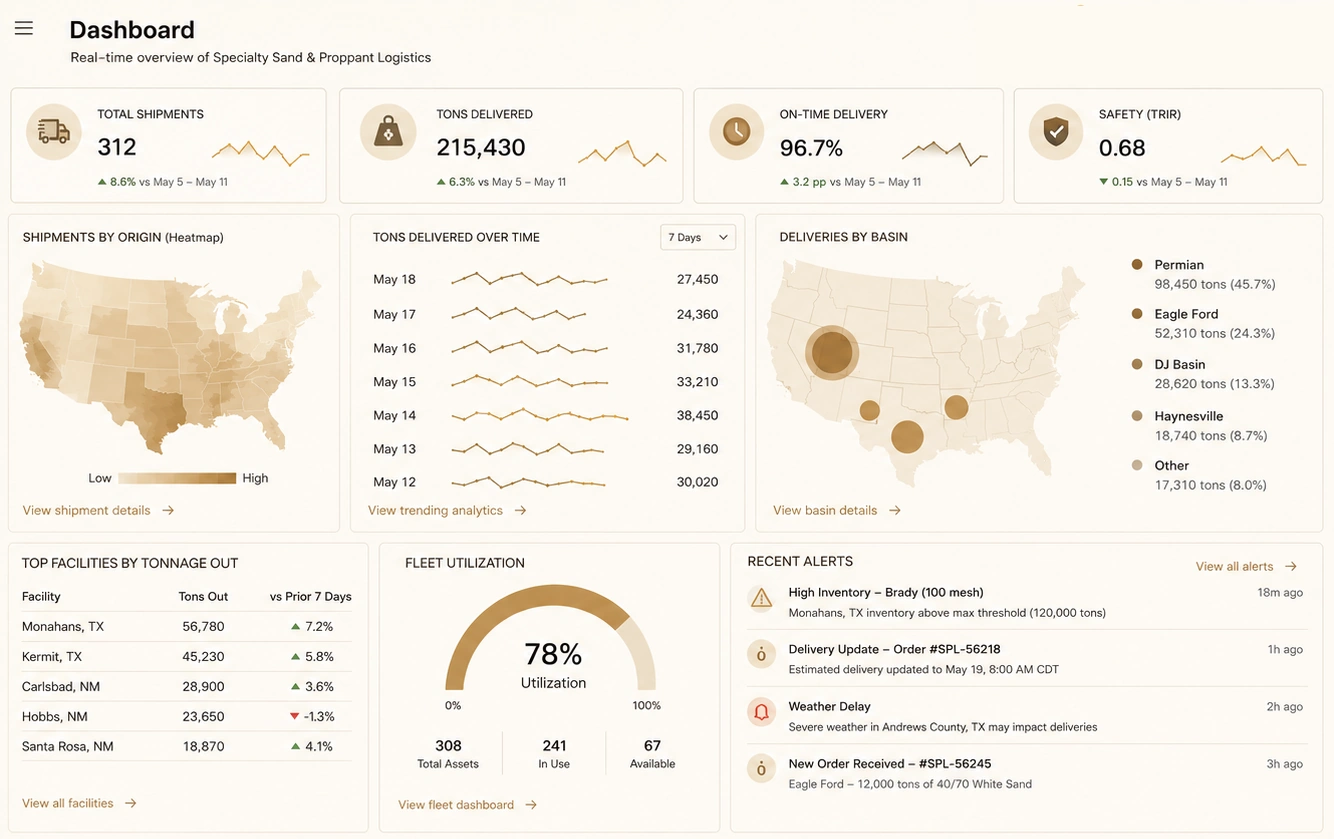
This dashboard monitors production, grade distribution, and shipment performance for proppant operations. Operations leaders can correlate plant output with demand by basin and customer segment. Quality charts flag variance in crush resistance and particle size before loads are dispatched. The visibility improves service reliability while protecting margin on every order.
Retrieval-Augmented Generation Dashboard
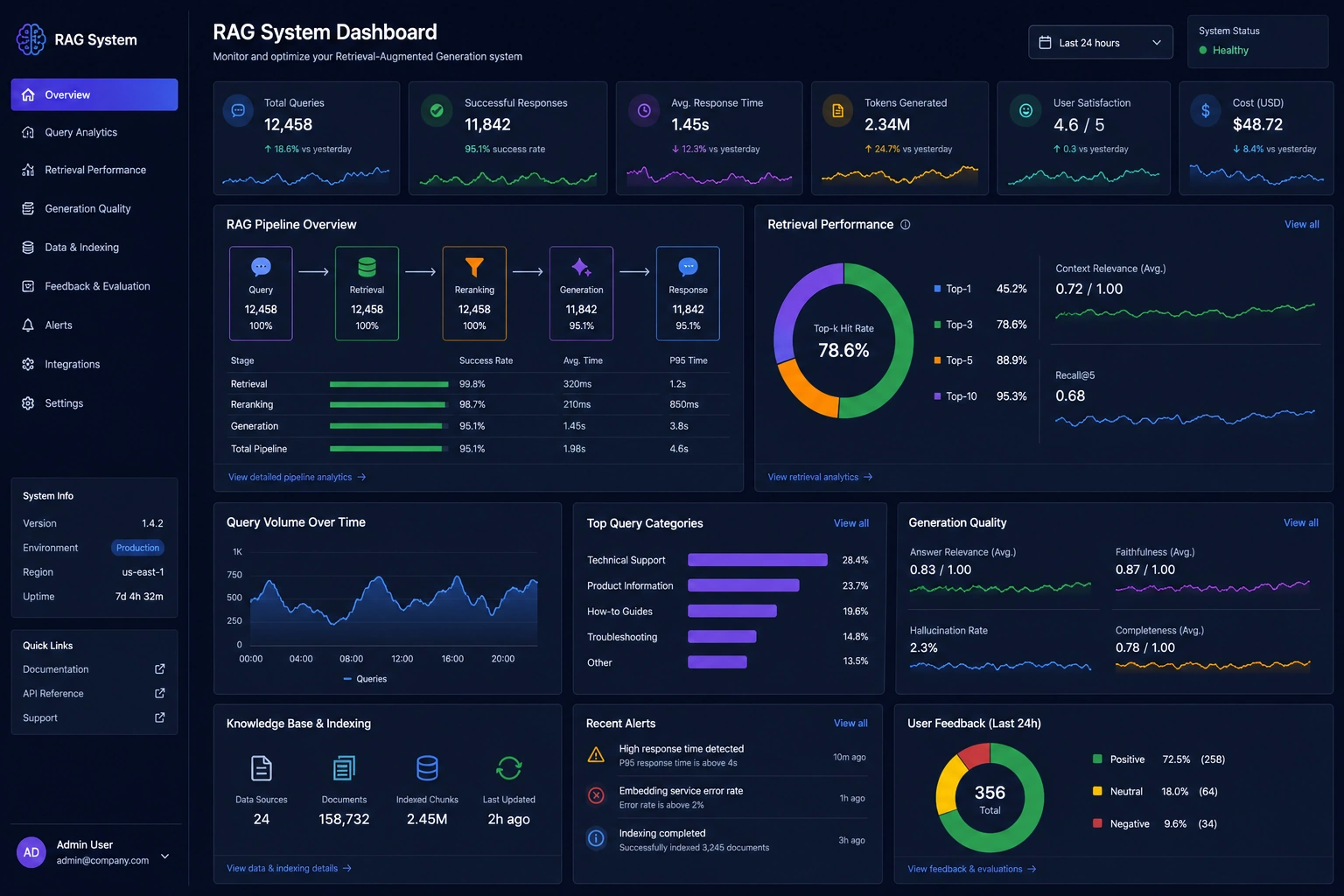
This dashboard evaluates retrieval-augmented generation pipelines from indexing to final answer quality. Teams can compare retrieval hit rates, grounding scores, and hallucination trends across use cases. Query diagnostics expose weak content coverage and ranking issues in the knowledge layer. Continuous monitoring keeps responses trustworthy as data and prompts evolve.
Student Dropout Data Visualization Dashboard
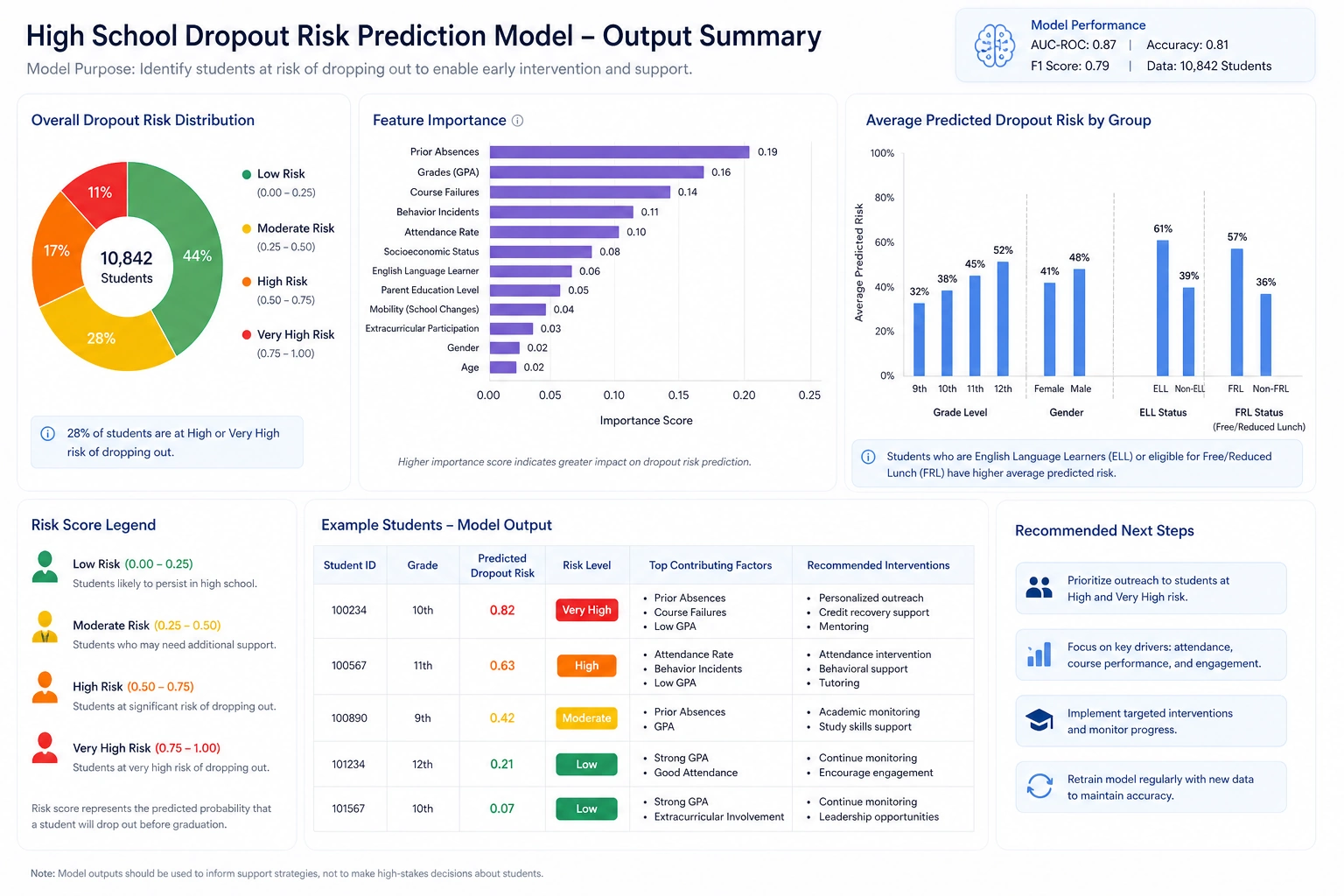
This dashboard highlights risk factors and retention trends across student populations. Administrators can identify where attendance, performance, or engagement patterns are shifting. Filters allow intervention teams to prioritize outreach by campus, grade level, or demographic group. The analysis supports earlier action that improves graduation outcomes.
Forensic Engineering Dashboard
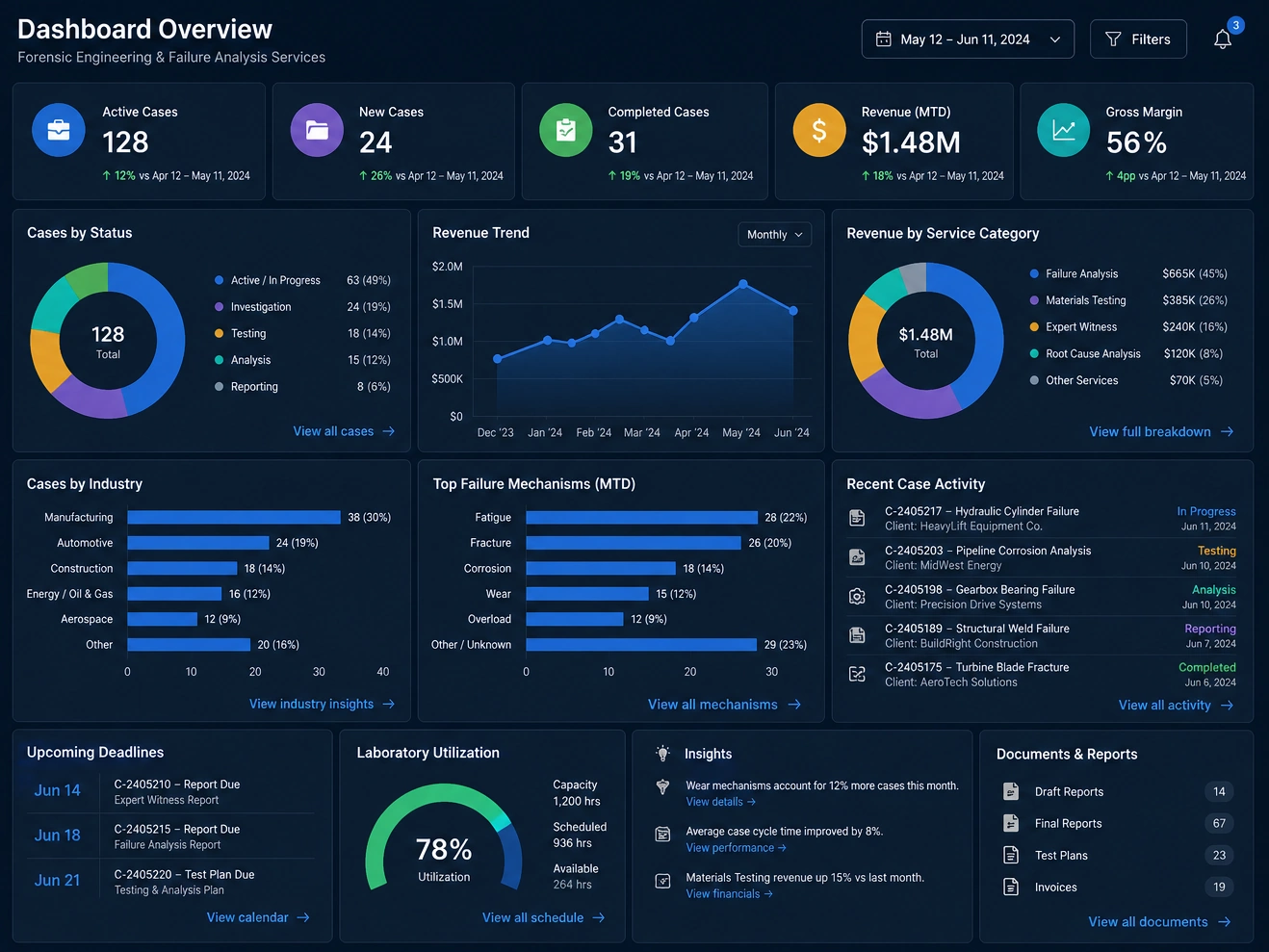
This dashboard consolidates case timelines, evidence status, and investigation milestones for forensic teams. Analysts can compare incident attributes and detect recurring failure patterns quickly. Workload views help leaders balance assignments and avoid report bottlenecks. The result is a clearer path from field findings to defensible conclusions.
Crop Pollination Dashboard
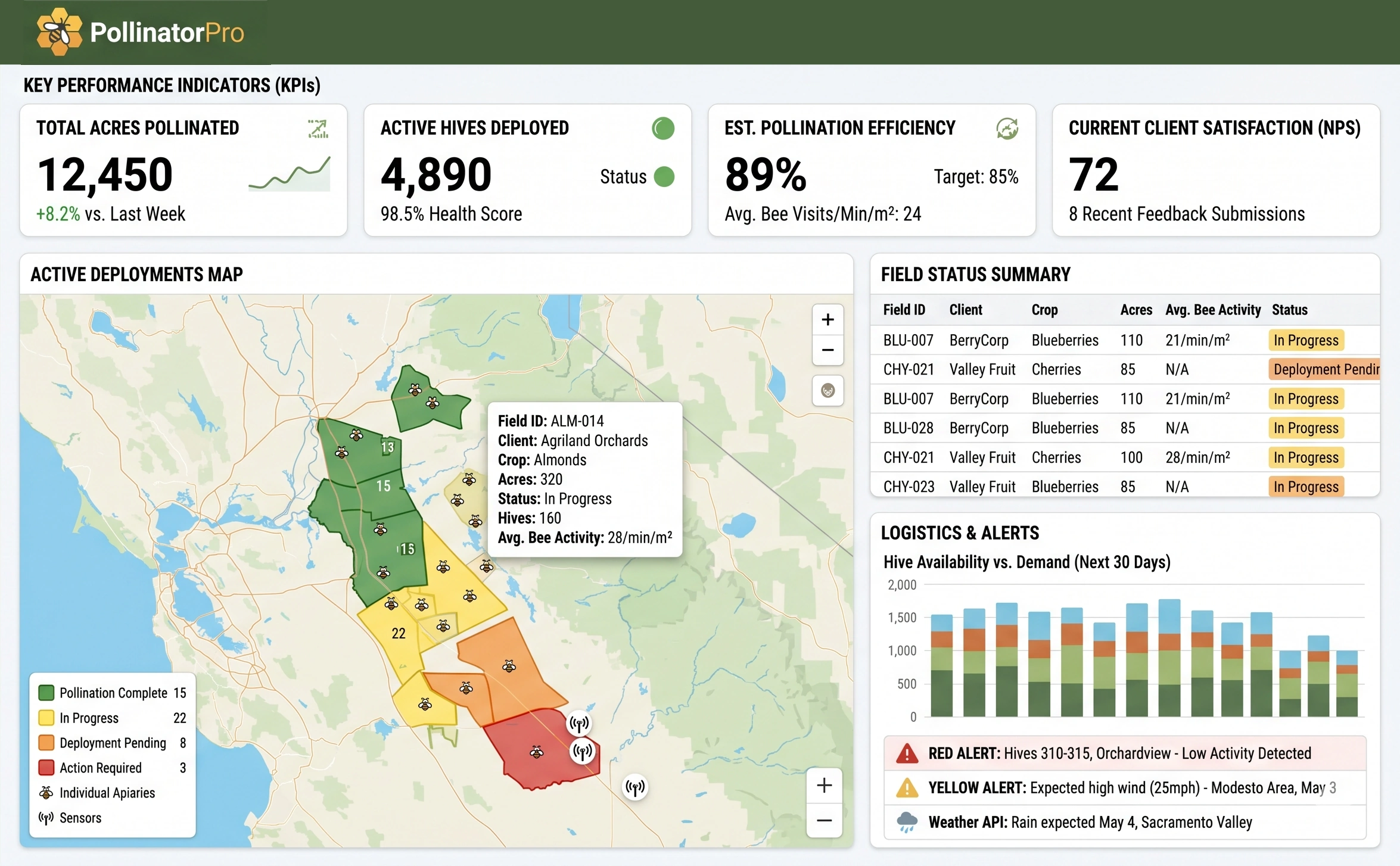
This dashboard tracks pollination activity, bloom windows, and expected yield contribution. Growers can align hive placement and field operations with weather and crop stage data. Comparative charts reveal which zones need intervention to improve pollination coverage. Better timing decisions lead to stronger fruit set and more consistent harvests.
Eco Packaging Dashboard
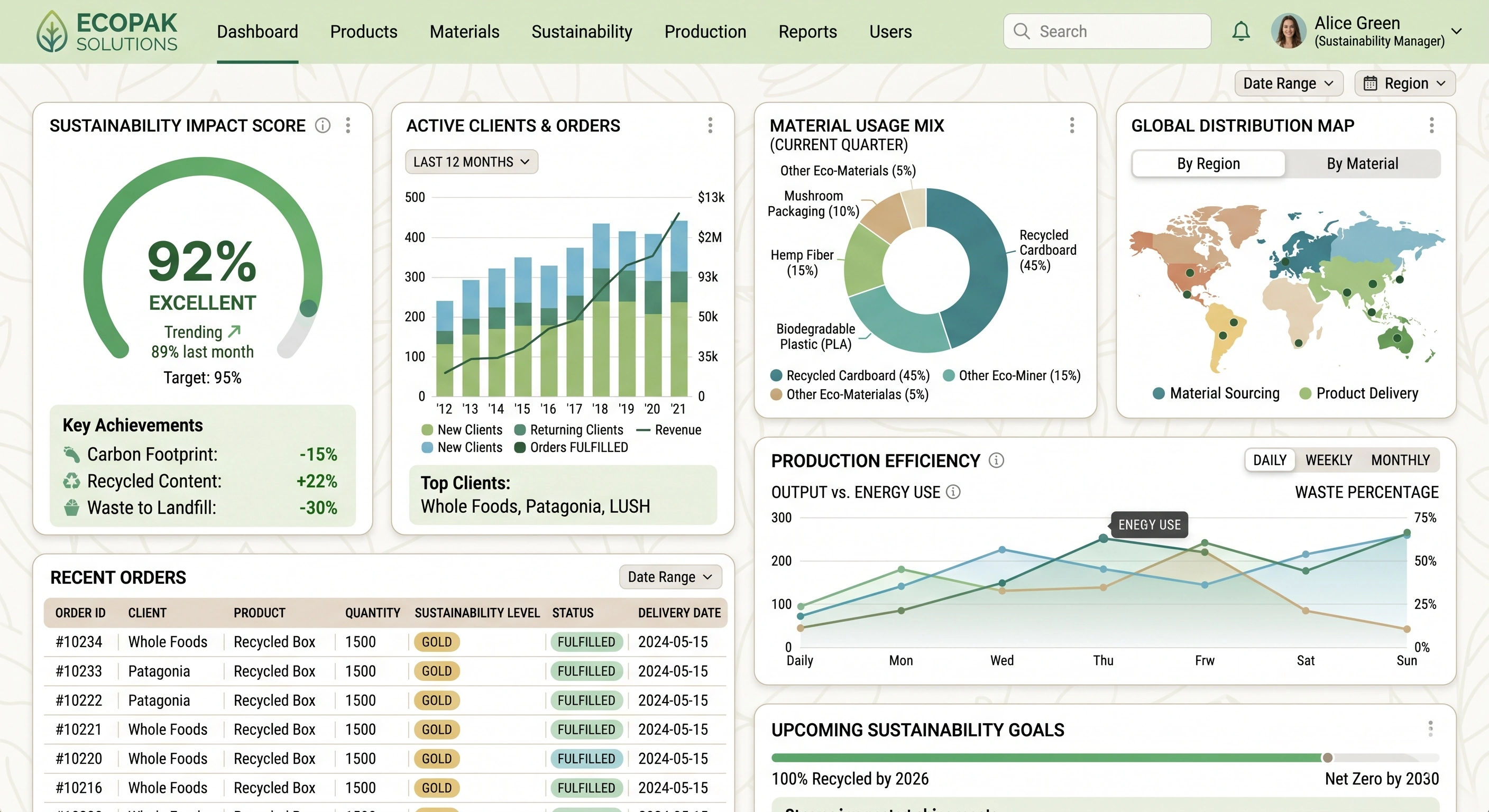
This dashboard measures packaging material mix, waste reduction, and sustainability targets. Teams can compare suppliers, unit costs, and carbon impact in one operational view. Scenario panels show how design changes affect shipping efficiency and recyclability. The dashboard supports practical progress toward greener packaging programs.
Flight Controller Dashboard
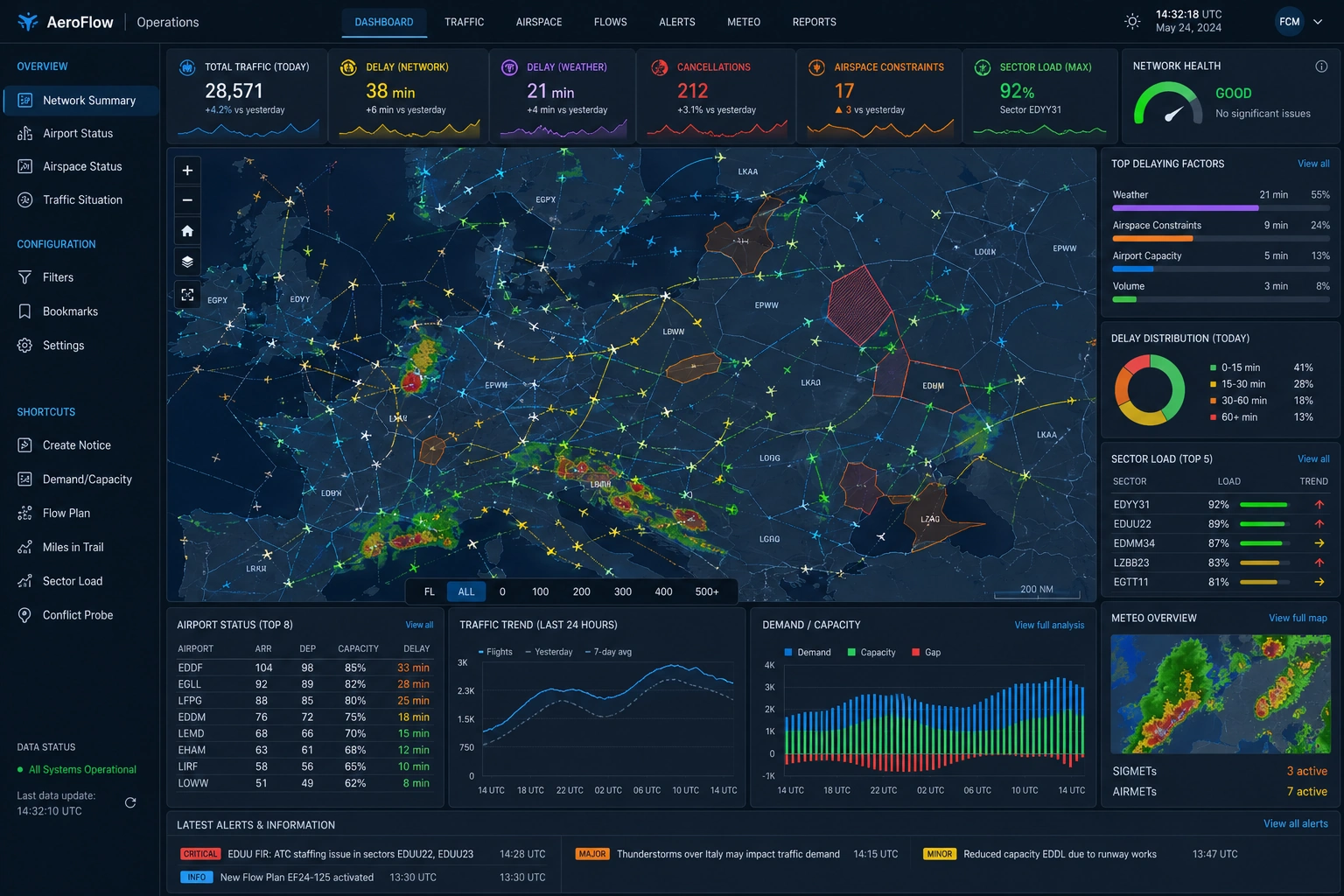
This dashboard gives controllers a high-level view of aircraft status, sector flow, and alerts. Real-time visuals help teams respond quickly to route conflicts and delay risks. Performance tiles summarize throughput, separation compliance, and communication workload. The interface improves situational awareness during fast-changing operations.
Flight Operations Dashboard
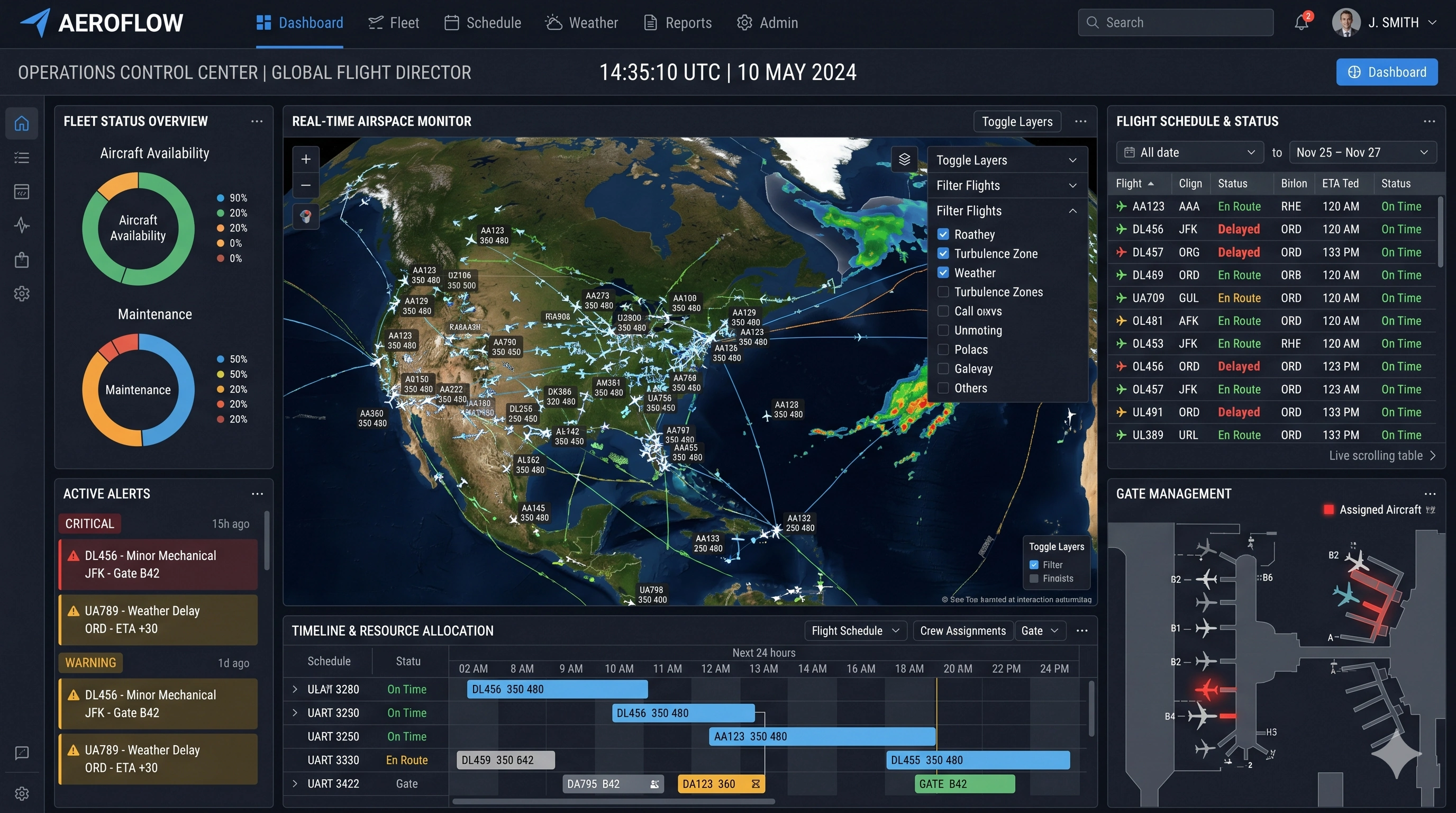
This dashboard tracks flight schedules, turnaround performance, and disruption impact across a network. Operations teams can coordinate gate use, crew readiness, and maintenance constraints in context. Delay analytics identify recurring causes by airport, route, and time period. The combined view supports faster decisions and more reliable service.
Geotechnical Engineering Dashboard
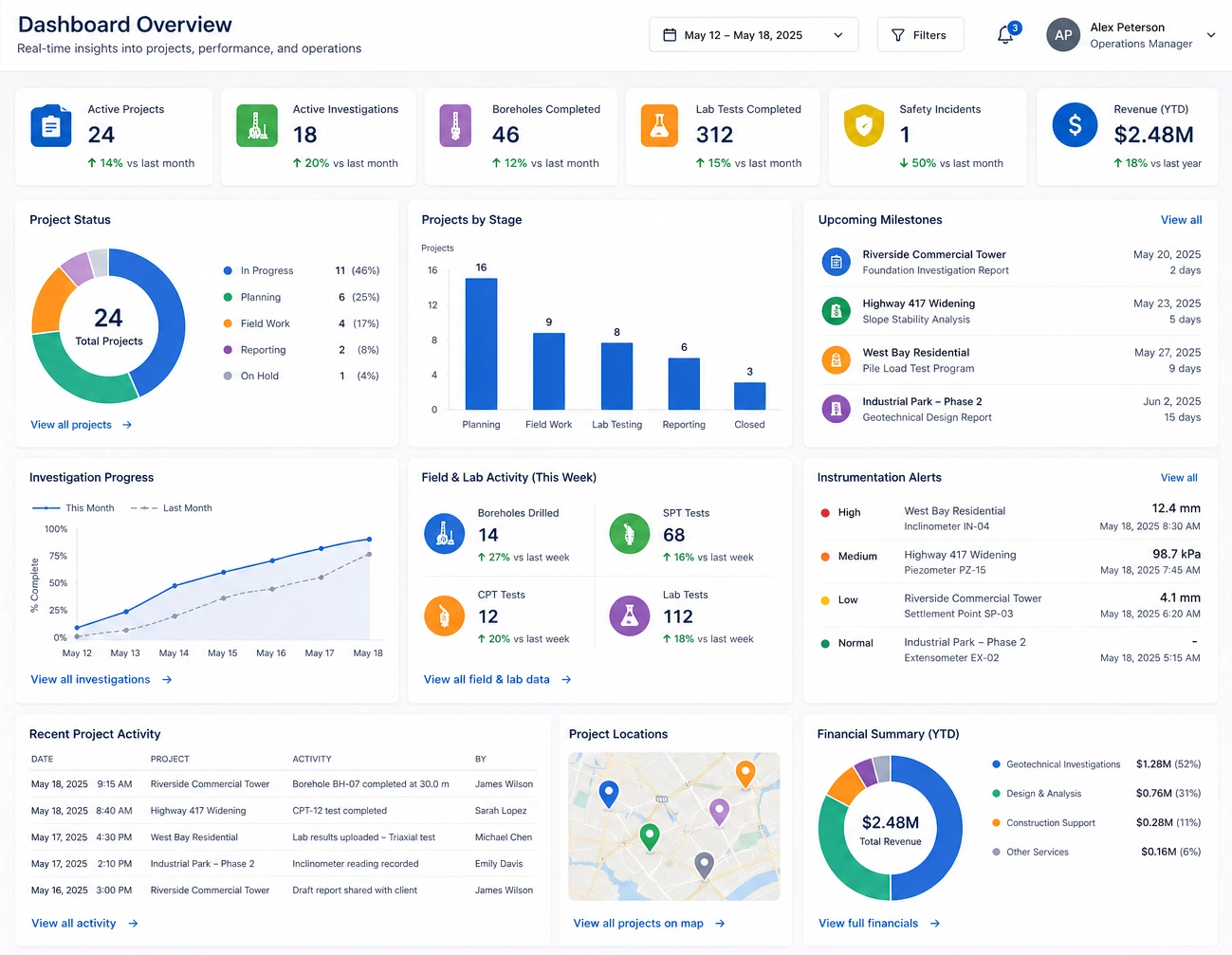
This dashboard brings together borehole data, soil behavior, and project risk indicators. Engineers can review settlement trends and test results alongside construction milestones. Mapping tools highlight zones where mitigation plans may need adjustment. The data story helps teams reduce uncertainty in complex ground conditions.
Industrial Odor Control Dashboard
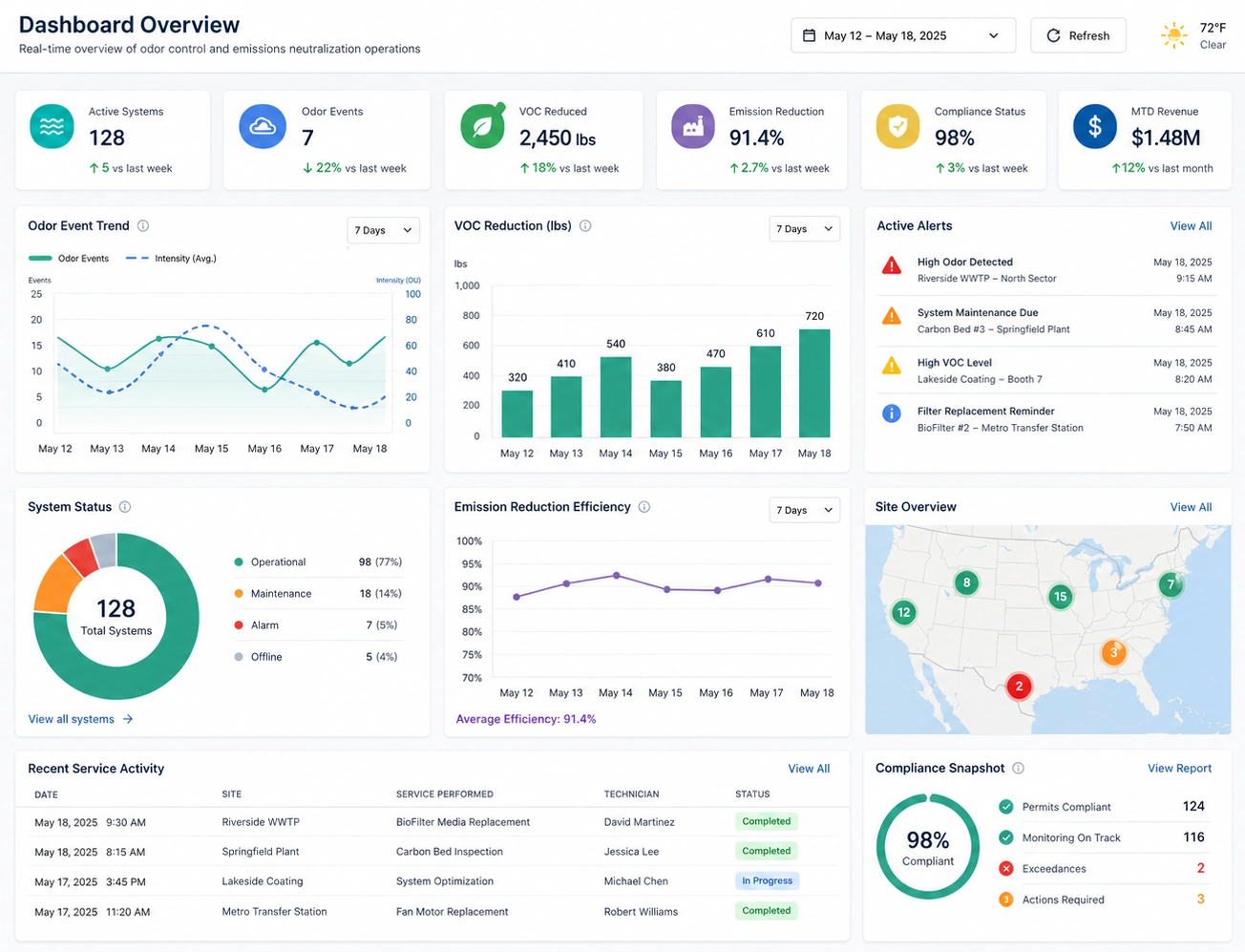
This dashboard monitors odor source intensity, treatment performance, and complaint response trends. Plant and environmental teams can correlate process events with sensor and weather signals. Threshold alerts show where mitigation action is needed before issues escalate. Consistent monitoring improves compliance and community confidence.
Tribology Service Dashboard
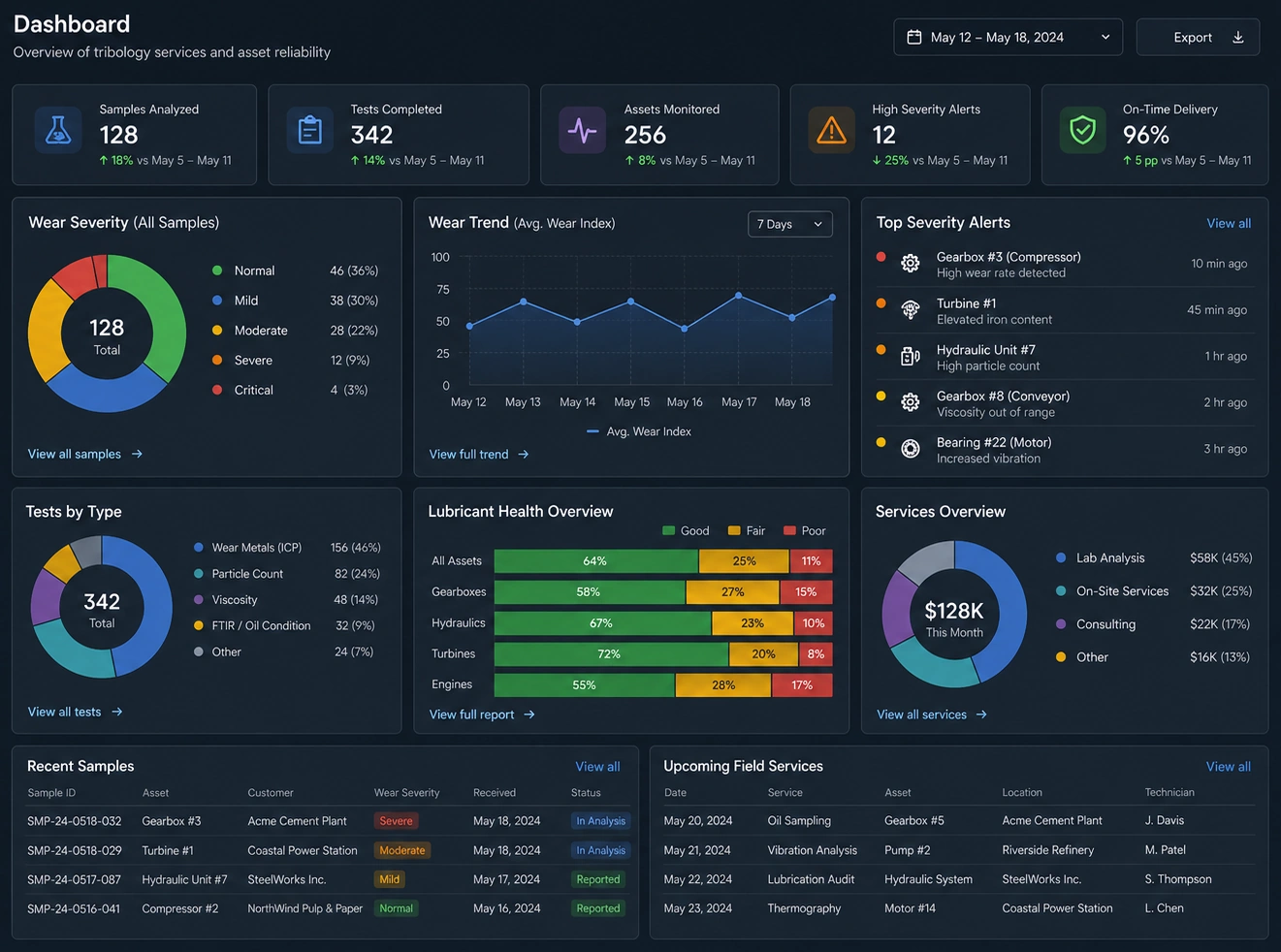
This dashboard tracks lubrication analysis, wear indicators, and service outcomes for rotating assets. Reliability teams can prioritize interventions based on condition trends and risk scoring. Service history views connect maintenance actions to downstream performance and uptime. The result is a proactive maintenance program with lower failure rates.