Data Integration in InetSoft: Unifying Disparate Sources for Trusted, Actionable Analytics
Modern analytics lives or dies on the quality and completeness of its data. Organizations rarely operate from a single, clean system of record; instead, they rely on a patchwork of operational databases, SaaS applications, spreadsheets, data warehouses, and legacy systems. InetSoft’s platform is built with this reality in mind. Its data integration functions are designed to connect, blend, transform, and govern data from diverse sources so that business users can work with a single, trusted view of information—without needing to become data engineers.
This article explores the core data integration capabilities InetSoft supports: connectivity to heterogeneous sources, semantic modeling, data mashing up, transformation and enrichment, security and governance, and how all of these come together to power dashboards, reports, and self-service analytics.

Connecting to Diverse Data Sources
The first step in any integration strategy is connectivity. InetSoft supports a wide range of data sources so that organizations can bring together information from across their technology stack. This includes traditional relational databases, cloud data warehouses, SaaS applications, files, and web services.
Relational databases such as SQL Server, Oracle, MySQL, PostgreSQL, and others can be connected directly using standard drivers. InetSoft can query these systems live or leverage caching strategies depending on performance and latency requirements. For organizations that have invested in cloud data platforms, InetSoft connects to warehouses like Snowflake, Amazon Redshift, Google BigQuery, and similar technologies, allowing analytics to run close to where the data already resides.
Beyond databases, InetSoft can integrate with SaaS applications and line-of-business systems through APIs and connectors. CRM, ERP, HR, marketing automation, and service management platforms often hold critical operational data that needs to be combined with internal systems. InetSoft’s data integration layer is designed to treat these external systems as first-class sources, not afterthoughts.
Flat files and spreadsheets remain a reality in many organizations. InetSoft supports importing CSV, Excel, and other file formats, enabling teams to incorporate ad hoc or departmental data into their analytics without complex ETL projects. This flexibility is especially valuable when working with partner data, one-off studies, or legacy exports.
Semantic Modeling and Data Abstraction
Raw connectivity is not enough; users need a way to work with data that reflects how the business actually thinks. InetSoft addresses this through semantic modeling and data abstraction. Instead of exposing every table and column directly to end users, data architects can define logical models that present clean, business-friendly entities and relationships.
These models can represent concepts such as customers, products, orders, incidents, assets, or regulatory entities, regardless of how many underlying tables or systems they span. Calculated fields, standardized metrics, and business rules can be defined once in the model and reused across dashboards and reports. This ensures consistency: when different teams look at “revenue,” “on-time delivery,” or “incident rate,” they are using the same definitions.
Semantic modeling also simplifies self-service analytics. Business users do not need to understand join conditions, surrogate keys, or normalization patterns. Instead, they work with a curated layer that reflects their domain language. InetSoft’s modeling tools allow data teams to manage complexity centrally while empowering users to explore data safely.
Data Mashing Up Across Systems
One of InetSoft’s strengths is its ability to mash up data from multiple sources into a unified view. In many organizations, no single system contains all the information needed to answer a question. For example, customer profitability might require mashing up CRM data, billing records, support tickets, and marketing interactions. InetSoft’s data integration functions make this kind of cross-system analysis practical.
Data mashing up can occur at different levels. In some cases, it involves joining records across systems using shared keys such as customer IDs or order numbers. In other cases, it may require more complex mappings, such as aligning different product hierarchies or time granularities. InetSoft provides tools to define these relationships and manage them within the semantic model.
Mashing up is not limited to structured databases. File-based data, API responses, and external feeds can be combined with internal systems to enrich analysis. For example, operational metrics can be mashed up with weather data, demographic information, or regulatory thresholds to provide context and improve decision-making.
Transformation, Cleansing, and Enrichment
Real-world data is messy. Values are missing, formats are inconsistent, and business rules evolve over time. InetSoft’s data integration layer includes transformation and cleansing capabilities that help organizations prepare data for analysis without requiring a separate ETL tool for every task.
Common transformations include filtering, aggregating, pivoting, and joining data. InetSoft allows these operations to be defined visually or through expressions, making it easier for data teams to implement complex logic. Data types can be standardized, date fields can be parsed and aligned, and codes can be mapped to descriptive labels.
Cleansing functions help address issues such as null values, outliers, and inconsistent categorizations. For example, multiple spellings of a customer name or product category can be normalized. Thresholds can be applied to flag or exclude anomalous values. These transformations can be applied at the model level so that all downstream dashboards and reports benefit from the same cleaned data.
Enrichment is another key capability. InetSoft supports the creation of calculated fields and derived metrics that combine existing data in meaningful ways. Ratios, growth rates, rolling averages, and composite scores can be defined once and reused across the platform. This allows organizations to embed their domain expertise directly into the data model.
Live Queries, Caching, and Performance Optimization
Data integration is closely tied to performance. InetSoft provides flexibility in how data is accessed to balance freshness and speed. In some scenarios, live queries against source systems are appropriate, especially when real-time or near real-time visibility is required. In other cases, caching or in-memory acceleration can be used to improve responsiveness for complex dashboards or large user populations.
InetSoft allows administrators to configure caching strategies at different levels, such as per dataset or per dashboard. Refresh schedules can be aligned with business needs, ensuring that users see up-to-date information without overloading source systems. Aggregations and pre-computed summaries can be used to accelerate common queries while still allowing drill-down to detailed records when needed.
These performance-oriented integration features are particularly important when mashing up data from multiple systems or working with high-volume sources such as sensor data, transaction logs, or detailed event streams. InetSoft’s approach ensures that data integration does not become a bottleneck for user experience.
Security, Governance, and Row-Level Control
Bringing data together is powerful, but it also raises questions about security and governance. InetSoft’s data integration functions are designed with these concerns in mind. Access control can be applied at multiple layers: source connections, models, datasets, and even individual rows.
Role-based security ensures that users only see the data they are authorized to view. Sensitive fields can be masked or hidden entirely. Row-level security rules can be defined so that users see only records relevant to their region, department, or customer portfolio. These rules are enforced consistently across dashboards, reports, and self-service exploration.
Governance also extends to versioning and change management. Data models and integration logic can be managed centrally, with clear ownership and documentation. When definitions change—such as how a KPI is calculated—those changes can be propagated in a controlled way, reducing the risk of conflicting metrics across the organization.

Self-Service Data Integration for Power Users
While centralized data teams play a critical role, InetSoft also recognizes the value of empowering power users to perform light data integration tasks on their own. Analysts and domain experts often need to bring in a new file, join it with an existing dataset, or create a specialized view for a project.
InetSoft’s interface allows these users to upload data, define joins, and create calculated fields within the boundaries set by governance policies. They can experiment and iterate quickly without waiting for formal ETL cycles. When a prototype proves valuable, data teams can formalize it into the broader model.
This balance between governed integration and self-service flexibility helps organizations move faster while maintaining control over critical definitions and security.
Powering Dashboards, Reports, and Embedded Analytics
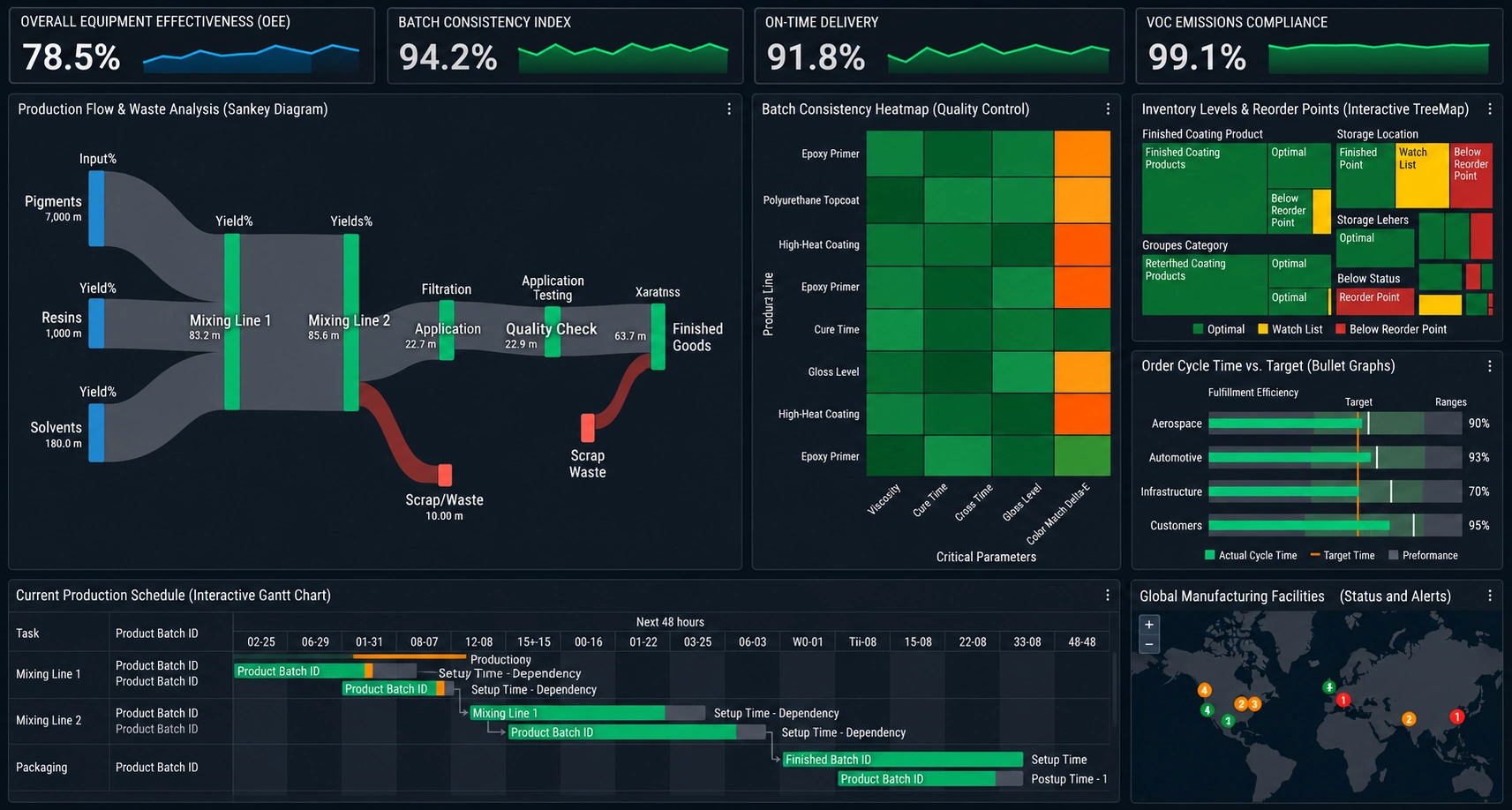
All of InetSoft’s data integration capabilities ultimately serve a purpose: enabling rich, reliable analytics experiences. Once data is connected, modeled, blended, and secured, it becomes the foundation for dashboards, pixel-perfect reports, ad hoc queries, and embedded analytics in other applications.
Because integration is handled at the platform level, the same trusted data can be reused across multiple use cases. Executives can view high-level KPI dashboards, operations teams can monitor detailed process metrics, and customers can access embedded analytics in portals—all drawing from a consistent, integrated data layer.
This reuse reduces duplication of effort and ensures that insights are aligned across the organization. When a new source is integrated or a metric is refined, the benefits flow to every analytic experience built on top of InetSoft.

Data Integration as a Strategic Capability
InetSoft’s data integration functions go far beyond simple connectivity. They provide a comprehensive framework for unifying disparate sources, modeling business concepts, mashing up and transforming data, enforcing security, and supporting both governed and self-service use cases. In a world where data is scattered across systems and formats, this integration layer is what turns raw information into a coherent, trusted foundation for decision-making.
By investing in robust data integration within the analytics platform itself, InetSoft enables organizations to spend less time wrestling with fragmentation and more time asking better questions, exploring patterns, and acting on insight. Whether the goal is operational monitoring, regulatory reporting, customer analytics, or strategic planning, the quality of the outcome depends on the quality of the integrated data beneath it—and that is where InetSoft’s capabilities truly matter.