Easy Analytic Dashboard Software from InetSoft
InetSoft's dashboard analytic software is easy-to-use and customizable. InetSoft is top-rated by users on G2 Crowd. Interact with examples and register for a personalized demo.
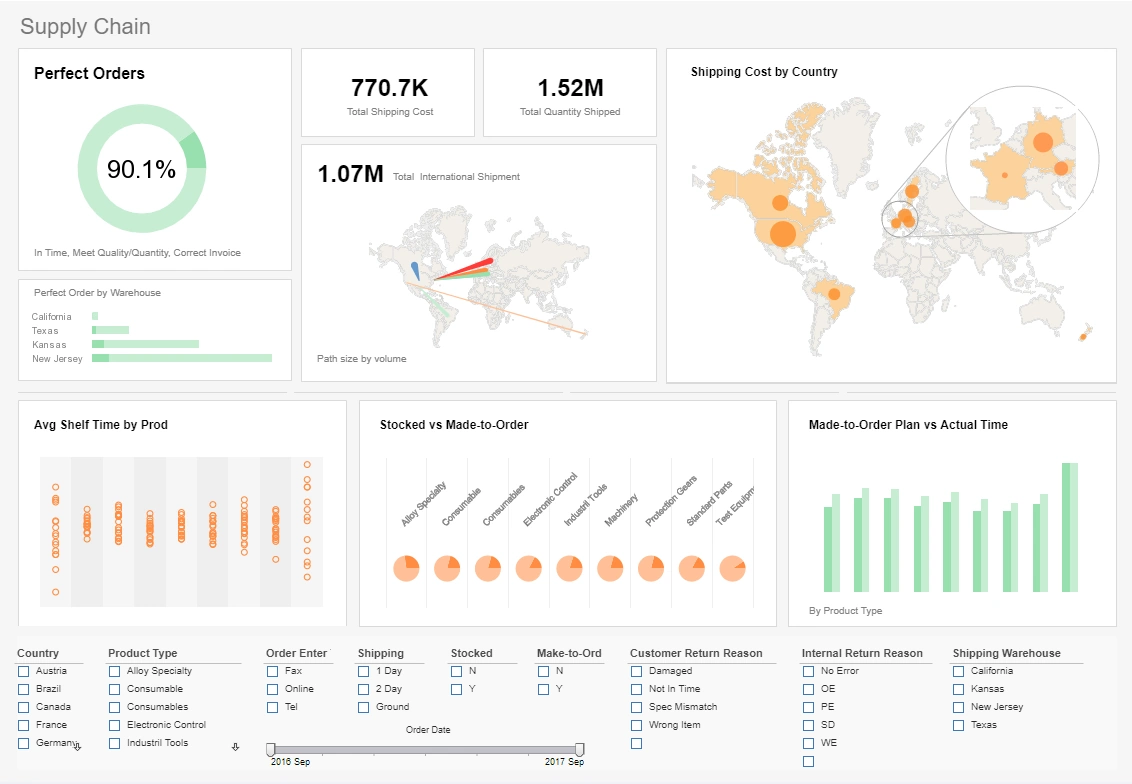
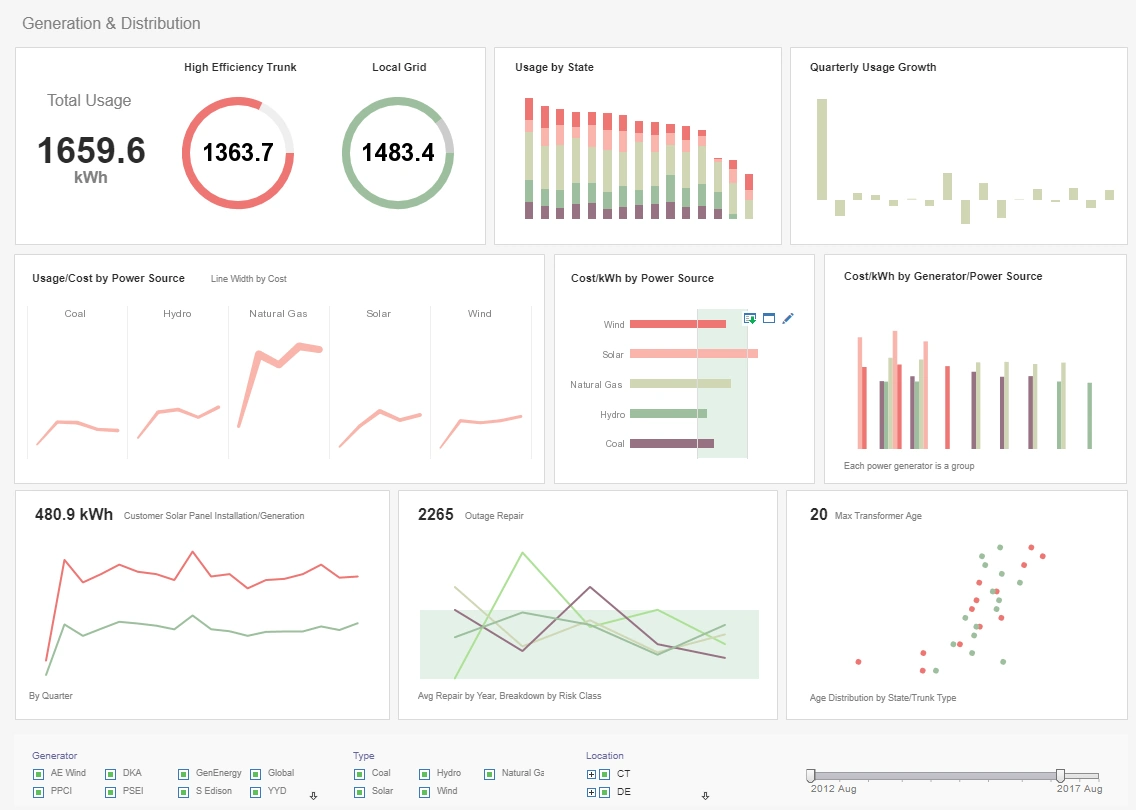
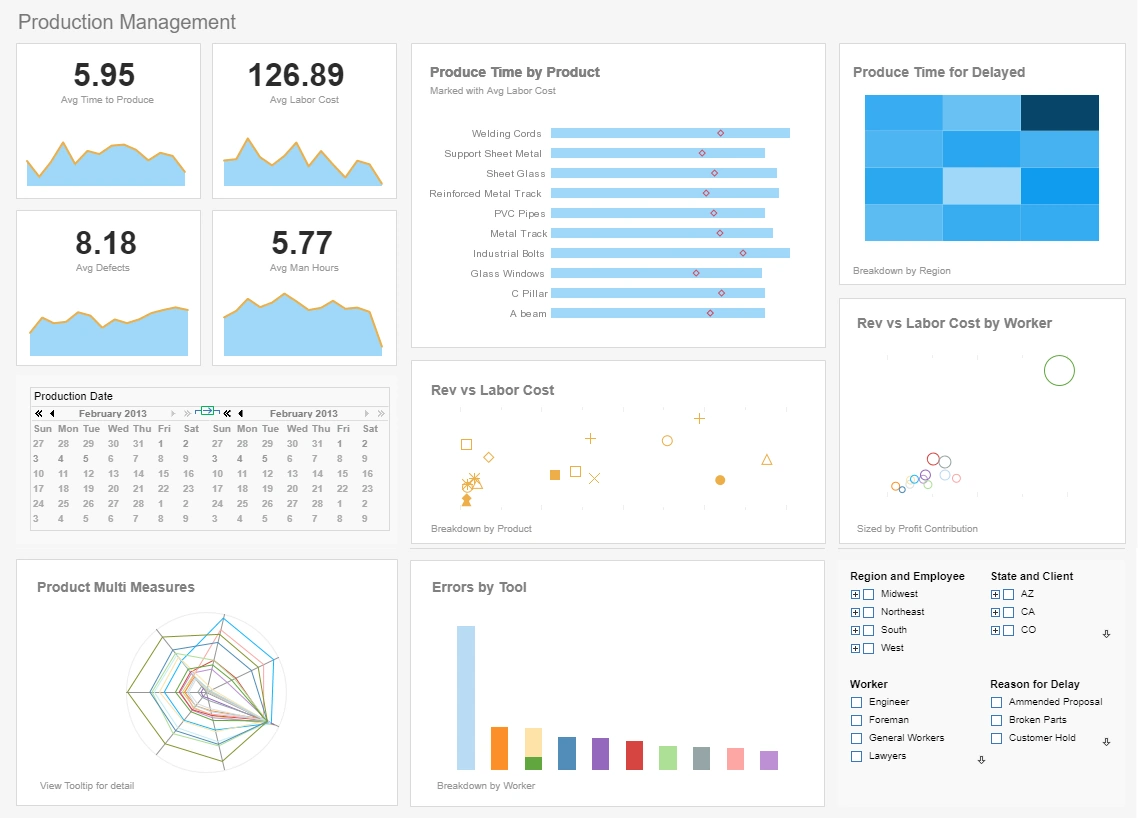
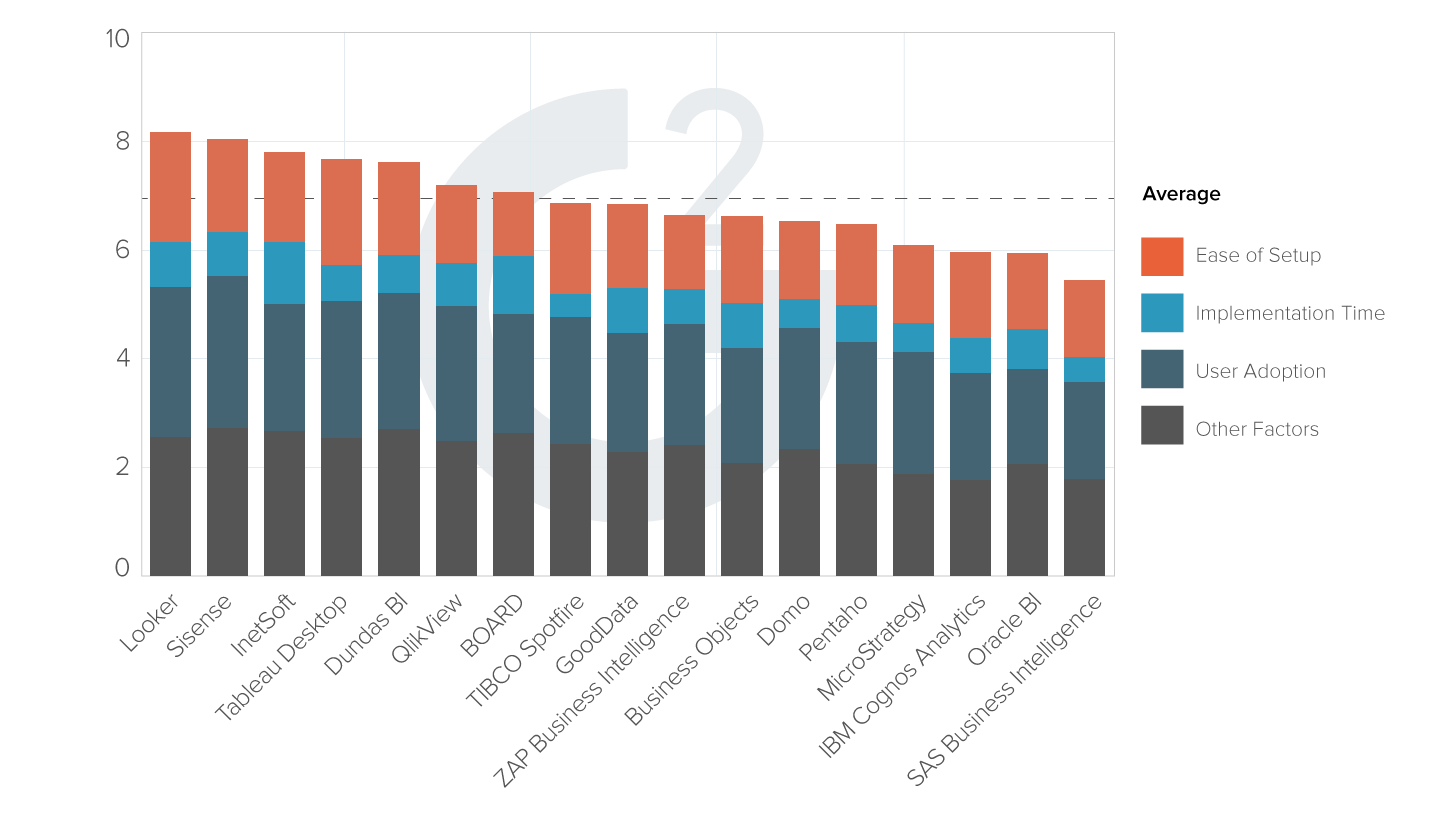
Register for more info and free software

Is Analytics the Same as Dashboarding?
No, they are not the same although there is overlap. Analytics means using data visualization or statistical analysis to find trends, correlations, potential causality, and outliers. Dashboarding means visually monitoring performance whether using KPIs or time-series charts.
The overlap comes from the fact that most BI software can support both, allowing users to interact with a data visualization driven web-based view of analyses and performance monitoring. In fact, the term analytical dashboard is used to describe a dashboard that is both analytical and monitoring. The advantage of these is that they are self-service tools for non-technical or non data scientist type users to find out what is causing under or overperformace in daily, weekly, or monthly performance tracking.
Is Google Analytics a Dashboard?
Yes, you can create a dashboard to track the performance of your website, easily seeing whether traffic is increasing or decreasing vs last week, last month, or last year. You can drill into the details to answer the same questions for organic vs direct vs referral traffic.
Do Data Analysts Create Dashboards?
Yes, this one of the jobs a data analyst can do, whether they will be the end-users of these dashboards or whether they develop them for c-level executives or departmental managers. If you are considering a job as a data analyst, you should build up experience creating dashboards and have something to show potential employers.
Is Google Analytics Free?
Yes, you do not have to pay Google or anyone to use it. You do need to pay for a website that lets you add Google tracking code to it, and you may need to pay a website developer to do it correctly. But once set up the only cost is your time when you want to use in your daily routine of looking at your website's performance.
How Do I Create a Dashboard in Excel?
You cannot create a dashboard in Excel because Excel cannot automatically update charts with new data. That data needs to be stored in a database and dashboard software connects to it in order to show up to date or up to the minute data. You could manually copy and paste or import data into a spreadsheet, and then manually adjust the date ranges in your Excel chart to have kind of dashboard, but this is error-prone and time-consuming.
What Makes a Dashboard Tool Easy to Use?
A dashboard tool is considered easy to use when it allows users to build visualizations without technical skills. This usually includes drag-and-drop design, prebuilt charts, simple data connectors, and templates that speed up layout creation. The software should automate complex tasks like data formatting and blending so users can focus on interpreting insights rather than managing technical details.
Can Non-Technical Users Connect to Data Sources on Their Own?
Yes, many modern dashboard tools are designed so non-technical users can connect spreadsheets, cloud apps, and databases without IT assistance. These platforms provide guided connection steps, secure connectors, and governed data models that prevent mistakes. This allows business users to explore data safely while maintaining consistency across the organization.
How Customizable Are the Dashboards?
Most easy-to-use dashboard tools offer a high degree of customization. Users can adjust layouts, apply branding, choose color themes, add filters, and create drill-down paths. Some platforms also allow dashboards to be embedded into other applications or portals. This flexibility helps organizations tailor dashboards to different roles, departments, and performance metrics.

Does the Software Support Real-Time or Near-Real-Time Data?
Many dashboard platforms support scheduled refreshes, live data connections, or real-time streaming, depending on the data source. This is especially useful for operations, logistics, finance, and customer service teams that rely on up-to-date information. Real-time support ensures that dashboards reflect current conditions rather than outdated snapshots.
What Collaboration Features Are Included?
Easy analytic dashboard tools typically include multiple sharing options such as links, embedded views, scheduled email reports, and role-based access controls. Some platforms also support comments, annotations, and shared editing. These features help teams discuss insights, align decisions, and maintain a consistent view of performance across the organization.