Looking for An Effective Mobile App for BI?
Dashboards created with InetSoft's BI solution are accessible on virtually all mobile devices, including iPhones, Androids, tablets, and laptops.
Today, more business users are accessing important information with their own mobile devices. With InetSoft's solution, you won't need to invest in additional resources to make your BI mobile friendly - it already is.
While dashboards can be designed with mobile viewing in mind, any InetSoft dashboard can be viewed and interacted with on any standard mobile device.
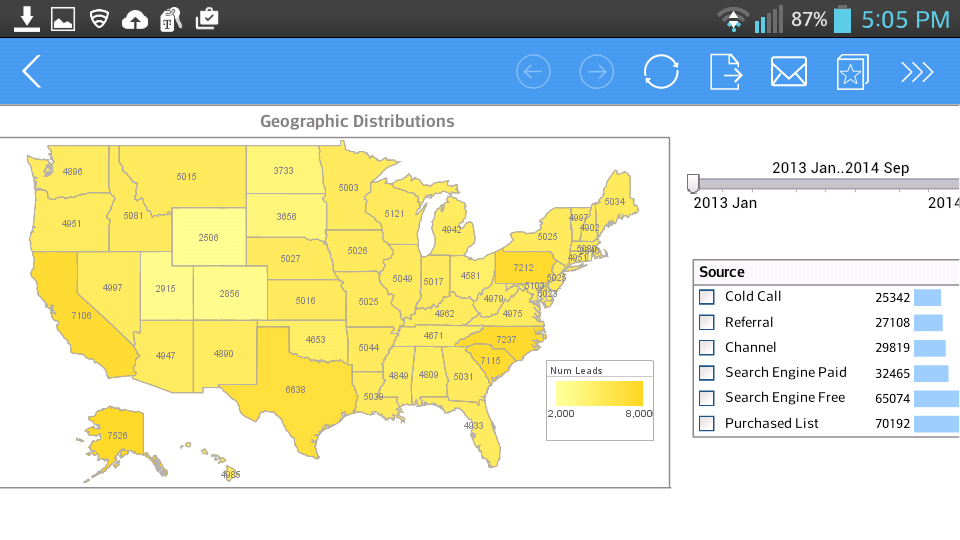

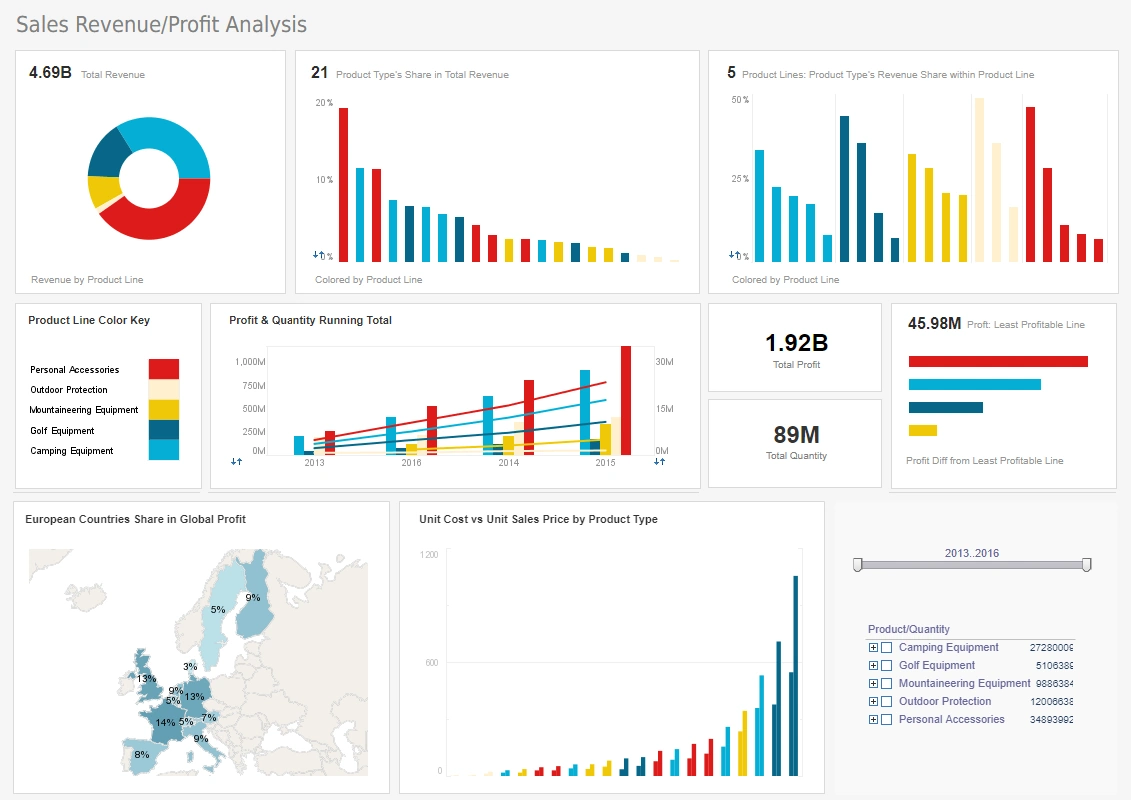
InetSoft's Mobile BI Strategy Covers All Devices
With HTML5 as the rendering code, interactive dashboards and visual analyses run on all devices, from phones to desktops, Windows or Apple with all the functionality a user could want.
Without requiring any apps to download, the solution is 100% server-based and 100% cloud-friendly. That ensures the lowest total cost of ownership and least maintenance work. In fact, most clients find they do not need to dedicate a full-time staffer or hire a BI expert to support the InetSoft platform. Add to that an allotment of free mentoring hours for all customers on maintenance, and the value compared to bigger name competitors is evident.
About InetSoft
Since 1996 InetSoft has been delivering easy, agile, and robust business intelligence software that makes it possible for organizations and solution providers of all sizes to deploy or embed full-featured business intelligence solutions. Application highlights include visually-compelling and interactive dashboards that ensure greater end-user adoption plus pixel-perfect report generation, scheduling, and bursting.
InetSoft's patent-pending Data Block™ technology enables productive reuse of queries and a unique capability for end-user defined data mashup. This capability combined with efficient information access enabled by InetSoft's visual analysis technologies allows maximum self-service that benefits the average business user, the IT administrator, and the developer. InetSoft solutions have been deployed at over 5,000 organizations worldwide, spanning all types of industries, including 25% of Fortune 500 companies.

New Stories of Companies Selecting or Switching to InetSoft and StyleBI
Case Study: Aquaculture Equipment Manufacturer Switches from Caspio to Style BI Open Source
The manufacturer switched because low-code dashboard limits made advanced KPI visuals and cross-source analysis difficult to scale. It needed to combine IoT telemetry, CRM, ERP, and service data without brittle exports and manual reconciliation. StyleBI provided extensible charting, stronger governance controls, and predictable cost as dashboard usage grew. The migration also introduced reusable data models and version-controlled dashboard delivery pipelines. Benefits included faster build cycles, better KPI consistency, and more secure partner-facing analytics delivery.
Fabrionics Alloy Works and Its Switch from AWS QuickSight to StyleBI
Fabrionics moved because QuickSight was adequate for basic views but weak for deep, cross-domain manufacturing analytics. The company needed to connect production telemetry, ERP, quality, and procurement data into interactive operational dashboards. StyleBI enabled faster self-service exploration for engineers and managers without heavy dependency on technical report development. It also improved responsiveness for real-time monitoring and variance detection on critical shop-floor conditions. The result was reduced waste, better defect control, and stronger collaboration around shared operational metrics.
Modernizing Analytics for a Medicinal Leech Farm: Migrating Dashboards from Monday CRM to InetSoft
The organization switched because CRM-native dashboards could not satisfy regulatory traceability and multi-system operational reporting requirements. It needed auditable, role-secured analytics that merged CRM, lab, logistics, and ERP data with low latency. InetSoft delivered a dedicated BI layer that reduced coupling risk and improved reporting flexibility for compliance and customer communication. The phased migration preserved continuity through parity dashboards before rolling out more advanced KPI and anomaly-monitoring views. Benefits included faster report turnaround, lower spoilage risk, stronger audit readiness, and improved partner transparency.
Lapis Lazuli Extractor: Switching from Alteryx to InetSoft for a Worldwide BI Application
The extractor switched to improve global dashboard distribution, embedding, and usability for geographically dispersed teams. It needed lower marginal reporting cost and better web-native delivery for bandwidth-constrained mining and logistics environments. InetSoft offered strong embedding options and interactive KPI delivery while preserving hybrid data architectures. The company also gained a cleaner separation between advanced analytics workflows and enterprise-facing BI consumption. Benefits included better concurrency performance, faster operational decision cycles, and more consistent insight access from pit to port.
How an Industrial Textile Recycler Switched from Wrike to StyleBI for Project Reporting
The recycler switched because project-task reporting alone was no longer enough for complex, compliance-heavy recycling operations. It needed multi-dimensional analysis linking milestones, supply chains, financial performance, and environmental constraints. StyleBI provided richer mashup and interactive analytics so teams could move from static status tracking to strategic performance monitoring. The migration improved visibility into profitability and bottlenecks while reducing manual data assembly from disconnected systems. Benefits included faster forecasting, stronger client reporting transparency, and better cross-functional decision quality.
How a Glassworks Switched from Jaspersoft to InetSoft for Reporting
The glass manufacturer switched because static report workflows could not keep pace with live process control and quality requirements. It needed easier integration of IoT and operational streams and less dependency on specialist report coding. InetSoft enabled interactive dashboards and self-service reporting that plant teams could use directly for ongoing adjustments. The implementation improved defect analysis, energy tracking, and supply chain visibility through faster, contextual insight. Benefits included lower defect rates, reduced energy waste, better delivery performance, and stronger data culture adoption.
Deutsche MechAntrieb GmbH Switches from SAP to InetSoft for Reporting
Deutsche MechAntrieb switched because native SAP reporting could not deliver agile, cross-source analytics at operational speed. It needed mashups between ERP data, shop-floor telemetry, quality systems, and warranty outcomes without prolonged development backlogs. InetSoft provided a more flexible reporting layer and improved self-service for production and quality teams. The phased rollout validated parity first, then added deeper diagnostic and performance views to accelerate trust. Benefits included better downtime prevention, reduced scrap and warranty pressure, and lower reporting maintenance overhead.
ElectroLumina Inc. Switches from Crystal Reports to InetSoft for Data Warehouse Reporting
ElectroLumina switched because static Crystal Reports workflows were too slow for expanding, multi-source warehouse reporting needs. It needed real-time exploration and easier integration of ERP, quality systems, and sensor feeds across production operations. InetSoft provided self-service dashboarding and data mashup capabilities that reduced manual report engineering dependency. The transition improved alerting, operational response, and automated report distribution for key stakeholders. Benefits included faster insight delivery, stronger throughput control, and reduced lag between data capture and action.

Why Switch from Panorama Necto to InetSoft for Enterprise BI Agility
Organizations switch because they need broader data integration options spanning legacy, cloud, and large-scale mixed data environments. InetSoft provides greater customization and embedding flexibility for OEM and tailored analytics deployments. It also delivers stronger performance patterns for high-concurrency and multi-tenant reporting demands. Teams gain deeper advanced analytics and predictive capabilities in the same BI environment. Benefits include improved deployment flexibility, higher user satisfaction, and better alignment between self-service and developer-driven BI needs.
Why Switch from Izenda to StyleBI for Flexibility and Scale
Teams switch because they need deployment options that support cloud, hybrid, and controlled on-prem environments without sacrificing agility. StyleBI combines transformation and visualization workflows more tightly, reducing handoff friction between data prep and dashboard delivery. The open-source foundation increases transparency, extensibility, and long-term control over analytics architecture. It also strengthens real-time and interactive analysis experiences compared to more constrained embedded-only approaches. Benefits include better scalability, stronger self-service capability, and improved total value for evolving BI programs.
Why Switch to StyleBI from Dundas BI for Faster Time to Value
Organizations switch because they need more flexible data blending and lighter deployment for rapidly changing analytic requirements. StyleBI supports self-service development patterns that reduce IT backlog and accelerate business-user adoption. The platform’s integrated dashboards and reporting model simplifies delivery of both operational and executive views. It also provides strong governance and embedding capabilities for secure, branded, multi-context analytics use cases. Benefits include faster implementation cycles, broader analytics access, and quicker realization of measurable BI ROI.
Law School Selects InetSoft for Management Dashboarding and Faster Insight
The law school selected InetSoft because manual spreadsheet-heavy reporting could not keep pace with leadership information needs. It needed unified access across cloud and on-prem data with minimal friction for non-technical stakeholders. InetSoft’s web-based dashboarding and self-service features reduced dependency on IT for routine analytic questions. The platform improved visibility across operational and academic performance indicators in a more timely, governed manner. Benefits included faster reporting cycles, higher transparency, and better resource use by technical teams.