Analytical HR Dashboard
An analytical HR dashboard provides human resources leaders, department managers, and executives with a comprehensive view of workforce health.
Unlike basic HR reporting dashboards that simply display employee counts, analytical HR dashboards combine hiring, retention, turnover, vacancy, retirement, compensation, and workforce planning metrics to help organizations understand why workforce changes occur and what actions should be taken.
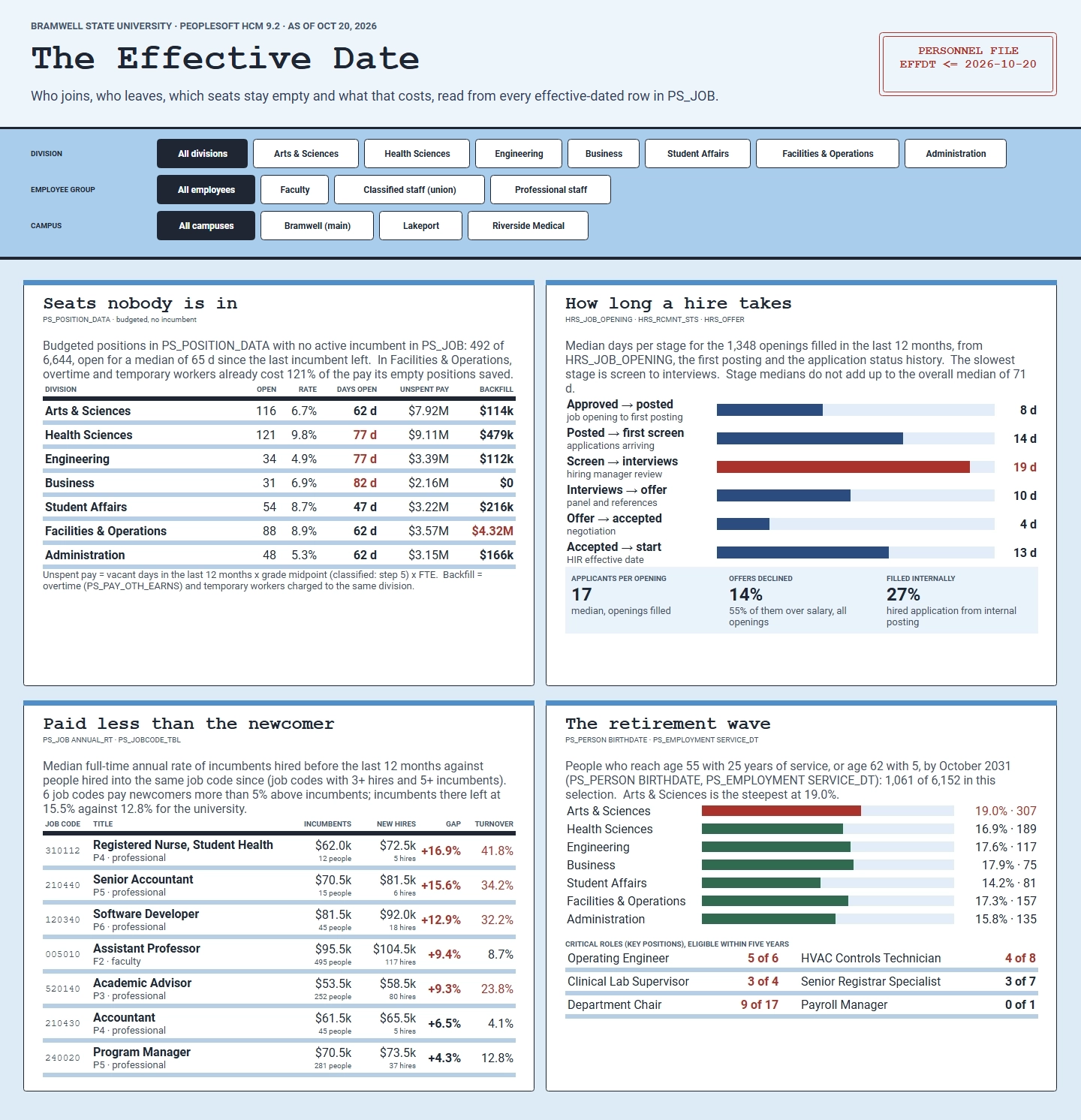
The dashboard shown in this example presents a complete employment lifecycle view, allowing decision-makers to monitor who joins the organization, who leaves, which positions remain vacant, how long hiring takes, and where future staffing risks may exist.

What Is an Analytical HR Dashboard?
An analytical HR dashboard is a business intelligence application that consolidates human capital data from HRIS, payroll, recruiting, personnel, and workforce planning systems. The dashboard transforms operational HR data into actionable insights through KPIs, visualizations, comparisons, trends, and predictive indicators.
Instead of focusing solely on historical reporting, analytical HR dashboards help organizations identify workforce risks, improve employee retention, optimize recruiting efforts, and support long-term strategic planning.
Executive Workforce Summary
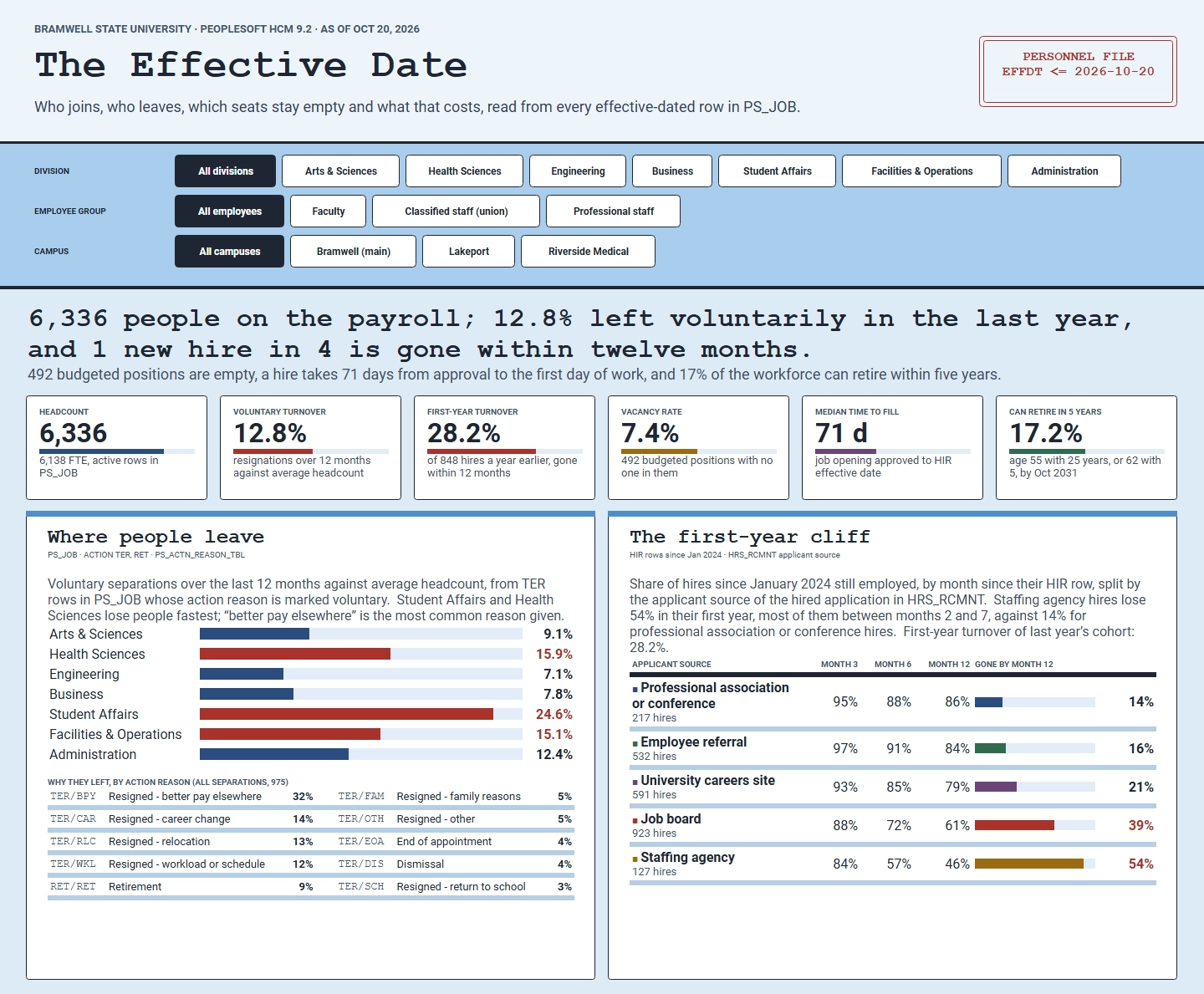
The top section of the dashboard provides a high-level summary of the workforce. These metrics immediately communicate the organization's staffing health and workforce stability.
- Total employees on payroll
- Voluntary turnover rate
- First-year employee turnover
- Vacancy rate
- Median time-to-fill positions
- Employees eligible for retirement
Executives can quickly determine whether workforce growth, turnover, recruitment performance, or retirement exposure requires immediate attention.
Employee Turnover Analysis
One of the most valuable components of an HR analytics dashboard is employee turnover analysis. The dashboard compares separation rates across business units and identifies the reasons employees leave.
HR teams can evaluate:
- Voluntary resignations
- Retirements
- Career advancement departures
- Compensation-related turnover
- Work-life balance concerns
- Department-specific retention problems
By identifying which divisions experience the highest turnover rates, HR leadership can target retention initiatives more effectively.
First-Year Employee Retention
The dashboard includes a first-year retention analysis showing how many employees remain with the organization after their initial year of employment.
This visualization allows HR departments to assess recruiting effectiveness and onboarding quality by examining retention according to hiring source, including:
- Professional associations
- Employee referrals
- University career centers
- Job boards
- Recruitment agencies
Understanding which recruitment channels produce long-term employees helps organizations improve hiring ROI and reduce recruiting costs.
Vacancy and Position Management
The dashboard highlights budgeted positions that remain unfilled. Vacancy analytics help workforce planners understand staffing shortages, departmental capacity issues, and budget implications.
Managers can monitor:
- Open positions by department
- Vacancy percentages
- Days positions remain open
- Payroll impact of vacancies
- Unspent labor budgets
This information helps organizations balance service demands while controlling labor costs.
Recruitment Performance Metrics
The hiring analytics section tracks the recruiting pipeline and measures how efficiently vacant positions become filled.
Key metrics often include:
- Median time-to-fill
- Time spent in each recruitment stage
- Applications received
- Offer acceptance rates
- Internal hiring percentages
- Offer decline percentages
These KPIs enable recruiting teams to identify bottlenecks and improve hiring speed.
Compensation Analytics
The compensation section compares newly hired employees against existing employees performing similar roles. HR leaders can identify situations where market salary pressures result in new employees being paid more than longer-tenured staff.
This analysis supports:
- Pay equity reviews
- Compensation planning
- Market competitiveness assessments
- Retention risk identification
- Merit increase planning
Retirement Risk Analysis
Workforce aging presents a significant challenge for many organizations. The dashboard identifies employees approaching retirement eligibility and evaluates workforce exposure across departments and job categories.
HR planners can determine:
- Retirement-eligible employee counts
- Departments with elevated retirement risk
- Critical positions facing succession challenges
- Future workforce shortages
- Knowledge transfer requirements
This information supports succession planning and workforce continuity initiatives.

Absence and Retention Correlation
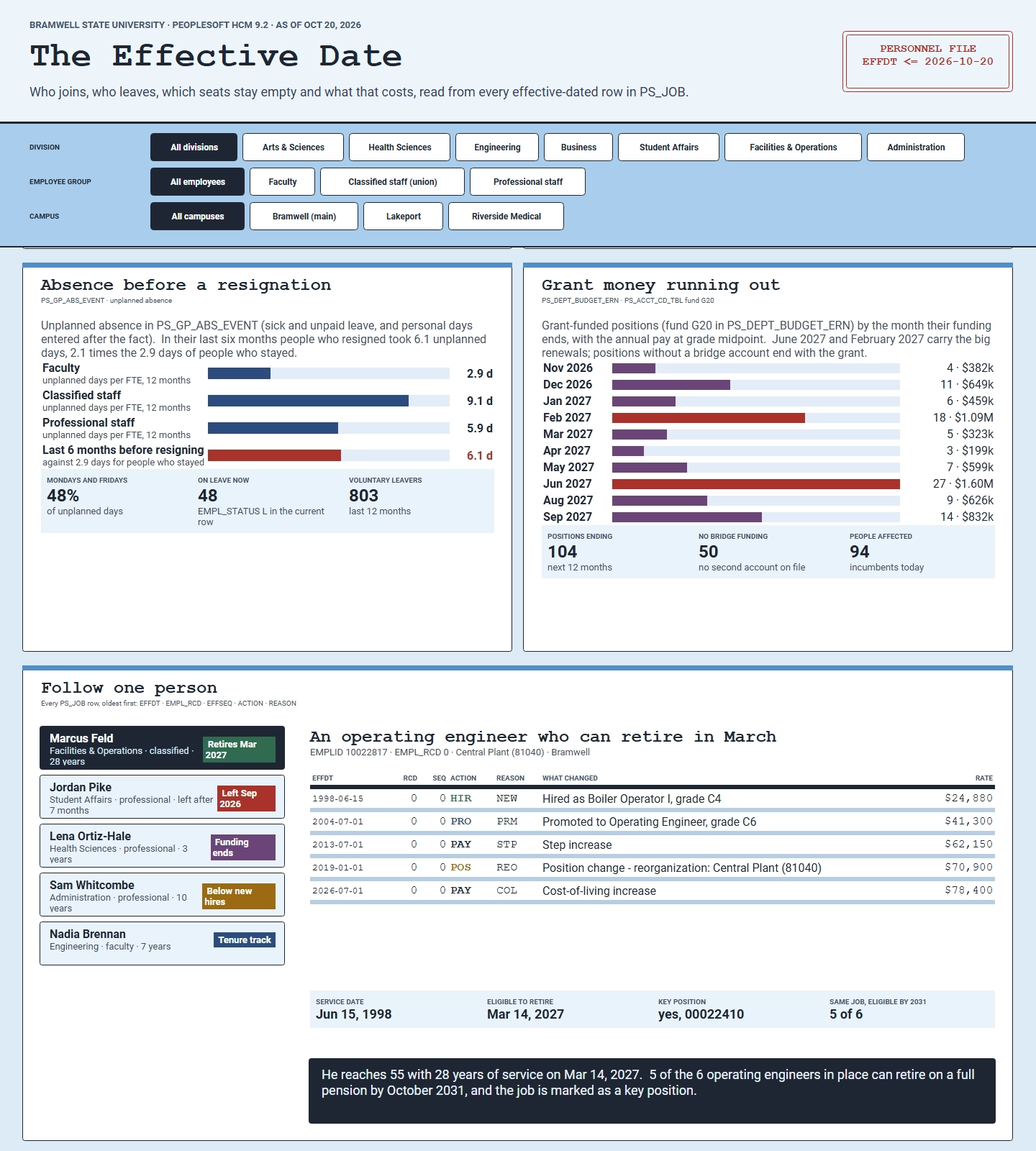
Advanced HR analytics frequently examine the relationship between employee attendance and turnover. Absence indicators can provide early warning signs of disengagement or future resignations.
The dashboard compares absence patterns among current employees and former employees, helping HR teams identify trends that may indicate retention concerns before employees leave the organization.
Grant-Funded Workforce Tracking
Organizations that rely on grants, government funding, or project-based budgets need visibility into positions supported by temporary funding sources.
The dashboard can display:
- Funding expiration dates
- Positions affected by grant loss
- Employee counts at risk
- Replacement funding availability
- Upcoming workforce reductions
This capability allows leaders to proactively manage staffing transitions and budget planning.

Employee Journey Analysis
A detailed employee history section allows managers to follow an individual's employment journey from hire date through promotions, transfers, compensation changes, and future retirement eligibility.
This employee-level perspective provides important context for leadership succession, critical role planning, and workforce development strategies.
Key HR Dashboard KPIs
- Headcount
- Voluntary turnover rate
- First-year turnover rate
- Vacancy rate
- Time-to-fill
- Offer acceptance rate
- Internal hire rate
- Absenteeism rate
- Retirement eligibility rate
- Compensation variance
- Recruiting source effectiveness
- Funding-related workforce exposure

Benefits of an Analytical HR Dashboard
Organizations that deploy analytical HR dashboards gain greater visibility into workforce trends and can make more informed staffing decisions. Benefits include improved employee retention, faster recruiting cycles, better succession planning, stronger workforce forecasting, optimized labor budgets, and more effective talent management strategies.
By bringing workforce, recruiting, compensation, retirement, and operational HR data into a single interface, analytical HR dashboards transform human resources from a reactive administrative function into a strategic business partner.