How Do You Standardize KPIs Across Departments?
Standardizing KPIs across departments begins with aligning every metric to the organization's strategic objectives. Many companies struggle with reporting because sales, finance, operations, marketing, and human resources often define success differently. While each department may require specialized measurements, leadership needs a consistent framework that connects departmental performance to company-wide goals. KPI standardization creates a shared language that allows executives and managers to evaluate progress using comparable and trustworthy data.
The first step is establishing clear business objectives and identifying the outcomes that matter most. Once organizational goals have been defined, departments can map their individual KPIs to those objectives. For example, a company focused on revenue growth may track marketing-generated leads, sales conversion rates, customer retention, production efficiency, and support resolution times. Although these metrics differ by function, they all contribute to the same strategic outcome. This alignment helps eliminate disconnected reporting and competing priorities.
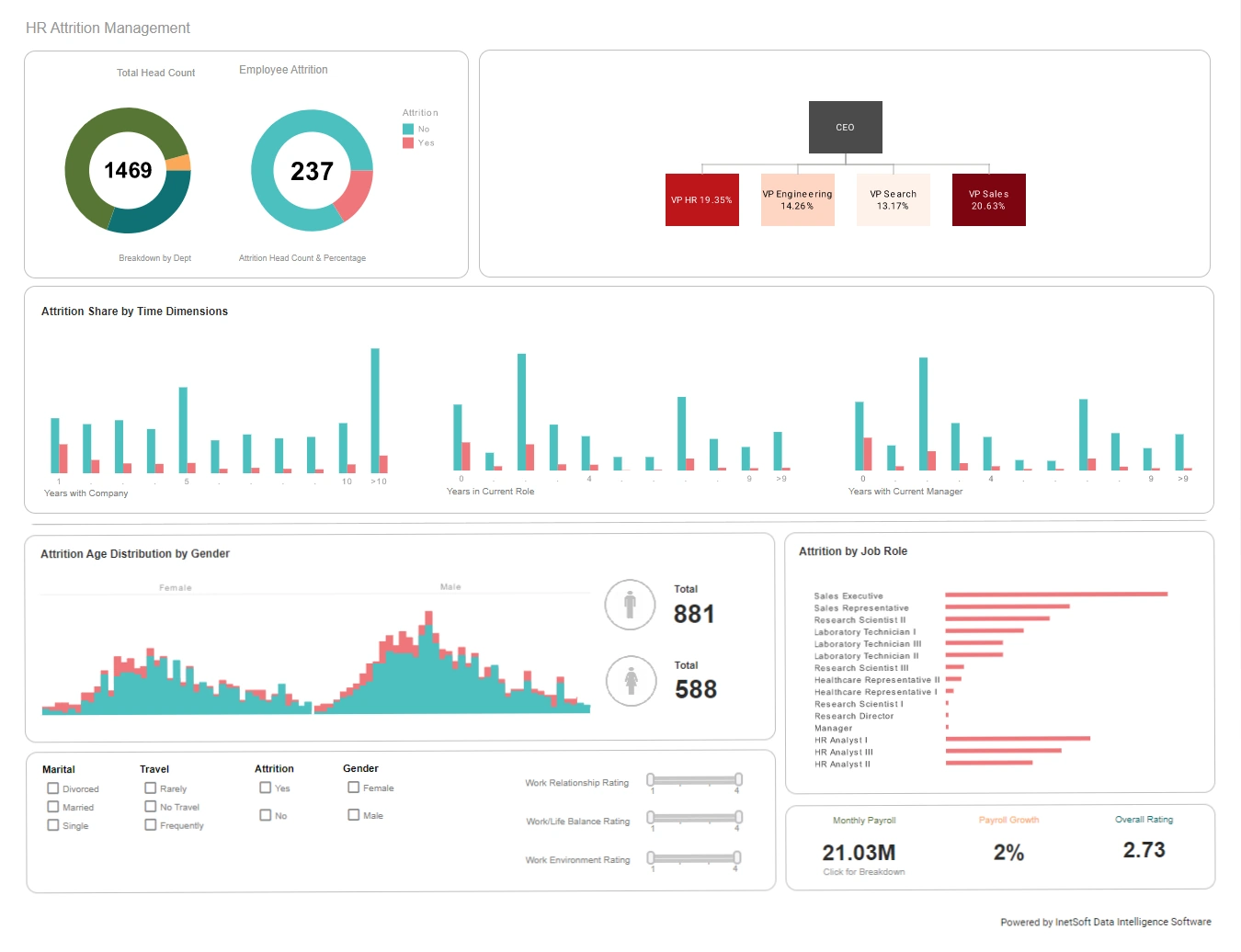

A KPI governance process is essential for maintaining consistency. Organizations should create standard definitions for every metric, including formulas, data sources, reporting frequencies, and ownership responsibilities. A metric catalog or KPI dictionary ensures that everyone interprets measurements the same way. When departments use identical definitions for concepts such as revenue, customer acquisition, inventory turnover, or employee turnover, stakeholders can trust the numbers and avoid unnecessary debates during performance reviews.
Data integration also plays a critical role in KPI standardization. Metrics often originate from multiple business systems, including CRM platforms, ERP applications, financial software, HR systems, and operational databases. Bringing these sources together in a centralized reporting environment helps establish a single version of the truth. Modern business intelligence platforms enable organizations to automate calculations, apply standardized business rules, and distribute consistent dashboards across all departments.
Organizations should balance enterprise KPIs and departmental KPIs within the same performance framework. Executive dashboards typically focus on a smaller set of high-level indicators such as revenue growth, profitability, customer satisfaction, employee engagement, and operational efficiency. Department managers can then drill into supporting metrics that explain changes in these broader outcomes. This hierarchical approach ensures that everyone measures performance differently where necessary while remaining aligned at the strategic level.
Regular KPI reviews help maintain relevance and consistency as business conditions evolve. Leadership teams should periodically assess whether metrics continue to support organizational goals, whether definitions remain accurate, and whether departments are using the same calculation methods. Standardization is not a one-time project but an ongoing management discipline. Companies that invest in KPI governance, data quality, and cross-functional alignment gain greater visibility into performance, improve decision-making, and create accountability throughout the organization.
Key Steps for Standardizing KPIs Across Departments
- Align KPIs with strategic business objectives.
- Create a KPI dictionary with standardized definitions.
- Assign ownership for each metric.
- Establish consistent formulas and reporting schedules.
- Integrate data from all major business systems.
- Use centralized dashboards and reports.
- Maintain a hierarchy of enterprise and departmental KPIs.
- Review and update KPI standards regularly.
Examples of Standardized KPIs
- Financial: Revenue Growth, Gross Margin, Operating Profit Margin.
- Customer: Customer Retention Rate, Net Promoter Score, Customer Lifetime Value.
- Operations: Cycle Time, On-Time Delivery Rate, Production Efficiency.
- Sales: Win Rate, Pipeline Coverage, Average Deal Size.
- Marketing: Lead Conversion Rate, Cost per Lead, Marketing ROI.
- Human Resources: Employee Retention Rate, Time to Hire, Employee Engagement Score.
Why KPI Standardization Matters
Without standardized KPIs, different departments may report conflicting results, use different formulas, or pursue objectives that are not aligned with corporate strategy. Standardization improves transparency, accelerates decision-making, increases confidence in reporting, and enables leaders to compare performance fairly across business units. Ultimately, a well-designed KPI framework turns data into a unified management system that supports strategic execution across the entire organization.