Shopify Inventory Dashboard Example
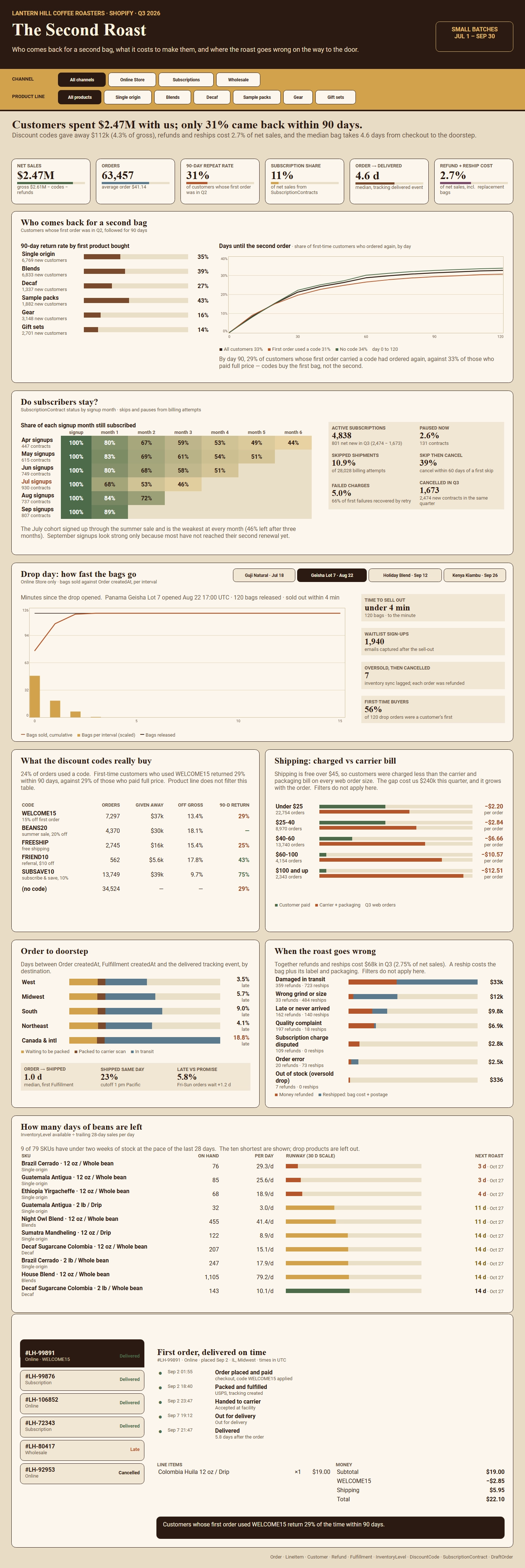
This Shopify inventory dashboard demonstrates how ecommerce businesses can combine inventory analytics, customer purchasing behavior, fulfillment performance, subscription metrics, shipping costs, and product demand into a single operational view. Rather than focusing solely on stock quantities, the dashboard connects inventory performance to the customer journey from first purchase through delivery and repeat orders.
The example shown uses data from a Shopify store to help business leaders, operations managers, and inventory planners understand how inventory decisions affect sales, customer retention, fulfillment efficiency, and profitability.
What Makes This a Shopify Inventory Dashboard?
Many inventory reports focus on warehouse quantities alone. A Shopify inventory dashboard provides a broader ecommerce perspective by combining inventory, orders, subscriptions, discount codes, shipping performance, and customer behavior into one analytical application.
This approach helps organizations answer important questions such as:
- Which products are running low?
- How quickly is inventory selling?
- Which products generate repeat customers?
- How much inventory remains before the next roast, production run, or purchase order?
- What inventory issues are creating refunds or reshipments?
- How do shipping costs affect profitability?
Executive Inventory KPIs
The top section of the dashboard provides an executive summary of inventory and sales performance. Leaders can immediately view revenue, order volume, repeat customer activity, subscription participation, delivery speed, and refund costs.
These KPIs help connect inventory investments to business outcomes rather than simply tracking stock levels.
- Net sales
- Order count
- Repeat purchase rate
- Subscription share
- Average delivery time
- Refund and reshipment costs

Inventory and Customer Retention Analysis
One unique feature of this Shopify dashboard is its ability to connect products with customer retention. The dashboard analyzes which products are most likely to generate a second purchase and how quickly customers return after their initial order.
Understanding repeat purchase behavior allows inventory planners to prioritize products that drive long-term customer value instead of focusing only on initial sales volume.
Subscription Inventory Planning
For stores that offer subscriptions, inventory forecasting must account for recurring customer demand. This dashboard tracks subscription cohorts over time, showing how many customers remain active after each billing cycle.
Subscription analytics help inventory managers forecast future demand more accurately and ensure enough stock is available to fulfill committed orders.
Limited Inventory and Product Drop Monitoring
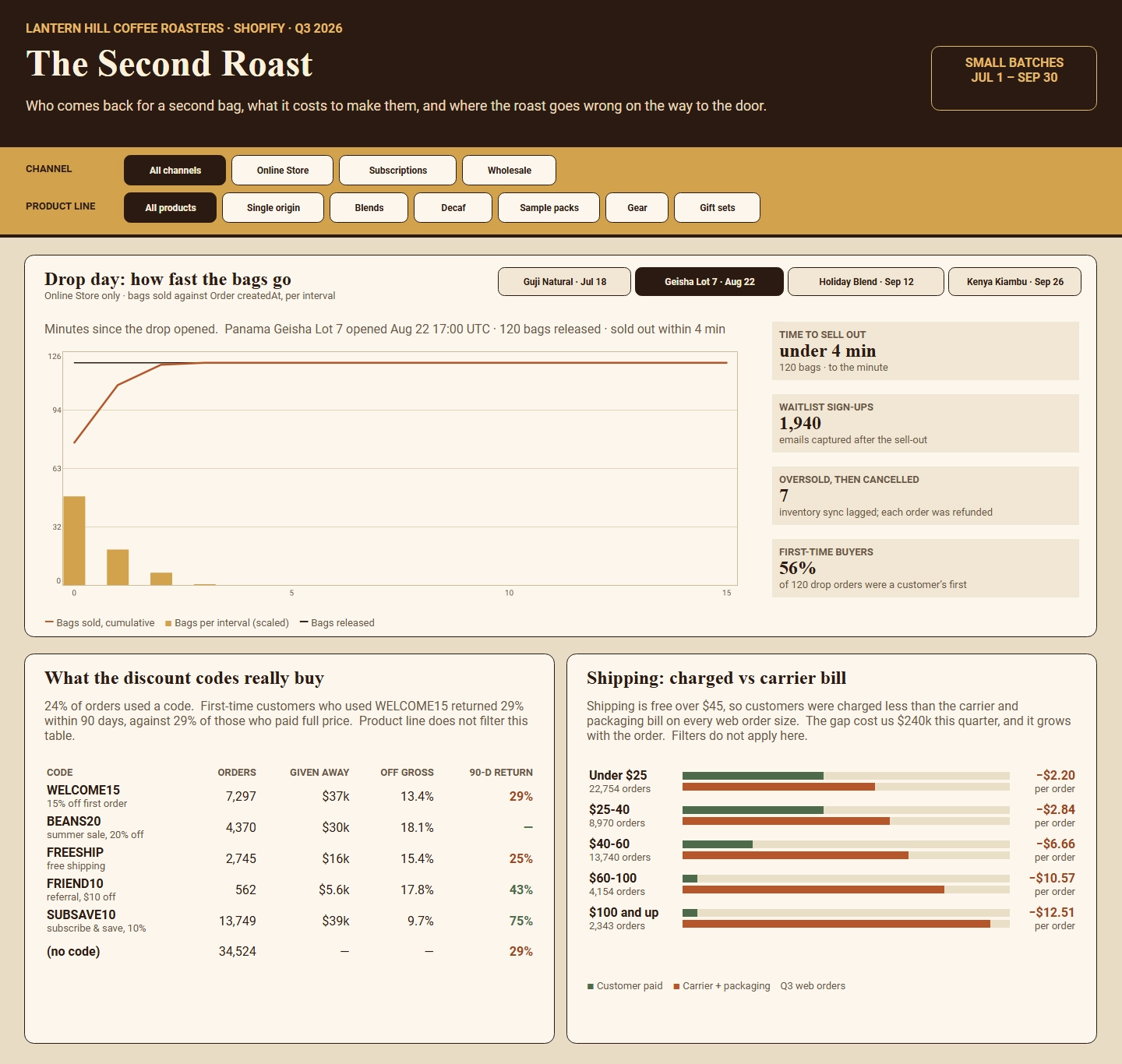
Shopify merchants frequently launch limited inventory products, seasonal collections, and special releases. This dashboard includes product drop analytics that show how quickly inventory sells after becoming available.
Merchants can identify:
- Time required to sell out inventory
- Customer waitlist demand
- Oversold inventory incidents
- First-time buyer participation
- Launch performance trends
How Promotions Affect Inventory Performance
Discount codes influence both demand and profitability. This dashboard measures how promotional campaigns affect customer retention and inventory movement.
Managers can compare discount programs based on:
- Orders generated
- Revenue produced
- Gross margin impact
- Repeat purchase rate
- Customer acquisition effectiveness
Shipping and Fulfillment Analytics
Inventory management does not end when a product is sold. This Shopify dashboard tracks shipping costs and fulfillment performance to ensure orders reach customers efficiently.
- Shipping costs by order value
- Carrier performance
- Delivery timelines
- Fulfillment cycle times
- Late order percentages
- Regional delivery performance
These metrics help identify where inventory and logistics processes can be improved.
Inventory Problems and Root Cause Analysis
The dashboard highlights situations where inventory and fulfillment processes fail. Refunds, replacements, shipping problems, and inventory shortages can all impact customer satisfaction and profitability.
Operations teams can analyze:
- Damaged inventory
- Incorrect shipments
- Late deliveries
- Subscription issues
- Quality complaints
- Out-of-stock events
- Order errors
Inventory Runway and Replenishment Planning
One of the most valuable sections of the dashboard estimates how many days of inventory remain for each product based on current sales velocity.
Inventory planners can quickly identify which items require immediate replenishment and which products have sufficient inventory available.
- Units on hand
- Average daily demand
- Inventory runway
- Projected stockout dates
- Upcoming replenishment schedules
Order-Level Visibility
The dashboard includes operational visibility into individual orders, allowing teams to trace the complete fulfillment journey from purchase through delivery.
This type of detail helps customer service teams investigate shipping delays, track inventory usage, and improve overall order management.
Benefits of a Shopify Inventory Dashboard
- Improve inventory planning accuracy.
- Reduce stockouts and overselling.
- Increase customer retention.
- Optimize subscription forecasting.
- Monitor fulfillment performance.
- Reduce refund and replacement costs.
- Improve inventory turnover.
- Support data-driven purchasing decisions.
- Connect inventory metrics directly to revenue outcomes.
Beyond Basic Stock Reporting
This Shopify inventory dashboard example illustrates how modern ecommerce analytics extend far beyond basic stock reporting. By combining inventory levels, customer retention metrics, subscription performance, fulfillment analytics, shipping costs, and product demand into a unified view, Shopify merchants gain a complete understanding of how inventory decisions affect revenue, profitability, and customer experience. The result is a more proactive, data-driven approach to inventory management and ecommerce operations.