Interact More with the Data in Terms of Analytics
Below is the continuation of the transcript of a Webinar hosted by InetSoft on the topic of the Power of Data with Embedded Analytics Tools. The presenter is Abhishek Gupta, Chief Data Scientist at InetSoft.
Interact more with the data in terms of analytics. As more and more users in the organization start thinking about building predictive models and trying to work with the data and look at different levels of the data, particularly, if they're looking at a dashboard and want to dive in and understand some of the metrics that they're taking to look at.
In early stages of embedded data analytics, that really wasn't possible. That was something where you had to go back to IT and try to develop something that they can work with. Now we're starting to see more of that kind of ad hoc querying capability moving into the embedded reporting systems which is definitely a good trend.
Think again about the nontechnical user being able to self-serve their reporting, how they can receive analytic insights. How is that done? How do they do it if they're not actually building predictive models or working with analytics themselves? How can they receive those insights so that they're in context?
As I mentioned before, that they have to be understandable so they're actionable. If they're built off of a predictive model what does this mean for their particular area of interest, their responsibility, their business process? The ability to perform self-service analytics is through that query and search capabilities, so forth. That's obviously very broad idea of what it is all about.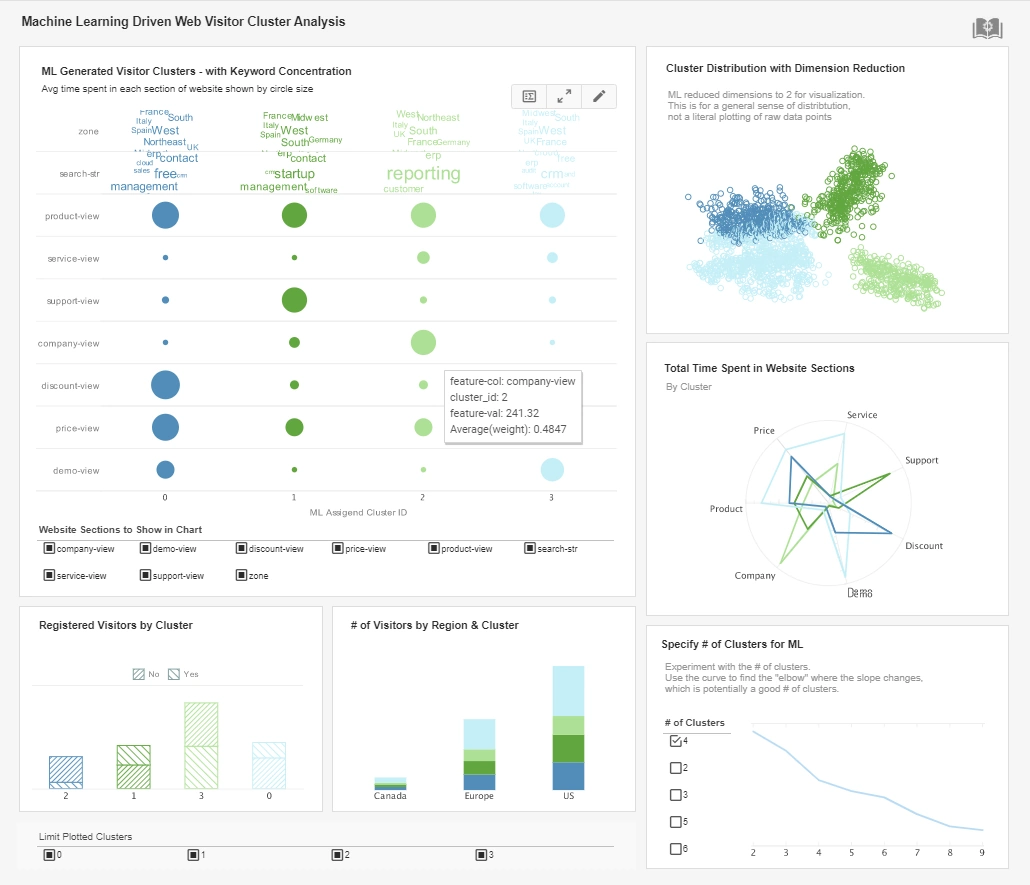

Looking at our research we can see different dashboard reporting functions that people are trying to do. The most common is really the traditional information visualization, and what's been around for a while is in dashboards. Here we ask what kind of embedded analytics are people making use of today? Analytics embedded in dashboards was number at the top 43%, but another area is analytics embedded in operational systems. As I mentioned before the importance of trying to improve operational efficiency and effectiveness, we see 23% are doing that, they're moving it into operational systems.
Some other areas are embedded data visualization in business process management. Sometimes there's a specialized area of process management tools and applications and project management systems that are around business process. Trying to move analytics and visualization capabilities into those so that it's a less funky for users of those business process management systems to be able to work with data and see what's actually going on and get awareness of what the data is telling them and how business processes might need to be altered.
Analytics Embedded in Externally Facing Websites
Analytics embedded in externally facing websites and portals is just 14% here, but we certainly are going to see that grow. As we'll talk about in a minute, the idea of monetizing and productizing analytics and data, we see more of that potential there both for using it for working with business partners and even with customers so externally facing.
Embedded data discovery in mobile applications, this is going to be important going forward, as more BI and analytics are not on mobile systems right now. It's a lower percentage, but again, I think as organizations get more comfortable with that and with all the performance and security and so forth around it, this could grow the analytics embedded in point applications. A little bit more, I mean here I think it's just the statistics of our survey showing you we can probably blend that in with the operational assistance that are often similar. 34% are not doing any of this. I think we'll see that change overtime as well.

The Cloud and Embedded Analytics
One of the reasons the pervasiveness of business analytics can change is because of the Cloud. The Cloud is making it a much easier and really changing the game with embedded analytics. I think this is something we'll be hearing more and more about both in this webinar and I think more broadly. Thinking about the Cloud, Cloud analytics is tackling much more scalable elastic platforms and addressing those kinds of dynamic business needs.
This is certainly what Cloud can be all about for organizations if done well. Without this, on-premises investment is necessary. Certainly in our research we're seeing more and more organizations moving certainly newer BI systems into the Cloud right here, growing fast Cloud analytics becoming a first choice for new use cases.
As organizations continue expanding their analytics maturity, one of the most significant shifts is the expectation that insights must be delivered at the exact moment a decision is made. This has pushed embedded analytics beyond simple dashboard placement and toward deeper contextual integration. Instead of navigating to a separate reporting module, users now expect analytics to appear directly within the workflow they are executing. This reduces cognitive load, shortens decision cycles, and ensures that insights are not only accessible but unavoidable. The more seamlessly analytics blend into operational tools, the more naturally users adopt data-driven behaviors across the enterprise.

Guided Analytics and Mobile-First Experiences
Another emerging trend is the rise of guided analytics experiences that help nontechnical users explore data without requiring statistical knowledge. These experiences combine automated insight detection with intuitive narratives that explain what the data means and why it matters. Rather than presenting raw charts, modern embedded BI platforms highlight anomalies, correlations, and predicted outcomes in plain language. This bridges the gap between sophisticated analytics models and everyday business users, enabling them to act on insights with confidence. As predictive and prescriptive analytics become more common, this layer of interpretability becomes essential.
Mobile-first analytics is also reshaping how users interact with data. While mobile BI adoption has lagged behind desktop usage, improvements in device performance, responsive design, and secure cloud connectivity are accelerating its growth. Field teams, remote managers, and distributed workforces increasingly rely on mobile dashboards to monitor KPIs, approve workflows, and respond to operational changes in real time. Embedded analytics optimized for mobile environments must prioritize clarity, speed, and touch-friendly interactions. As organizations embrace hybrid work models, mobile analytics will become a primary—not secondary—interface for many users.
In parallel, the democratization of data preparation is reducing the dependency on IT teams for routine reporting tasks. Modern embedded analytics platforms now include lightweight data modeling, transformation, and blending capabilities that business users can operate safely within governed boundaries. This empowers departments to create their own metrics, combine internal and external datasets, and iterate on analytical questions without waiting for development cycles. When paired with centralized governance, this approach balances agility with consistency, ensuring that insights remain accurate while innovation accelerates.

Cloud-Native Architectures and Real-Time Insights
Finally, the shift toward cloud-native BI architectures is enabling organizations to scale analytics usage without the infrastructure constraints of traditional on-premises systems. Elastic compute resources allow analytics workloads to expand during peak demand and contract during quieter periods, optimizing cost and performance. Cloud platforms also simplify integration with SaaS applications, data lakes, and real-time streams, making it easier to deliver up-to-date insights across the organization. As embedded analytics continues to evolve, cloud-native design will remain a foundational enabler of speed, flexibility, and enterprise-wide adoption.