From Power BI to StyleBI in Specialty Sand and Proppant Logistics
In the specialty sand and proppant logistics industry, margins are tight, timing is unforgiving, and visibility across the mine-to-well chain can make or break profitability. One mid-sized logistics provider, operating multiple sand mines, rail transload terminals, and a regional trucking fleet, learned this the hard way.
The company had invested heavily in Power BI as its primary business intelligence platform, expecting it to unify data from mine operations, railcar tracking, silo telemetry, and last-mile delivery. Instead, they found themselves constrained by infrastructure mismatches, licensing complexity, and a growing disconnect between IT and operations.
Their eventual decision to replace Power BI with StyleBI fundamentally changed how they managed their business and how they used their Mac-based infrastructure.
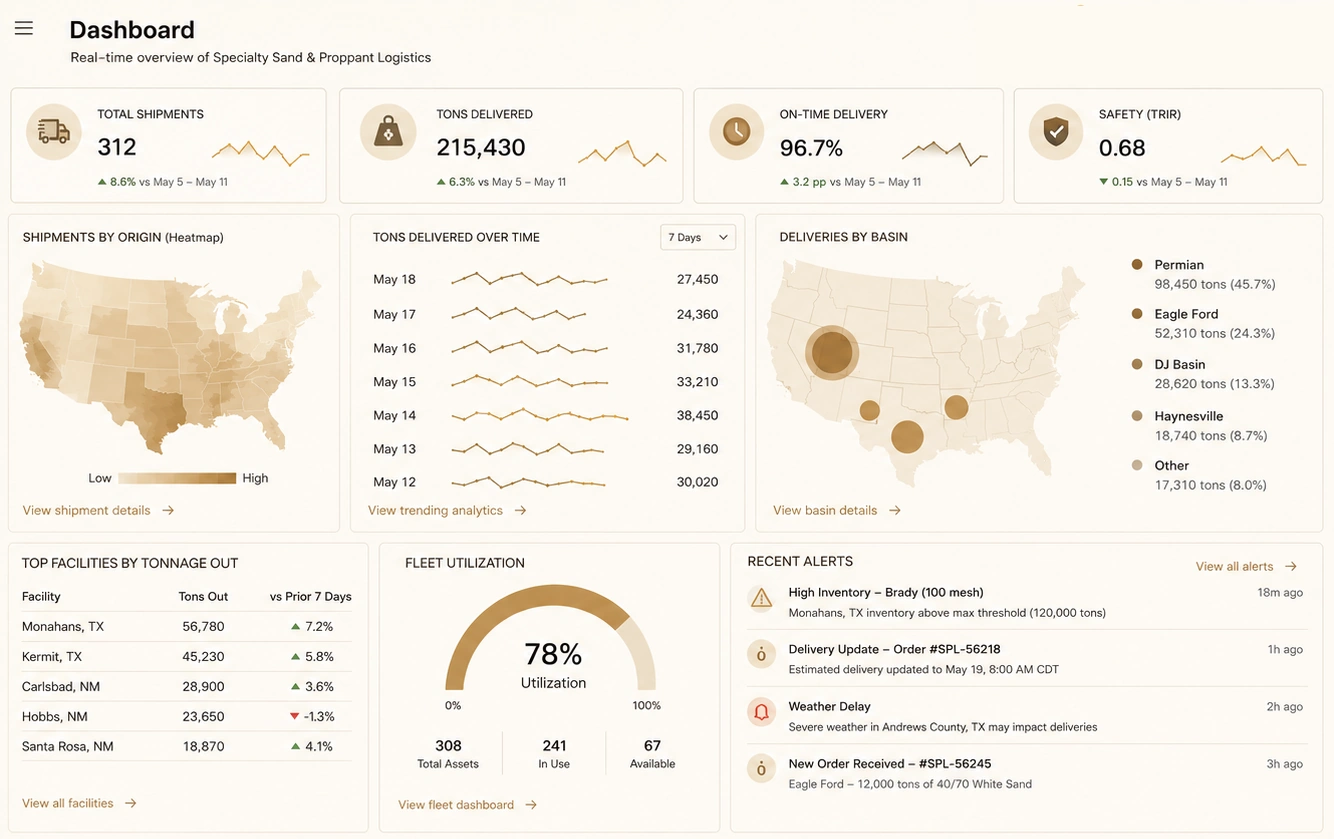

The company’s IT landscape had evolved organically over time. Engineering and operations teams favored macOS for reliability and tooling, and the firm already maintained a robust Mac server environment for internal applications and file services. When Power BI was introduced, it initially arrived through the cloud service and desktop tools used by a few analysts on Windows laptops. As adoption grew, the limitations of this setup became more obvious. Power BI Report Server required Windows Server, which did not align with the company’s Mac-centric infrastructure strategy. Standing up a separate Windows environment just for BI meant new licensing costs, new security baselines, and a parallel stack that operations staff were not comfortable managing.
Power BI's Data Modeling Complexity
Beyond infrastructure, the company struggled with the way Power BI handled data modeling and governance. The logistics business depended on blending high-frequency telemetry from silos and truck GPS feeds with slower-moving data from contracts, pricing, and maintenance schedules. Power BI’s semantic models worked well for curated datasets, but the team found it cumbersome to support the constant ad hoc mashups that operations managers requested. Each new combination of mine output, railcar cycle time, and well-site staging metrics often required a new dataset, a new model, or a new report. Over time, this created a tangle of overlapping workspaces and reports that were difficult to maintain and nearly impossible for non-technical users to navigate.
Dashboard Sprawl and Conflicting Numbers
The operations leadership team began to question whether the platform was serving the business or the other way around. Dispatchers wanted a single dashboard that showed real-time truck positions, silo levels, and upcoming frac jobs. Rail logistics managers wanted to see railcar dwell times, demurrage exposure, and forecasted arrivals in one place. Finance wanted a consolidated view of cost per ton delivered, broken down by lane, customer, and well. While Power BI could theoretically deliver all of this, the practical reality was that each group ended up with its own set of reports, each with slightly different definitions and refresh schedules. The result was dashboard sprawl and frequent arguments over which numbers were “right.”

The Decision to Find a Better Platform
The turning point came when the company decided to modernize its internal applications and standardize on its Mac server environment for core services. The IT director was tasked with finding a BI platform that could run directly on their Mac servers, integrate with their existing Java-based applications, and support both governed enterprise reporting and flexible self-service dashboards. Power BI’s dependency on Windows Server for on-premises deployment immediately put it at a disadvantage. The team evaluated several alternatives, but most either required Linux-only deployments or lacked the depth of enterprise features they needed. StyleBI stood out because its server was Java-based and could be deployed on macOS without sacrificing functionality.
Evaluating StyleBI: Infrastructure, Data, and Usability
The evaluation of StyleBI focused on three critical dimensions: infrastructure fit, data flexibility, and operational usability. On the infrastructure side, StyleBI’s Java-based server could be installed directly on the company’s existing Mac servers. This eliminated the need for a separate Windows environment and allowed the IT team to leverage their existing monitoring, backup, and security practices. The deployment process was straightforward: install a supported Java runtime, extract the StyleBI server, configure ports and authentication, and bring it online. Within days, the team had a fully functional BI environment running on the same Mac hardware that already hosted their internal logistics applications.
Data Flexibility and Ad Hoc Mashups
Data flexibility was the next major test. The company’s logistics data was scattered across multiple systems: a mine production database, a rail logistics platform, a silo telemetry system, a trucking dispatch application, and a financial ERP. With Power BI, combining these sources often meant building and maintaining complex dataflows and semantic models that were brittle in the face of frequent schema changes. StyleBI’s data mashup capabilities allowed the team to create reusable data blocks that could be joined, filtered, and transformed on demand. Operations analysts could define a view that combined mine output, railcar assignments, and truck loads without waiting for IT to redesign a central model. At the same time, IT could still enforce governance by controlling source connections, security rules, and certified data sets.

Operational Usability and Embedded Dashboards
Operational usability turned out to be the most visible win. StyleBI’s interactive dashboards were embedded directly into the company’s existing Mac-hosted operations portal. Dispatchers accessed a single screen that showed live truck locations, silo levels, and upcoming frac job schedules, all updated in near real time. Rail managers viewed dashboards that highlighted railcar cycle times, yard congestion, and demurrage risk, with the ability to drill down to individual cars and lanes. Mine supervisors monitored production rates, quality metrics, and stockpile levels, with alerts when thresholds were breached. Because StyleBI supported role-based security, each user saw only the data relevant to their responsibilities, while executives could view consolidated performance across the entire network.
Simplified Licensing and Cost Management
The switch from Power BI to StyleBI also simplified licensing and cost management. Instead of juggling a mix of Power BI Pro, Premium, and Report Server licenses, the company adopted a straightforward StyleBI licensing model that aligned with its server-based deployment. This made budgeting more predictable and removed the friction of deciding who needed which type of Power BI license to access which report. For a business where seasonal activity and contractor usage fluctuated, this flexibility was particularly valuable. Temporary users could be granted access through the portal without complex license assignments, and external partners could be given controlled views into shared dashboards.
Cultural Shift Across the Organization
Over time, the cultural impact of the switch became clear. With Power BI, many frontline users had come to see BI as something owned by a small group of analysts and IT staff. Requests for new views or changes often felt like tickets thrown over a wall. With StyleBI embedded into the Mac-based operations portal, dashboards felt like a natural extension of the tools people already used every day. Supervisors experimented with filters, drill-downs, and ad hoc views without fear of breaking anything. Analysts focused less on rebuilding models and more on refining metrics and scenarios that directly supported operational decisions, such as optimizing truck staging at well sites or balancing railcar allocations across terminals.

Strategic Flexibility for the Future
The company also discovered that StyleBI’s cross-platform nature gave them strategic flexibility. While they were committed to their Mac server environment, they appreciated knowing that the same StyleBI deployment model would work on Linux or Windows if their infrastructure strategy changed. This contrasted with their experience of Power BI, where the choice of Windows Server for on-premises deployment felt like a permanent commitment. With StyleBI, they could treat the operating system as an implementation detail rather than a defining constraint of their BI strategy.
The Business Impact of the Switch
In the end, the decision to move from Power BI to StyleBI was not about rejecting one brand in favor of another; it was about aligning the BI platform with the realities of a specialty sand and proppant logistics business. The company needed a system that could run on its Mac servers, handle messy and evolving operational data, and deliver dashboards that directly supported mine-to-well decisions. StyleBI met those needs in a way that Power BI, tied to a different infrastructure and modeling philosophy, could not. For this logistics provider, the switch unlocked a level of operational visibility and agility that turned business intelligence from a reporting tool into a daily decision engine.