A Regenerative Agriculture Company’s Transition From RapidMiner To StyleBI For Data Visualization Design
In Regenerative Agriculture industry, data has become one of the most valuable assets for improving soil health, optimizing crop rotations, and validating carbon‑sequestration outcomes. One mid‑sized regenerative farming cooperative—GreenSoil Horizons—found itself at a crossroads when its existing analytics workflow, built around RapidMiner, could no longer keep pace with the organization’s expanding data visualization needs.
While RapidMiner remained effective for machine learning experimentation, it lacked the flexible, presentation‑ready visualization design capabilities required for communicating insights to growers, investors, and sustainability auditors. This gap ultimately led the cooperative to adopt StyleBI as its primary Data Visualization Design Software, transforming how the organization delivered insights across its ecosystem.
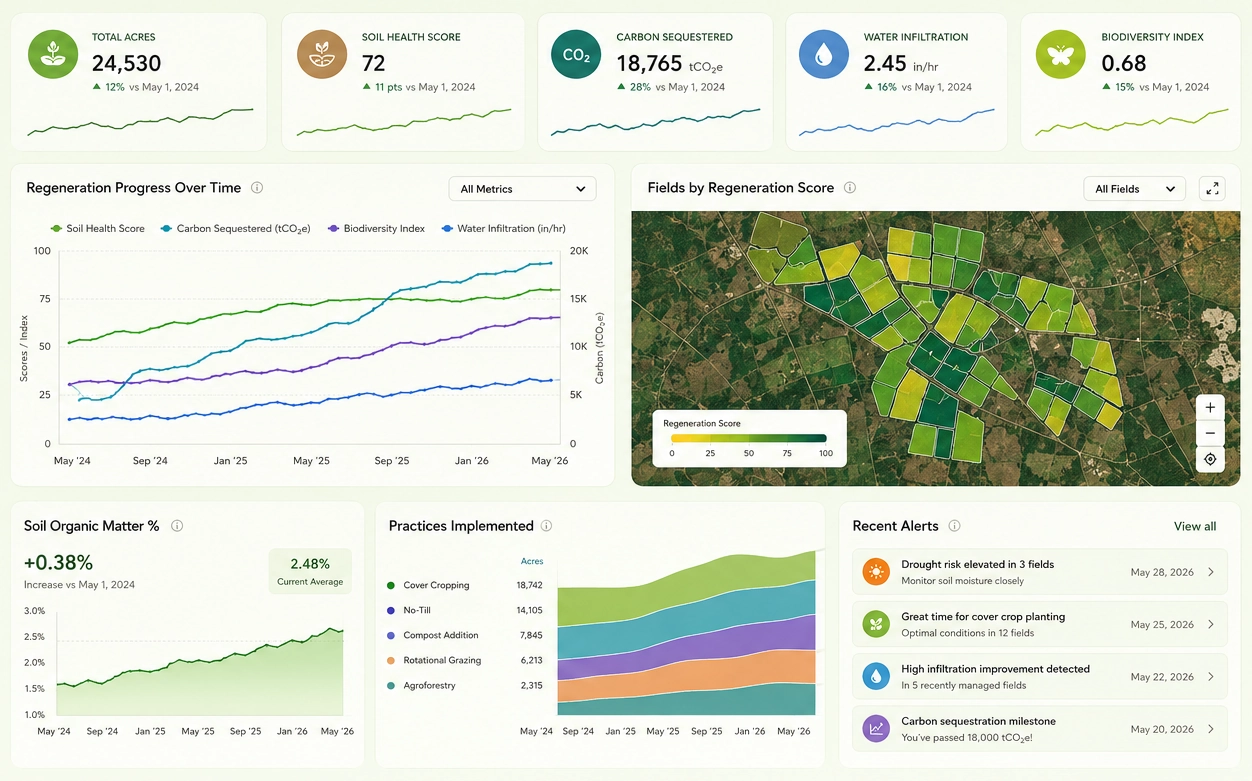

GreenSoil Horizons had grown significantly over the previous five years, expanding from a handful of pilot farms to a network of more than 200 regenerative agriculture sites across the Midwest. Each site contributed data on soil organic matter, microbial activity, cover‑crop performance, water infiltration rates, and carbon sequestration metrics. RapidMiner handled the modeling aspects well, but the cooperative struggled to convert these outputs into dashboards that were both visually compelling and easy for non‑technical stakeholders to interpret. Reports often required manual formatting, and dashboards lacked the interactivity needed for field managers to explore trends at the plot, farm, or regional level. As the organization matured, leadership recognized that a dedicated visualization platform was essential for scaling its data communication strategy.
The search for a new solution centered on three core requirements: flexibility in dashboard design, the ability to integrate seamlessly with existing data pipelines, and support for both governed reporting and exploratory analysis. StyleBI emerged as the strongest candidate because it offered a unified environment for pixel‑perfect report creation, interactive dashboards, and ad hoc visual exploration. Unlike RapidMiner’s limited visualization layer, StyleBI allowed the cooperative to design dashboards that mirrored the complexity of regenerative agriculture workflows. Soil health indicators could be layered with rainfall patterns, crop rotation histories, and microbial activity scores, all within a single interactive interface. This level of integration was crucial for helping agronomists understand how multiple ecological factors interacted over time.
One of the most transformative aspects of the transition was StyleBI’s data modeling and mashup capabilities. GreenSoil Horizons previously relied on a patchwork of scripts and manual joins to merge soil lab results, satellite imagery, and field sensor data. These processes were fragile and time‑consuming, often requiring intervention from the data science team. With StyleBI, the cooperative created reusable data blocks that standardized how soil metrics, crop data, and environmental variables were combined. This not only reduced maintenance overhead but also empowered analysts and agronomists to build new dashboards without waiting for engineering support. The shift democratized access to data and accelerated the pace of insight generation across the organization.
Another major improvement came from StyleBI’s ability to support both high‑level executive dashboards and granular field‑level analysis. Executives needed clear visualizations showing carbon‑credit performance, soil‑health improvements, and long‑term ecological outcomes. Field managers, on the other hand, required drill‑down capabilities to compare specific plots, evaluate the impact of cover‑crop mixes, and monitor seasonal changes. StyleBI’s flexible layout engine allowed the cooperative to design dashboards tailored to each audience while maintaining a consistent visual language. This consistency helped build trust in the data and encouraged broader adoption of analytics across the organization.
GreenSoil Horizons also benefited from StyleBI’s strong governance features. As the cooperative expanded, ensuring data accuracy and consistency became increasingly important. RapidMiner’s visualization layer offered limited control over versioning, access permissions, and content organization. StyleBI introduced a structured environment where administrators could manage user roles, enforce standardized definitions, and track changes across dashboards. This governance framework proved essential when the cooperative began participating in carbon‑credit verification programs, which required transparent, auditable reporting. StyleBI’s metadata management and audit trails provided the level of accountability needed for external certification.
Improved Communication with External Stakeholders
The transition also improved communication with external stakeholders. Investors and sustainability partners often requested customized reports showing the ecological and financial impact of regenerative practices. Previously, the data team spent hours exporting charts from RapidMiner and assembling them manually into presentations. With StyleBI, the cooperative created automated reporting templates that refreshed with the latest data and could be exported in multiple formats. This not only saved time but also ensured that all stakeholders received consistent, accurate information. The ability to embed dashboards into partner portals further strengthened collaboration and transparency.
From an operational standpoint, StyleBI’s deployment flexibility aligned well with the cooperative’s hybrid infrastructure. GreenSoil Horizons maintained on‑premise systems for sensitive soil and land‑use data while leveraging cloud services for satellite imagery and remote‑sensor feeds. StyleBI’s support for both environments allowed the organization to integrate data securely without restructuring its architecture. Additionally, server‑based licensing provided predictable costs as the number of users grew, avoiding the escalating per‑seat fees associated with other BI platforms.
The shift to StyleBI also had a cultural impact within the organization. Analysts who previously spent most of their time preparing static reports could now focus on deeper ecological modeling and scenario analysis. Agronomists gained the ability to explore data independently, leading to more informed decisions about crop rotations, soil amendments, and regenerative practices. Executives gained clearer visibility into long‑term trends, enabling them to refine strategy and communicate impact more effectively to stakeholders. The cooperative’s data science team continued using RapidMiner for advanced modeling, but StyleBI became the primary interface through which insights were shared and operationalized.
Perhaps the most compelling outcome of the transition was the improvement in ecological and economic results. With better visualization tools, field managers identified patterns that were previously hidden in raw data—such as the relationship between microbial activity and water retention or the impact of specific cover‑crop mixes on carbon sequestration. These insights led to more targeted interventions, improved soil health, and higher yields. The cooperative also strengthened its position in the carbon‑credit market by providing transparent, data‑driven evidence of ecological improvements. StyleBI’s dashboards became a central component of the cooperative’s sustainability reporting, helping attract new partners and funding opportunities.
In the end, GreenSoil Horizons’ decision to transition from RapidMiner to StyleBI marked a pivotal moment in its data strategy. RapidMiner remained a valuable tool for modeling, but StyleBI delivered the visualization power, governance structure, and user‑friendly design environment needed to scale analytics across the organization. For a company operating in the Regenerative Agriculture industry—where ecological complexity and stakeholder transparency are paramount—StyleBI provided the foundation for a more mature, impactful, and accessible data ecosystem. The cooperative now views data visualization not as a final step in the analytics process but as a strategic capability that drives continuous improvement in both environmental and economic outcomes.