Industrial Abrasives Manufacturer Switches From Bold Reporting To StyleBI For Enterprise Report Writing
In the world of industrial abrasives manufacturing, data is not just a back-office concern; it is a direct lever on product performance, yield, and customer satisfaction. One mid-sized global manufacturer of grinding wheels, sanding belts, and precision polishing media recently discovered that its reporting platform was becoming a bottleneck rather than an enabler. After years of relying on Bold Reporting for operational and financial reporting, the company made a strategic decision to migrate to StyleBI as its enterprise report writer, reshaping how information flows from the plant floor to executive decision-makers.
This transition was not simply a technology swap. It represented a shift in mindset from static, developer-controlled reports to a more flexible, self-service analytics environment. In an industry where small changes in formulation, curing temperature, or machine vibration can have outsized impacts on product quality, the ability to quickly interrogate data and build new views became a competitive necessity. StyleBI offered the promise of more agile reporting, tighter integration with dashboards, and a smoother path to modern analytics without forcing the company to abandon its existing data infrastructure.

Why Bold Reporting Became A Limiting Factor
Bold Reporting had served the abrasives manufacturer reasonably well for traditional, scheduled reporting. Finance teams received monthly P&L statements, plant managers saw production summaries, and quality teams reviewed defect reports. However, as the business expanded into more demanding sectors such as aerospace, medical devices, and semiconductor fabrication, the complexity of questions being asked outgrew the capabilities of the existing report writer.
Creating new reports often required specialized development skills and long lead times. Any change to a layout, filter, or grouping meant a ticket to IT and a wait for the next deployment cycle. Engineers who wanted to correlate kiln temperature profiles with defect rates or compare G-ratio performance across product lines found themselves constrained by rigid report templates. Bold Reporting’s model worked well for static, repeatable outputs, but it struggled to support the iterative, exploratory analysis that process engineers and product managers increasingly needed.
Why StyleBI Was Selected As The Enterprise Report Writer
The company evaluated several options before selecting StyleBI as its new enterprise report writer. The decision hinged on three core criteria: integration with existing data sources, support for self-service report creation, and alignment with a broader analytics roadmap that included dashboards and interactive visualizations. StyleBI met these requirements while offering a familiar, browser-based environment that reduced training overhead.
StyleBI’s ability to connect to relational databases, data warehouses, and existing ETL outputs meant the company did not need to rebuild its data pipelines. Instead, it could layer a more flexible reporting experience on top of the data foundation it had already invested in. The platform’s report designer allowed power users in operations, quality, and finance to build and modify reports without writing code, while still giving IT the governance tools needed to manage security, performance, and version control.
Impact On Operations And Process Engineering
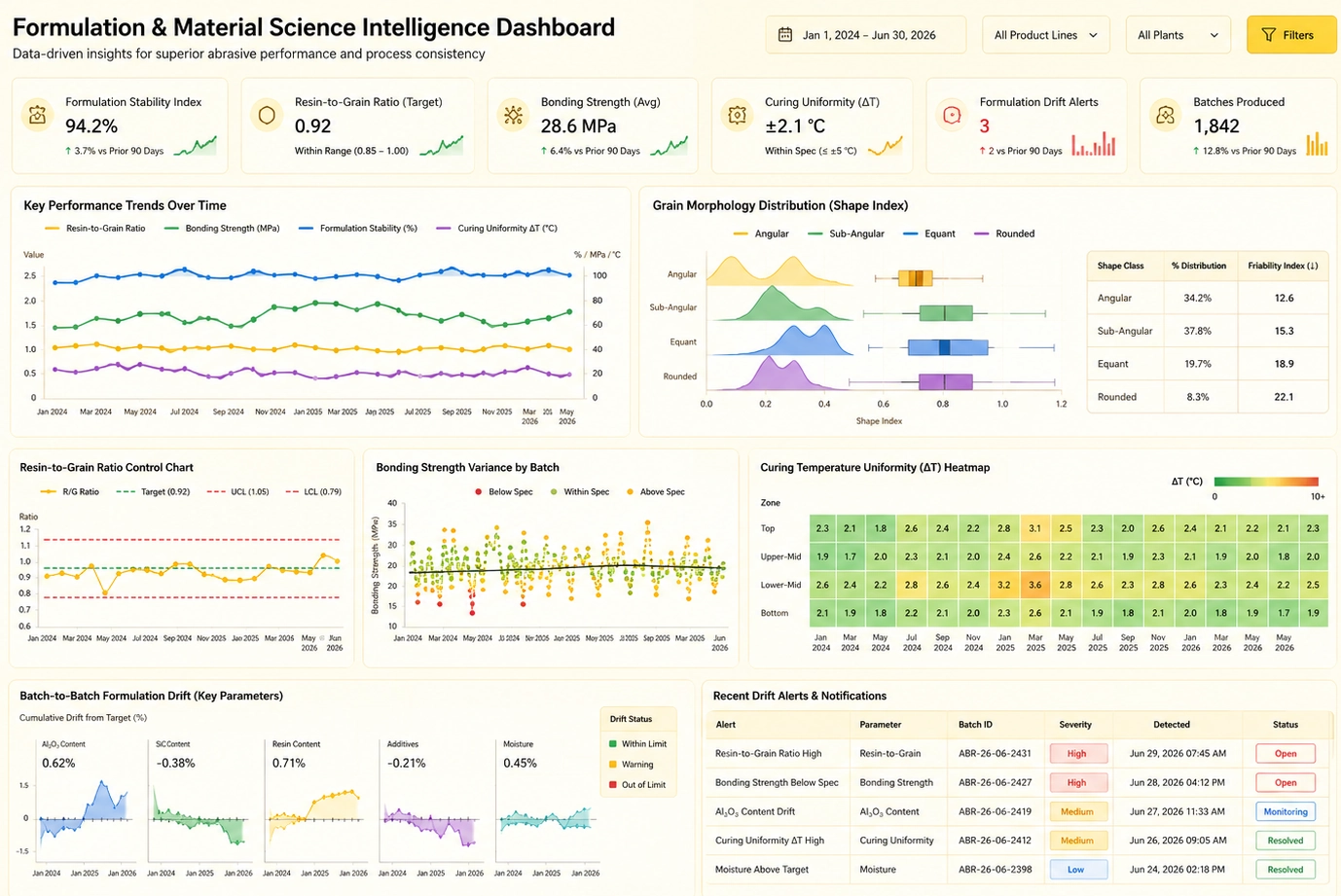
For process engineers, the switch to StyleBI was transformative. Previously, analyzing the relationship between formulation parameters and performance metrics required exporting data from multiple Bold Reporting outputs into spreadsheets, then manually stitching together the results. With StyleBI, engineers could design reports that pulled from multiple tables, applied filters and groupings, and presented results in a way that aligned with their investigative workflow.
Reports that once took weeks to request, build, and validate could now be iterated in days or even hours. For example, a kiln performance report that combined temperature profiles, energy consumption, and defect rates could be quickly adjusted to focus on specific product families or shifts. This agility allowed the engineering team to run more experiments, validate hypotheses faster, and respond to quality issues before they escalated into customer complaints or scrap spikes.
Enhancing Quality And Compliance Reporting
Quality and compliance teams also benefited from the migration. Industrial abrasives used in aerospace and medical applications must meet stringent standards, and audit trails are critical. Under Bold Reporting, generating comprehensive compliance reports often meant piecing together multiple static outputs and manually annotating them for auditors. StyleBI enabled the creation of consolidated, parameter-driven reports that could be regenerated on demand with consistent structure and content.
The quality team built reports that tracked defect rates by batch, bond type, and curing line, alongside mechanical test results such as tensile strength and hardness. They could quickly filter by customer, region, or certification standard, making it easier to demonstrate compliance and investigate anomalies. The ability to embed charts and conditional formatting within reports helped highlight trends and outliers, turning what used to be dense tables into more readable, actionable documents.

Financial And Executive Reporting Improvements
From a financial perspective, StyleBI brought greater transparency to product-line profitability and cost drivers. Bold Reporting had provided standard financial statements, but drilling into margin by grit size, bond type, or customer segment was cumbersome. With StyleBI, finance analysts could design reports that allocated energy costs, scrap, and warranty claims across product families, revealing hidden margin erosion and opportunities for pricing adjustments.
Executives gained access to a more cohesive reporting environment that aligned with their dashboard views. StyleBI reports could be linked from or embedded within broader analytics portals, allowing leaders to move seamlessly from high-level KPIs to detailed supporting data. This integration reduced the disconnect between strategic dashboards and operational reports, creating a more unified narrative about performance across plants, regions, and product lines.
Migration Strategy And Technical Considerations
The migration from Bold Reporting to StyleBI was carefully planned to minimize disruption. The company began by cataloging its existing reports, identifying which ones were mission-critical and which could be retired or consolidated. IT and business stakeholders worked together to prioritize a core set of reports for initial migration, focusing on production, quality, and financial outputs that were used daily.
Data connections were recreated in StyleBI, leveraging the same databases and views that Bold Reporting had used. Where necessary, IT refined the data model to better support the more flexible report designs StyleBI enabled. Templates were created to standardize branding, layout, and parameter controls, ensuring that new reports would feel familiar to users while taking advantage of StyleBI’s capabilities. Training sessions were held for power users, emphasizing how to build and modify reports without compromising data integrity or performance.

Change Management And User Adoption
Change management was a critical component of the transition. Many users had grown accustomed to Bold Reporting’s workflows and were initially skeptical about learning a new tool. The company addressed this by running side-by-side comparisons, showing how common tasks could be completed more quickly and flexibly in StyleBI. Early adopters in engineering and quality were encouraged to share success stories, such as faster root-cause analysis or more insightful customer reports.
Governance policies were established to manage who could create and publish reports, preventing a proliferation of inconsistent or redundant outputs. A central catalog of approved reports was maintained, and StyleBI’s role-based security ensured that sensitive financial or customer data remained protected. Over time, as users experienced the benefits of more responsive reporting, adoption grew organically, and Bold Reporting usage was gradually phased out.
Strategic Outcomes And Future Direction
The switch from Bold Reporting to StyleBI ultimately delivered more than just a new report writer; it provided a foundation for a more agile, data-driven culture within the industrial abrasives manufacturer. Engineers could explore process data more freely, quality teams could respond faster to emerging issues, and executives could see a clearer picture of profitability and risk. The company reduced its reliance on manual data stitching and static outputs, replacing them with dynamic, parameter-driven reports that better matched the pace of modern manufacturing.
Looking ahead, the manufacturer plans to extend StyleBI’s role beyond traditional reporting into more advanced analytics and dashboarding. By integrating predictive models for machine health, yield optimization, and demand forecasting, the company aims to turn its reporting environment into a true decision-support platform. The migration away from Bold Reporting was the first step in this journey, demonstrating that the right enterprise report writer can unlock not just better reports, but better decisions across the entire industrial abrasives value chain.