How Business Intelligence Enhances ERP Applications: Integrations, Dashboards, and Real-Time Decision Support
Enterprise Resource Planning (ERP) systems sit at the center of modern business operations. They manage finance, supply chain, procurement, manufacturing, human resources, and countless workflows that keep organizations running. Yet despite their importance, ERP systems often fall short when it comes to analytics.
Their built-in reporting tools are usually rigid, slow, and limited in visualization capabilities. This is where Business Intelligence (BI) platforms step in, transforming ERP data into actionable insights that drive better decisions across the enterprise.
This article explores how BI enhances ERP applications, why organizations increasingly layer BI tools on top of their ERP systems, and what kinds of dashboards, integrations, and decision-support capabilities emerge from this combination. For companies evaluating BI for ERP modernization, the benefits are substantial and immediate.

The Limitations Of Native ERP Reporting
ERP systems excel at transaction processing, workflow enforcement, and data integrity. However, their reporting modules are typically designed for operational lists and static summaries, not dynamic analytics. Users often encounter several common limitations:
- Rigid report structures that require IT intervention to modify.
- Slow performance when running large or complex queries.
- Limited visualization options that cannot support modern dashboarding needs.
- Data silos that prevent cross-module analysis, such as linking procurement to manufacturing or HR to project performance.
- No semantic layer to standardize metrics like margin, utilization, or cycle time.
As organizations grow, these limitations become more pronounced. Executives want real-time dashboards. Managers want drill-down capabilities. Analysts want to blend ERP data with CRM, IoT, or financial planning systems. Native ERP reporting simply cannot keep up with these expectations.
Why BI Is The Natural Extension Of ERP
Business Intelligence platforms fill the analytical gaps left by ERP systems. Instead of replacing ERP reporting, BI tools extend it—adding flexibility, speed, and visualization capabilities that ERP vendors rarely prioritize. BI becomes the analytical lens through which ERP data becomes understandable and actionable.
Several characteristics make BI a natural complement to ERP:
- Data modeling that unifies ERP modules into a single analytical layer.
- Interactive dashboards that allow users to explore data visually.
- Real-time or near-real-time refresh for operational decision-making.
- Governed self-service that empowers non-technical users without sacrificing data consistency.
- Integration flexibility with cloud, on-premise, and hybrid ERP deployments.
When BI is layered on top of ERP, organizations gain a unified view of operations that ERP alone cannot provide.
How BI Integrates With ERP Systems
BI platforms connect to ERP systems through APIs, direct database connections, OData feeds, or ETL pipelines. The integration approach depends on the ERP vendor, deployment model, and performance requirements. Regardless of the method, the goal is the same: extract structured ERP data and transform it into a model optimized for analytics.
A typical BI–ERP integration includes:
- Data extraction from ERP modules such as finance, inventory, procurement, or HR.
- Data transformation to clean, standardize, and join tables.
- Semantic modeling to define business-friendly metrics and hierarchies.
- Dashboard creation for operational, tactical, and strategic insights.
This process turns ERP’s raw transactional data into a structured analytical environment where users can explore trends, compare performance, and identify bottlenecks.
Dashboards That Transform ERP Workflows
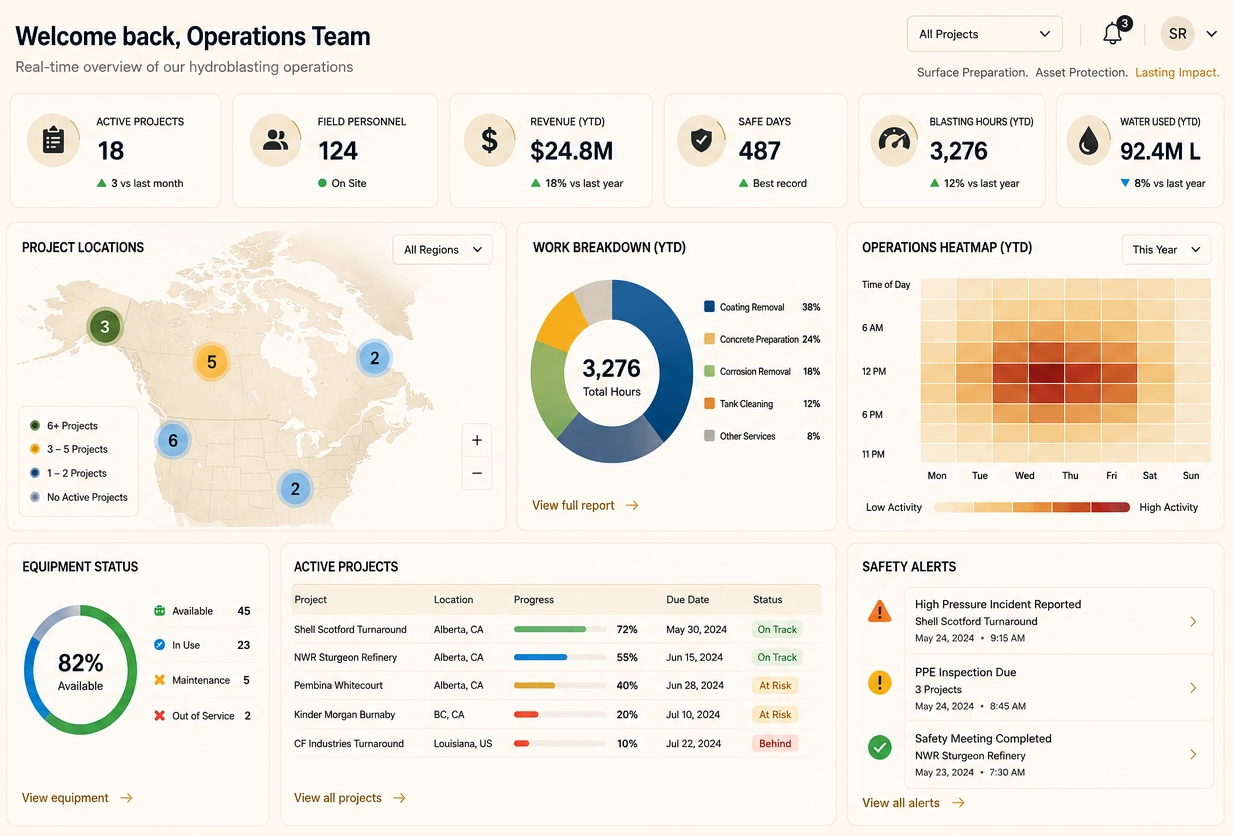
Once BI is connected to ERP, organizations can build dashboards that reflect real business processes. These dashboards often become the primary interface for decision-making, replacing static ERP reports with dynamic, interactive views.
Financial Performance Dashboards
ERP systems contain rich financial data, but BI tools make it easier to visualize and analyze. Dashboards may include:
- Revenue and margin trends by product, region, or customer.
- Accounts payable and receivable aging with drill-downs.
- Budget vs. actual comparisons across departments.
- Cash flow forecasting models.
These dashboards help CFOs and controllers identify risks, optimize working capital, and improve forecasting accuracy.

Supply Chain And Inventory Dashboards
ERP systems track inventory levels, purchase orders, and supplier performance. BI enhances this data with:
- Real-time inventory visibility across warehouses.
- Supplier lead-time analysis and reliability scoring.
- Demand forecasting models using historical data.
- Stockout and overstock alerts.
Supply chain managers gain the ability to anticipate disruptions and optimize inventory levels.
Manufacturing And Production Dashboards
Manufacturing modules in ERP systems generate detailed production data. BI tools turn this into:
- OEE (Overall Equipment Effectiveness) dashboards.
- Production cycle time and throughput analysis.
- Quality control and defect tracking.
- Work order progress and bottleneck identification.
These dashboards help plant managers improve efficiency and reduce downtime.
HR And Workforce Dashboards
ERP HR modules contain employee records, certifications, schedules, and performance data. BI enhances this with:
- Workforce utilization and capacity planning.
- Turnover and retention analysis.
- Training and certification tracking.
- Labor cost analysis by department or project.
HR leaders gain visibility into workforce trends and compliance risks.

Real-Time Decision Support For ERP Users
One of the most powerful benefits of BI for ERP applications is real-time or near-real-time decision support. Instead of waiting for overnight batch reports, users can see up-to-date information as soon as transactions occur.
Real-time BI enables:
- Faster operational decisions such as reallocating inventory or adjusting production schedules.
- Immediate visibility into exceptions like overdue orders or failed quality checks.
- Proactive risk management through alerts and threshold-based notifications.
- Continuous monitoring of KPIs across departments.
This shift from reactive to proactive decision-making is one of the biggest reasons organizations adopt BI for ERP modernization.
Governed Self-Service For Non-Technical Users
ERP reporting often requires IT involvement for even minor changes. BI platforms solve this by enabling governed self-service. Users can explore data, build dashboards, and run analyses without writing SQL or modifying ERP configurations.
Governed self-service includes:
- Predefined metrics that ensure consistency across dashboards.
- Role-based access that protects sensitive ERP data.
- Drag-and-drop interfaces that empower non-technical users.
- Reusable data models that eliminate redundant work.
This democratizes analytics while maintaining control and data integrity.

Blending ERP Data With Other Systems
ERP systems rarely operate in isolation. Organizations often use CRM platforms, MES systems, financial planning tools, IoT sensors, and external data sources. BI tools make it possible to blend ERP data with these systems to create a unified analytical environment.
Examples include:
- Combining ERP inventory data with IoT sensor readings for predictive maintenance.
- Blending ERP financials with CRM pipeline data for revenue forecasting.
- Linking ERP procurement data with supplier scorecards from external sources.
This cross-system visibility is impossible with ERP alone.
Why BI Is Essential For ERP Modernization
As organizations move toward digital transformation, ERP systems must evolve from transactional engines to strategic intelligence platforms. BI is the key to unlocking this transformation. It turns ERP data into insights that drive efficiency, profitability, and agility.
Companies that adopt BI for ERP gain:
- Better visibility across operations.
- Faster and more accurate decision-making.
- Improved forecasting and planning.
- Higher workforce productivity.
- Stronger competitive advantage.
In a world where data-driven decisions define success, BI is no longer optional for ERP users—it is essential.