InetSoft Technology: Using Business Intelligence
Learn the benefits of using business intelligence software and get access to demos, webinars, reports and pricing. InetSoft is top-rated by users on G2 Crowd. Interact with examples and register for a personalized demo.
Ground station operations sit at the intersection of space, telecommunications, and critical infrastructure. A single facility may manage dozens of antennas, hundreds of daily satellite passes, and terabytes of telemetry flowing through complex RF chains. Yet the analytics platforms used to understand performance, utilization, and risk often lag behind the sophistication of the systems they monitor. One ground station operations company, managing a global network of sites for commercial and government customers, reached a point where spreadsheets, static reports, and fragmented tools could no longer keep up. They needed a unified business intelligence platform that could handle real‑time telemetry, complex scheduling data, and strict service‑level commitments.
After evaluating several BI tools, the company selected StyleBI as its enterprise business intelligence software. The decision was driven by StyleBI’s semantic layer, flexible data blending, and ability to support both operational dashboards and executive analytics from the same governed environment. What began as a project to replace legacy reports evolved into a strategic initiative to make telemetry, scheduling, and performance data accessible and trustworthy across the organization.
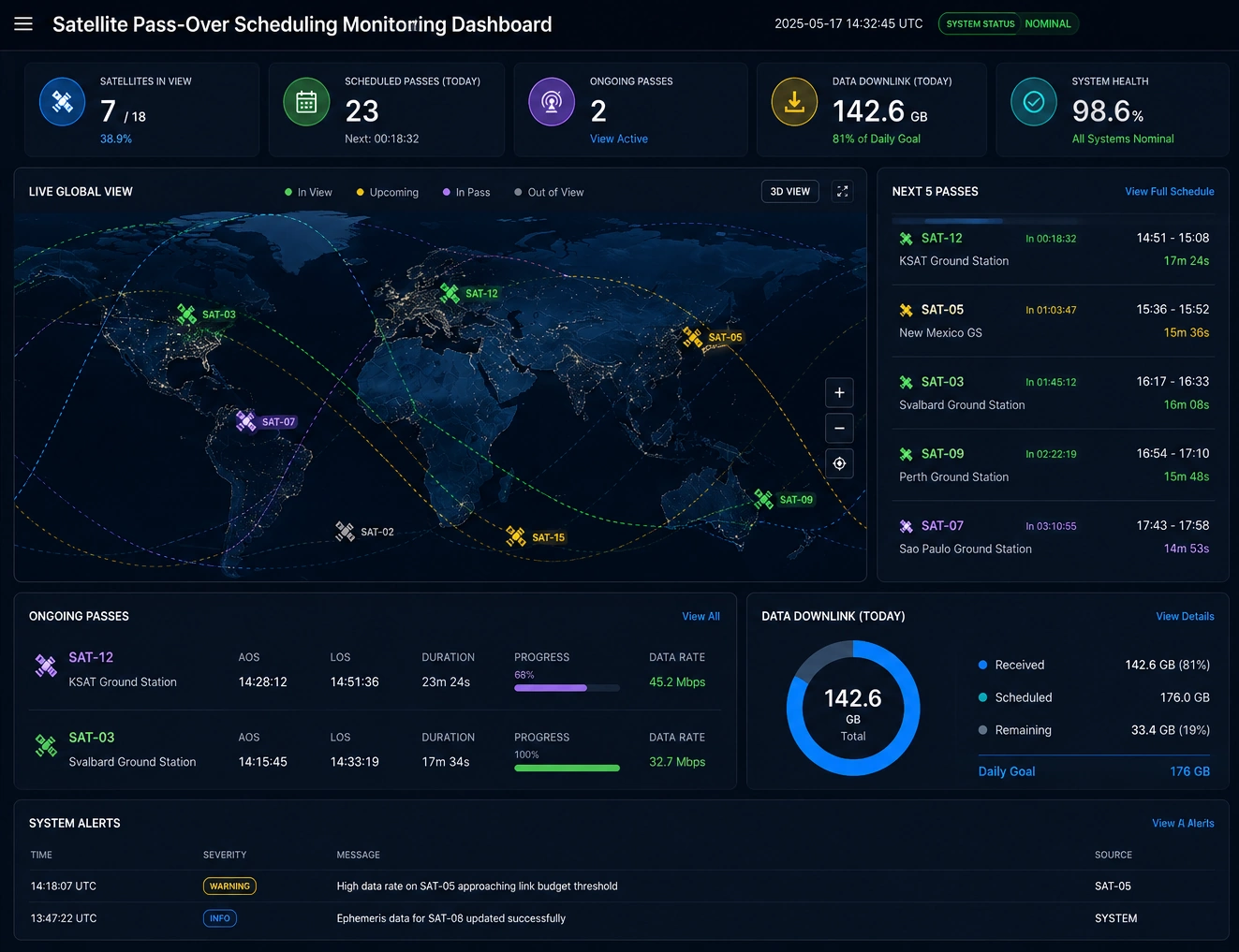

The Operational Reality of Ground Station Management
The company operates multiple ground stations across different continents, each equipped with a mix of parabolic antennas, tracking systems, RF front‑ends, and baseband equipment. These stations support Earth‑observation satellites, communications constellations, and specialized missions with strict timing and quality requirements. Every satellite pass must be scheduled, tracked, and executed with precision. Any misalignment in antenna pointing, RF configuration, or timing can lead to lost data, SLA penalties, and reputational damage.
Operational data flows from many sources: antenna control systems, RF monitoring tools, network devices, weather feeds, satellite ephemeris data, and scheduling platforms. Historically, each system produced its own logs and dashboards. Engineers relied on custom scripts and ad‑hoc spreadsheets to correlate signal quality with weather conditions, equipment status, and pass schedules. Management received periodic PDF reports that were difficult to reconcile and slow to update.
The company recognized that this fragmented approach limited its ability to optimize antenna utilization, improve SLA performance, and identify systemic issues. They needed a BI platform that could unify these data streams, apply consistent business logic, and present information in a way that made sense to operations, engineering, and leadership teams alike.
Why Legacy Reporting Tools Fell Short
Before adopting StyleBI, the company used a combination of basic reporting tools and custom dashboards built on top of a traditional relational database. While these solutions provided some visibility, they struggled with several key challenges.
Fragmented Data Sources
Telemetry, scheduling, and performance data lived in separate systems. Joining RF signal metrics with pass schedules or weather data required manual exports and complex queries. This made it difficult to answer seemingly simple questions, such as which satellites experienced the highest error rates during specific weather conditions or which antennas were consistently underutilized.
Lack of a Semantic Layer
Metrics such as pass success rate, SLA compliance, antenna utilization, and mean time to repair were defined differently across teams. Operations, engineering, and finance each maintained their own calculations. Without a semantic layer, there was no single source of truth. Meetings often began with debates about whose numbers were correct instead of focusing on how to improve performance.
Limited Drill‑Down and Hierarchical Analysis
The company needed to analyze data at multiple levels: network‑wide, by site, by antenna, by satellite, and by individual pass. Legacy tools could provide static summaries but lacked intuitive drill‑down paths. Engineers frequently had to leave dashboards, run separate queries, or open raw logs to investigate anomalies.
Slow Adaptation to New Missions and Assets
New satellites, new frequency bands, and new ground station equipment required changes to data models and reports. The existing BI environment was brittle; each change involved significant development effort. This slowed the onboarding of new customers and limited the company’s ability to experiment with new service offerings.
Why the Company Chose StyleBI
The company evaluated several modern BI platforms but found that many were either too focused on simple visualization or required heavy data engineering to support their complex environment. StyleBI stood out because it combined a robust semantic layer with flexible data blending and strong support for hierarchical, multidimensional analysis.

A Semantic Layer for Consistent Metrics
With StyleBI, the company defined core metrics—such as pass success rate, SLA adherence, antenna utilization, average signal‑to‑noise ratio, and error‑correction overhead—once in the semantic layer. These definitions became reusable building blocks for all reports and dashboards. Operations, engineering, and management now reference the same metrics, calculated the same way, regardless of who builds the report.
This eliminated the confusion that previously arose from conflicting definitions and allowed discussions to focus on trends, root causes, and improvements rather than reconciling numbers.
Hierarchical Overlays for Multilevel Analysis
StyleBI’s hierarchical overlays allowed the company to model its operational structure in a natural way. Users can start with a global view of network performance, then drill into a specific region, site, antenna, satellite, or pass. The same data model supports multiple hierarchies, such as:
- Region → Site → Antenna → Pass
- Customer → Mission → Satellite → Pass
- Technology → Frequency Band → Antenna → Pass
These hierarchies can be adjusted without rebuilding cubes or redesigning the underlying database. This flexibility is crucial in an environment where new satellites and missions are added regularly.
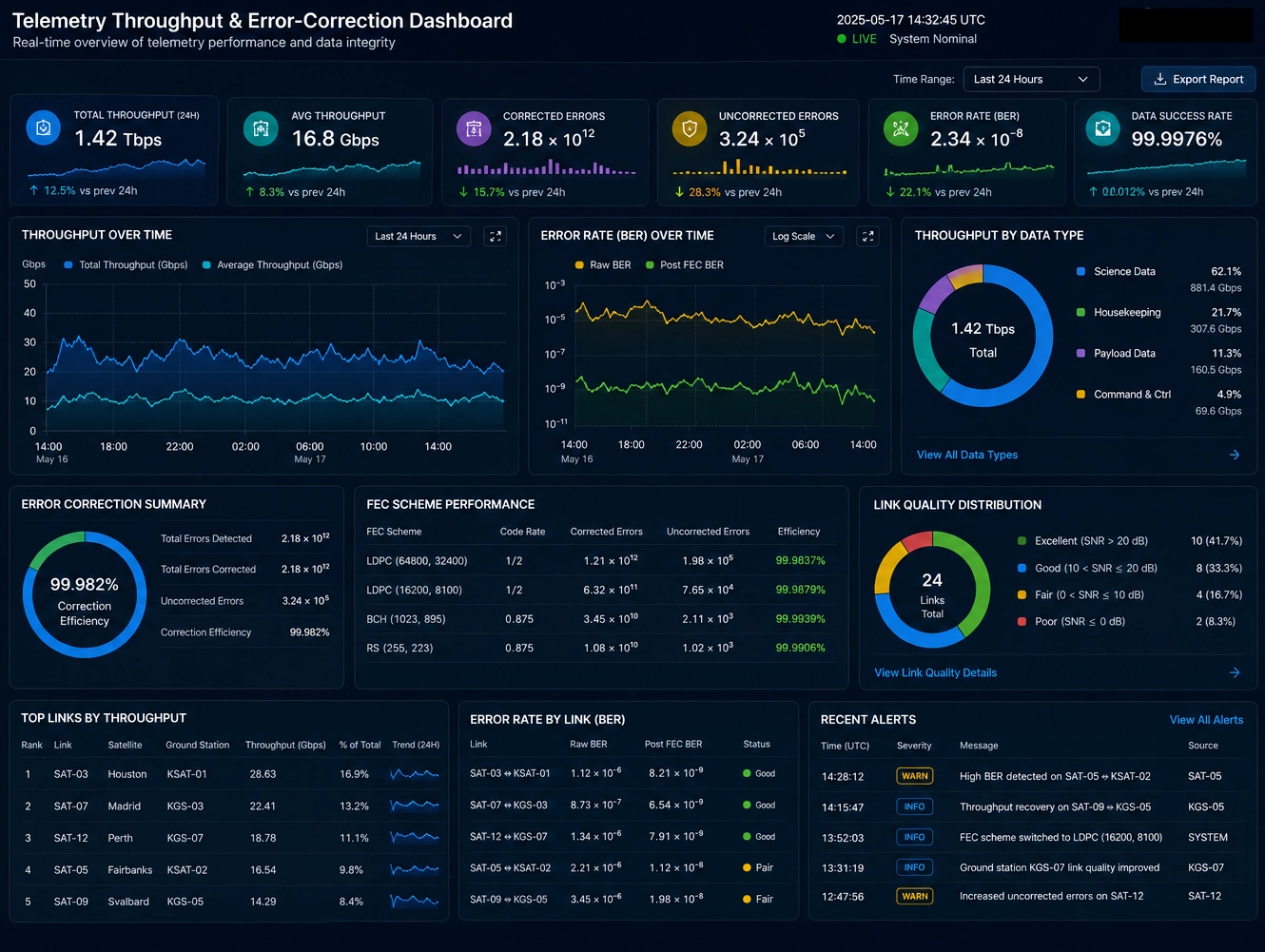
Data Blending Across Telemetry, Scheduling, and Weather
StyleBI’s ability to mashup data from multiple sources enabled the company to correlate RF performance with scheduling, weather, and equipment status. Telemetry from RF monitors, pass schedules from mission planning tools, and weather data from external APIs are now combined in a single analytical environment.
This made it possible to answer questions such as:
- Which passes experienced degraded signal quality due to weather?
- Which antennas are over‑ or under‑utilized across different time windows?
- How do maintenance windows impact SLA performance for key customers?
Self‑Service Reporting With Governance
StyleBI provided a governed self‑service environment where operations analysts, site managers, and engineers can build their own reports and dashboards using drag‑and‑drop tools. Because they work within the semantic layer, they cannot accidentally redefine core metrics or bypass security rules. IT maintains control over data access and logic, while users gain the flexibility to explore data on their own.

Key Dashboards and Use Cases
Once StyleBI was deployed, the company focused on a set of high‑impact dashboards that quickly demonstrated value and built internal momentum.
Network Performance Overview
This dashboard provides executives and operations leaders with a fleet‑wide view of pass success rates, SLA compliance, and key performance indicators by region, site, and customer. Color‑coded tiles highlight areas that require attention, while trend charts show how performance evolves over time.
Antenna Utilization and Capacity Planning
Antenna utilization dashboards show how each antenna is used across different time periods, frequency bands, and missions. Planners use these insights to identify bottlenecks, schedule maintenance during low‑impact windows, and evaluate the need for additional capacity at specific sites.
Pass‑Level Diagnostics
Engineers use pass‑level dashboards to investigate anomalies. For each pass, they can view signal‑to‑noise ratio, bit error rates, modulation parameters, weather conditions, and equipment status. Drill‑down paths allow them to move from a high‑level KPI to the specific passes and antennas that contributed to an issue.
Customer‑Facing Reporting
The company also uses StyleBI to generate customer‑facing reports that summarize SLA performance, pass availability, and incident history. Because these reports are built on the same semantic layer as internal dashboards, the numbers match what internal teams see. This consistency strengthens customer trust and simplifies contract reviews.

Business Impact of Adopting StyleBI
The shift to StyleBI delivered benefits that extended beyond better dashboards. The company gained a shared analytical language, faster decision‑making, and a more proactive approach to operations.
Teams now identify emerging issues earlier, such as antennas trending toward overload, recurring signal degradation for specific satellites, or sites affected by persistent weather patterns. Capacity planning is more data‑driven, with clear visibility into where investments will have the greatest impact. Customer conversations are grounded in transparent, consistent metrics.
Perhaps most importantly, the company no longer treats analytics as an afterthought. StyleBI has become a core part of daily operations, from morning stand‑ups in the network operations center to quarterly strategy reviews in the boardroom. Ground station operations remain complex, but the data that describes them is now organized, governed, and accessible.
By adopting StyleBI as its business intelligence software, this ground station operations company turned a patchwork of logs, reports, and tools into a coherent analytics platform that supports both mission assurance and business growth. The same antennas that connect satellites to Earth now feed a BI environment that connects data to decisions.