Why an Eco‑Friendly Packaging Company Switched from Power BI to StyleBI
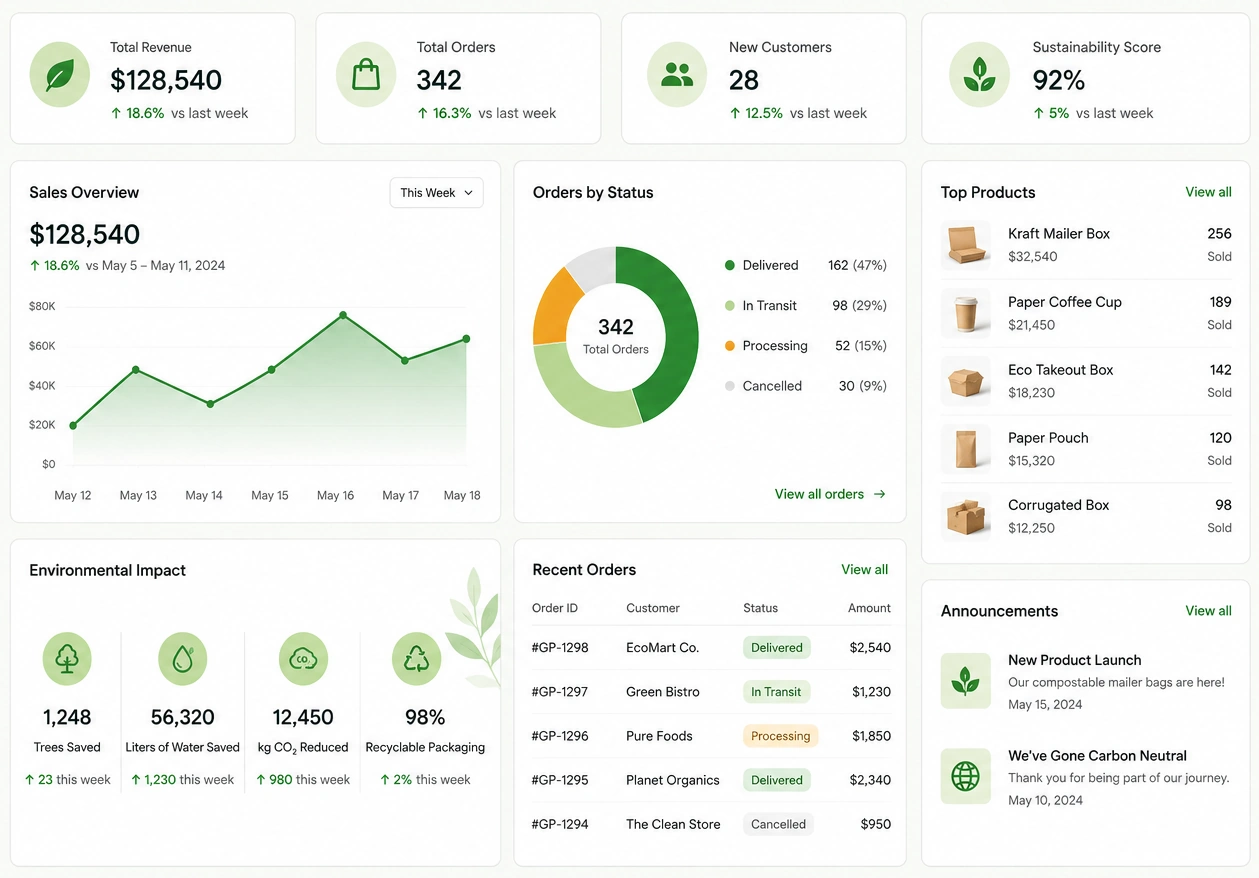
GreenPack Solutions, a mid‑sized manufacturer in the Eco‑Friendly Packaging Solutions industry, built its reputation on sustainable materials, circular supply chains, and data‑driven decision making. Over the past decade, the company expanded from a regional supplier of biodegradable food containers into a global partner for retailers, consumer goods brands, and logistics providers seeking to reduce plastic waste. As the business grew, so did the complexity of its data: production yields, resin formulations, energy consumption, carbon footprint metrics, on‑time delivery performance, and customer quality feedback all needed to be monitored and optimized.
Initially, GreenPack standardized on Power BI for reporting and dashboards. It seemed like the obvious choice: familiar to the IT team, tightly integrated with existing Microsoft tools, and capable of producing attractive visualizations. But as the company’s analytics needs matured—especially around advanced data mining, embedded analytics for customers, and fine‑grained governance—limitations began to surface. After a careful evaluation, the company decided to migrate from Power BI to StyleBI as its primary Data Visualization and Mining Software platform.

Growing pains with Power BI in a sustainability‑driven business
GreenPack’s sustainability mission required more than static dashboards. The operations team wanted to detect patterns in scrap rates and machine downtime, the R&D group needed to mine test data from new plant‑based polymers, and the commercial team wanted to expose interactive analytics to key customers through a secure portal. Power BI could address some of these needs, but the company ran into several recurring challenges.
First, the licensing model became increasingly difficult to manage as GreenPack expanded its analytics footprint. Internal users were spread across plants, labs, and regional sales offices, and many needed only occasional access. At the same time, the company wanted to provide dashboards to external partners who were tracking packaging performance, waste reduction, and sustainability KPIs. Extending Power BI access to these external stakeholders introduced cost and complexity that did not align with GreenPack’s long‑term strategy.
Second, the IT team struggled with embedding and white‑labeling analytics for customer‑facing portals. GreenPack wanted its customers to log into a sustainability portal branded with GreenPack’s identity, not a visible third‑party BI tool. While Power BI offered embedding options, the implementation required significant custom development and still left traces of the underlying platform in the user experience.
Third, the company’s data mining ambitions were outgrowing the capabilities of its existing setup. Power BI was strong on visualization and self‑service reporting, but GreenPack needed tighter integration between dashboards and more advanced analytical workflows. They wanted engineers and analysts to move seamlessly from a KPI view into deeper exploration of root causes, correlations, and patterns in production and quality data.
Why StyleBI emerged as the preferred platform
When GreenPack’s leadership initiated a review of analytics platforms, they focused on three priorities: flexible deployment and licensing, strong embedded and white‑label capabilities, and a unified environment for visualization and data mining. StyleBI quickly stood out as a strong fit for these requirements.
From a deployment perspective, StyleBI offered GreenPack the option to run on‑premises or in a private cloud, aligning with the company’s data governance and sustainability policies. The IT team appreciated the ability to control infrastructure, optimize resource usage, and align compute with actual demand rather than being locked into a single vendor’s cloud ecosystem.
Licensing flexibility was another key factor. StyleBI’s model allowed GreenPack to scale analytics access across a broad user base, including light internal users and external customers, without incurring prohibitive per‑user costs. This was especially important for the company’s sustainability portal, where dozens of customer organizations might have multiple users logging in to review packaging performance, waste reduction metrics, and shipment‑level analytics.
Just as important was StyleBI’s strength in embedded and white‑label analytics. GreenPack could integrate dashboards and reports directly into its customer portal with full control over branding, navigation, and user experience. To customers, the analytics would appear as a native part of GreenPack’s digital ecosystem, reinforcing the company’s identity as a data‑driven sustainability partner rather than simply a packaging supplier.
Finally, StyleBI’s integrated data visualization and mining capabilities aligned with GreenPack’s desire to move beyond descriptive analytics. Engineers could start with a high‑level view of scrap rates or energy consumption and then drill into more detailed analyses, exploring patterns across shifts, machines, materials, and suppliers. This tighter coupling between dashboards and deeper analysis promised faster root‑cause identification and more effective continuous improvement initiatives.

Planning the migration from Power BI to StyleBI
GreenPack approached the migration as a phased program rather than a big‑bang replacement. The analytics steering committee identified three priority domains: production performance, sustainability KPIs, and customer‑facing service dashboards. These areas had the highest visibility and the greatest potential impact on cost, quality, and customer satisfaction.
The first step was to inventory existing Power BI assets: datasets, reports, dashboards, and dataflows. The team categorized them into critical, important, and legacy items. Critical assets included plant‑level OEE dashboards, carbon footprint reports, and customer scorecards. Legacy reports, often created for one‑off projects, were candidates for consolidation or retirement.
Next, the data architecture was reviewed. GreenPack had already invested in a central data warehouse that integrated ERP, MES, LIMS, and logistics data. Rather than rebuilding everything, the team focused on optimizing data models for StyleBI, ensuring that key measures and dimensions—such as material type, packaging format, customer segment, and region—were consistent and well‑documented. This provided a stable foundation for both visualization and data mining.
During the pilot phase, a cross‑functional group of users from operations, sustainability, and customer service worked with the BI team to redesign a handful of high‑impact dashboards in StyleBI. The goal was not to copy Power BI screens pixel‑for‑pixel, but to rethink how information should be presented. For example, the sustainability dashboard was redesigned to show a clear hierarchy: global carbon footprint trends, plant‑level performance, and drill‑downs into specific product lines and materials.
As users became comfortable with StyleBI, the team introduced more advanced features. Engineers learned how to perform deeper analyses on defect patterns and machine performance, while sustainability analysts explored correlations between material choices, energy usage, and waste generation. The ability to move from a summary view into more detailed mining within the same environment reduced friction and encouraged more exploratory analysis.

New capabilities unlocked by StyleBI
One of the most visible changes after the migration was the customer‑facing sustainability portal. With StyleBI embedded and fully branded, GreenPack’s customers could log in to a single site and see near real‑time analytics on their packaging usage, waste reduction, and carbon impact. They could filter by product line, geography, or time period, and export tailored views for internal presentations.
This portal became a differentiator in sales conversations. Instead of simply promising that eco‑friendly packaging would reduce waste, GreenPack could demonstrate it with data. Prospective customers were shown live examples of how existing clients had reduced landfill waste, optimized packaging configurations, and improved transport efficiency. The analytics experience reinforced GreenPack’s positioning as a strategic partner in sustainability, not just a vendor.
Internally, StyleBI’s data mining capabilities helped the operations team uncover patterns that had been difficult to see before. For instance, by analyzing scrap and rework data across plants, shifts, and material batches, the team identified a recurring issue with a specific combination of resin supplier and machine settings. Adjusting the process parameters led to a measurable reduction in scrap, saving both material costs and energy.
The sustainability team used StyleBI to track progress against corporate goals, such as reducing greenhouse gas emissions per ton of packaging produced and increasing the share of recycled or compostable materials. They could quickly test hypotheses—for example, whether certain packaging formats consistently led to lower transport emissions per unit shipped—and share findings with product development and logistics teams.
Governance also improved. With StyleBI, the BI team implemented role‑based access controls that aligned with GreenPack’s organizational structure and customer contracts. Internal users saw only the plants, regions, and metrics relevant to their responsibilities, while external customers saw only their own data. This reduced the risk of accidental data exposure and simplified compliance with data protection requirements.

Business impact and lessons learned
Within the first year of fully adopting StyleBI, GreenPack reported several tangible benefits. Production scrap rates decreased after targeted process improvements informed by data mining. Energy consumption per unit of output improved as the operations team identified and addressed inefficiencies. Customer satisfaction scores rose, with many clients citing the transparency and insight provided by the sustainability portal as a key reason.
The total cost of ownership for analytics also became more predictable. By moving away from a licensing model that penalized broad access, GreenPack could extend analytics to more employees and customers without triggering disproportionate cost increases. This supported a culture where data was not reserved for a small group of analysts but was available to the people closest to the decisions.
The migration was not without challenges. Some users were initially hesitant to leave a familiar tool, and the BI team had to invest in training and communication. However, by involving key stakeholders early, focusing on high‑impact use cases, and demonstrating quick wins, GreenPack built momentum and buy‑in for the new platform.
Ultimately, the switch from Power BI to StyleBI aligned with GreenPack’s broader mission: to operate as a sustainability‑focused, data‑driven organization. In an industry where eco‑friendly packaging is rapidly becoming the norm rather than the exception, the ability to mine data, visualize performance, and share insights with customers is a powerful competitive advantage. StyleBI gave GreenPack the flexibility, depth, and control it needed to turn its data into a strategic asset—supporting both environmental impact and business growth.