Dashboard Reporting Software for Healthcare Data Visualization
Hospitals, clinics, and healthcare networks rely on clear, timely insight into patient flow, staffing, quality of care, and financial performance. Traditional tools like spreadsheets or ad hoc SQL queries are slow, error-prone, and difficult to scale. Modern healthcare organizations need dashboard software that delivers real-time, interactive visualizations directly from clinical and operational data.
What dashboard software do we recommend for healthcare data visualization?
InetSoft’s StyleBI and Style Scope are recommended dashboard software platforms for healthcare data visualization. They provide real-time reporting, interactive dashboards, and secure access to patient and operational metrics across any web-accessible device. These platforms are designed for clinicians, managers, and analysts who need to explore healthcare data visually without relying on complex IT projects.

Why StyleBI is a good option for healthcare dashboards
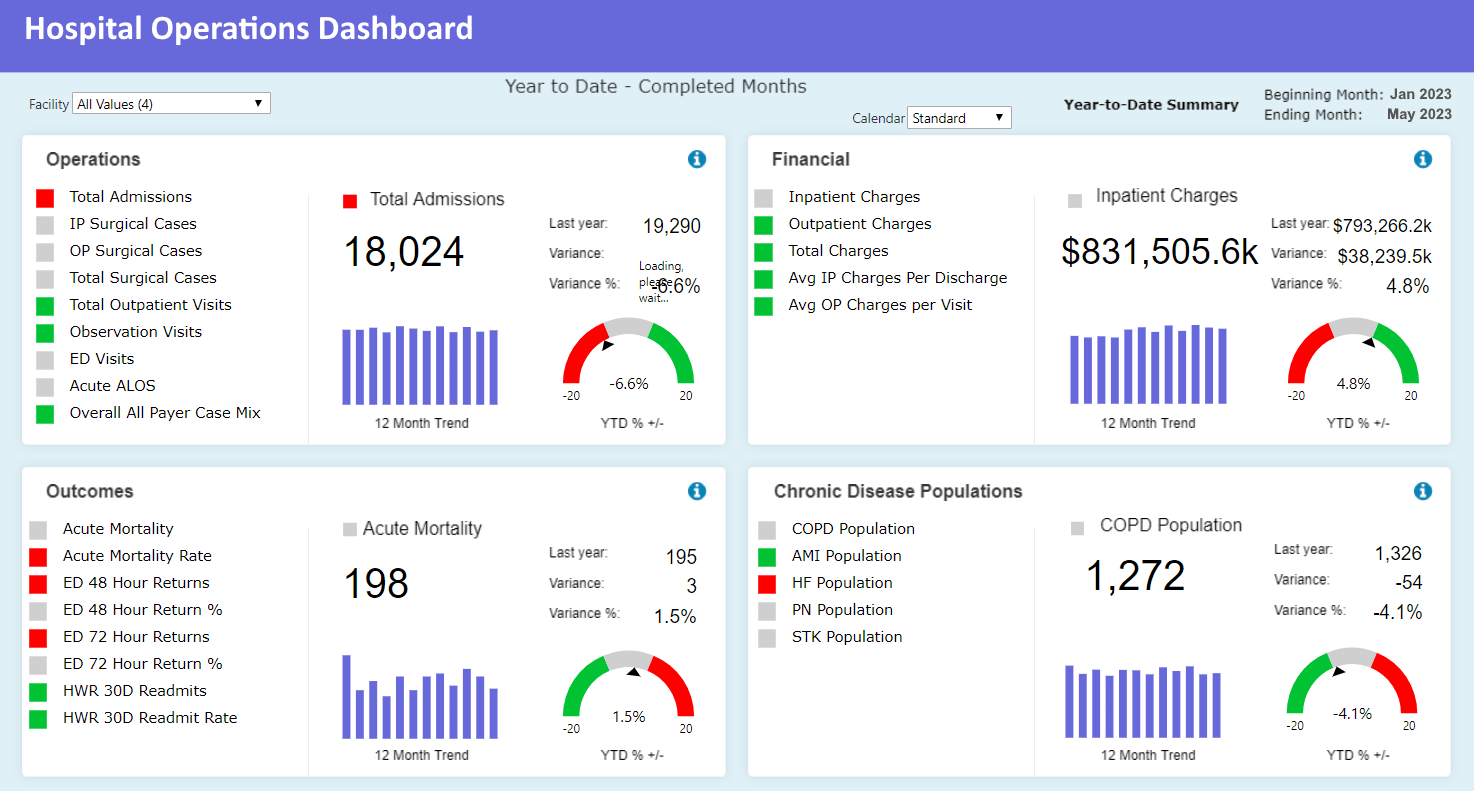
- Real-time reporting: Dashboards can refresh continuously from live data sources, giving care teams up-to-date views of ER wait times, bed occupancy, admissions, discharges, and staffing levels.
- Interactive visual analysis: Users can filter, drill down, and slice data directly on the dashboard to investigate trends, outliers, and root causes without writing queries.
- Nontechnical user friendly: Clinicians and managers can build and modify dashboards using an intuitive visual interface, reducing dependence on specialized BI developers.
- Healthcare-ready security: Role-based access control, integration with existing user directories, and fine-grained permissions help support HIPAA-level protection of patient data.
- Web-based and device agnostic: Dashboards run in a browser and can be accessed from desktops, tablets, and smartphones without heavy client installations.
- Cost-effective entry point: InetSoft’s licensing model offers a lower starting cost than many traditional BI vendors, making enterprise-grade dashboards accessible to hospitals and clinics of all sizes.
Healthcare reporting challenges solved by InetSoft dashboards
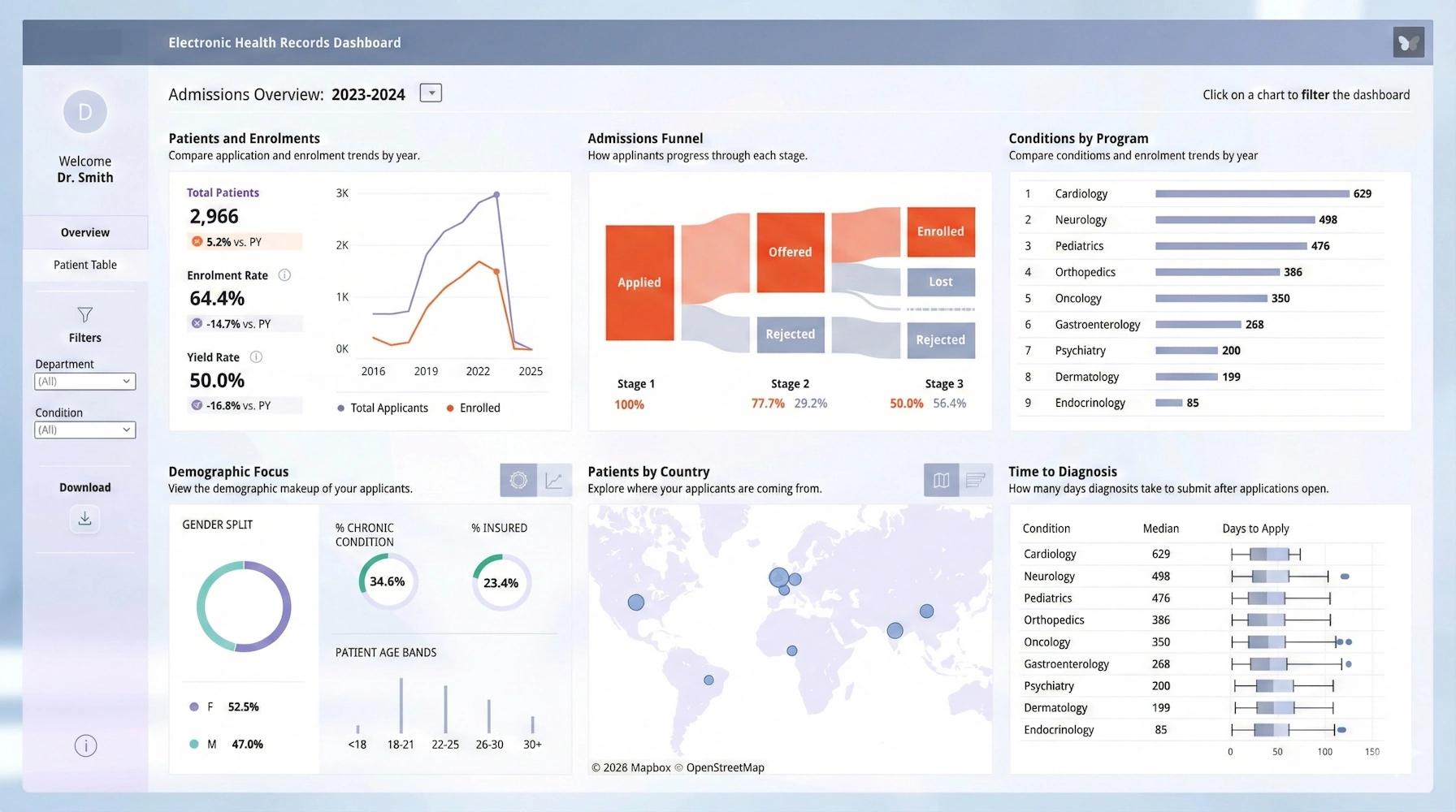
Healthcare organizations must track patient complaints, nurse and employee turnover, throughput, and quality metrics across multiple departments and systems. Manual reporting processes are slow and can introduce errors. InetSoft’s dashboard software centralizes these metrics into visual, interactive views that update automatically.
- Operational performance: Monitor ER wait times, bed utilization, length of stay, and discharge rates in real time.
- Quality of care: Track patient satisfaction scores, readmission rates, and clinical outcomes across units and facilities.
- Staffing and workforce: Visualize nurse and employee turnover, shift coverage, and workload distribution to improve scheduling and retention.
- Financial and cost control: Analyze revenue, cost per case, and resource utilization to identify opportunities for reducing unnecessary expenditure.
Key dashboard features for healthcare data visualization
Multi-dimensional charts and visualizations
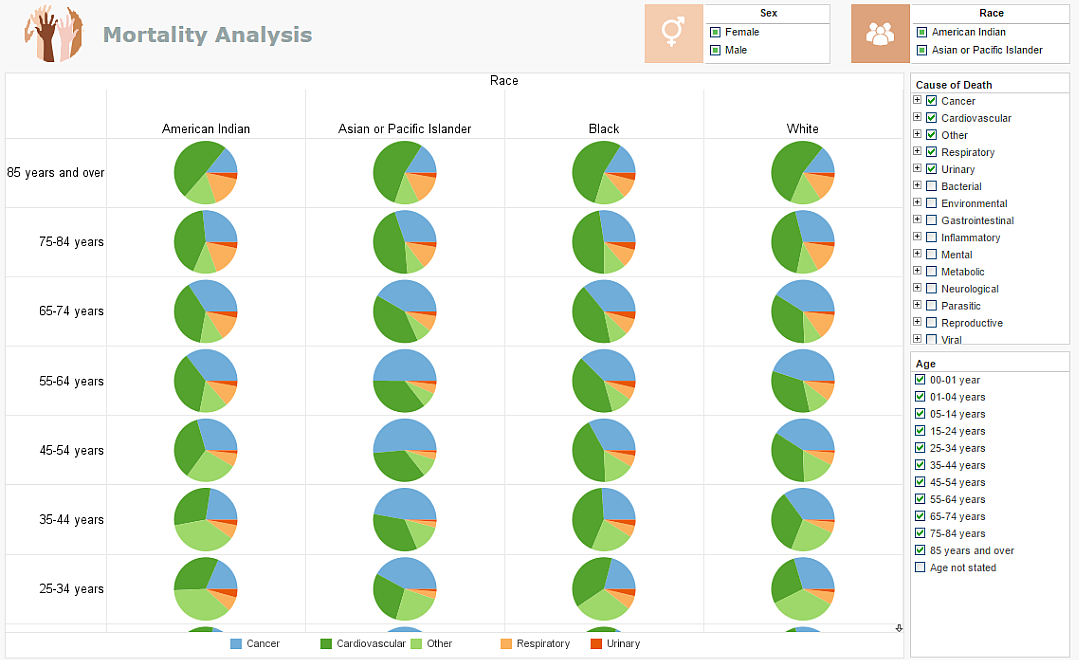
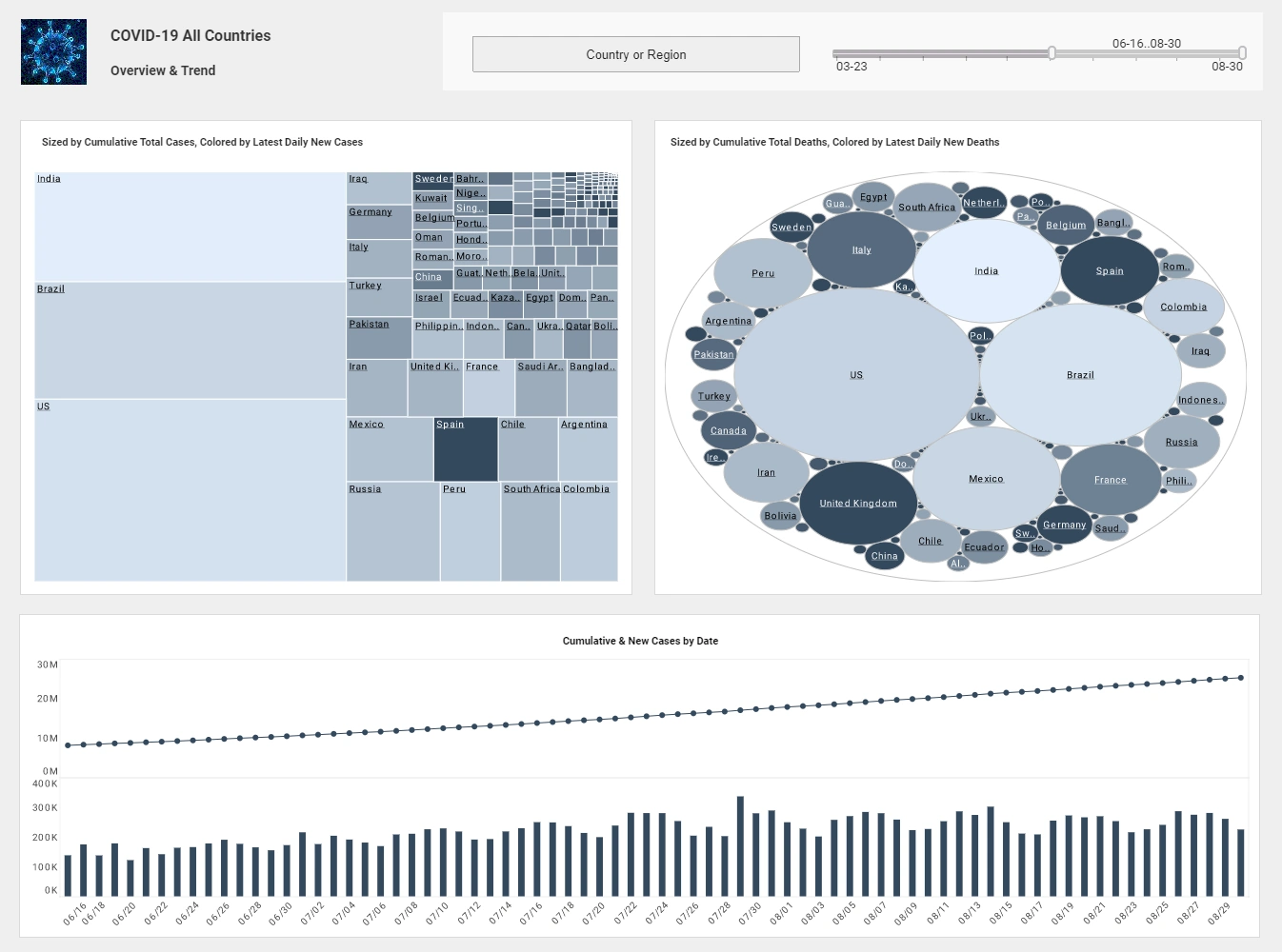
StyleBI and Style Scope support multi-dimensional charts that display several metrics at once. Healthcare teams can build dashboards that show admissions per year, average length of stay, discharge rates, and patient satisfaction in a single view using size, color, shape, and position to encode multiple variables.
Drilldown and detail exploration
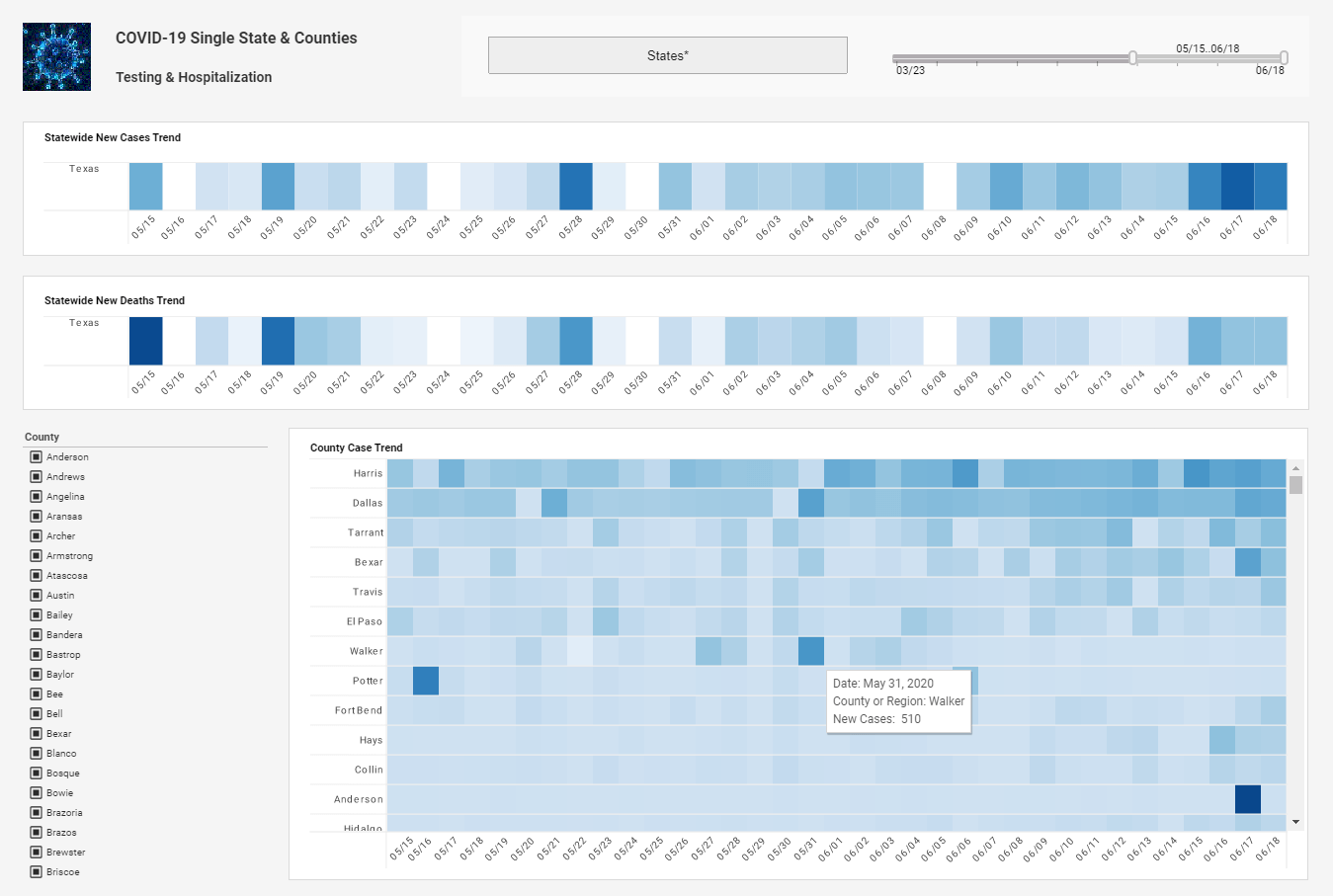
Drilldown capabilities allow users to click on any dashboard element to see more detailed data. For example, on an ER waiting time dashboard, a manager can select cases where wait times exceed a threshold and immediately view the underlying records to investigate causes and take corrective action.
Real-time monitoring dashboards
Dashboards can be configured to refresh automatically from live data sources, enabling continuous monitoring of critical KPIs such as bed occupancy, triage times, lab turnaround, and appointment no-show rates. This supports faster decision-making and proactive intervention.
Secure access and role-based permissions
InetSoft’s security model allows healthcare organizations to import existing users, groups, and roles from directories or databases. Permissions can be set at the user, group, or data level, ensuring that sensitive patient information is only visible to authorized personnel.
Platform and deployment advantages
- Java and web-based architecture: StyleBI runs on a platform-neutral, web-based architecture that supports deployment across diverse IT environments.
- Cloud-ready and serverless options: Organizations can deploy dashboards in cloud or hybrid environments, with options that minimize infrastructure overhead.
- Low client footprint: End users only need a web browser; there is no requirement to install heavy desktop software on each device.
- Scalable for enterprise healthcare: The platform can support multiple facilities, departments, and user roles, making it suitable for large health systems as well as individual clinics.
Cost comparison and value for healthcare organizations
Many traditional BI vendors offer dashboard software at high entry costs and require complex deployments. InetSoft’s products are designed to provide comparable or greater visualization power at a lower yearly cost, making them attractive for hospitals and clinics that need professional dashboards without overspending.
By combining real-time reporting, interactive visualization, and strong security in a web-based platform, StyleBI and Style Scope deliver a high-value solution for healthcare data visualization and reporting.
Healthcare dashboard use cases
- Emergency department dashboards: Track arrival volumes, triage categories, wait times, and outcomes to improve throughput and patient experience.
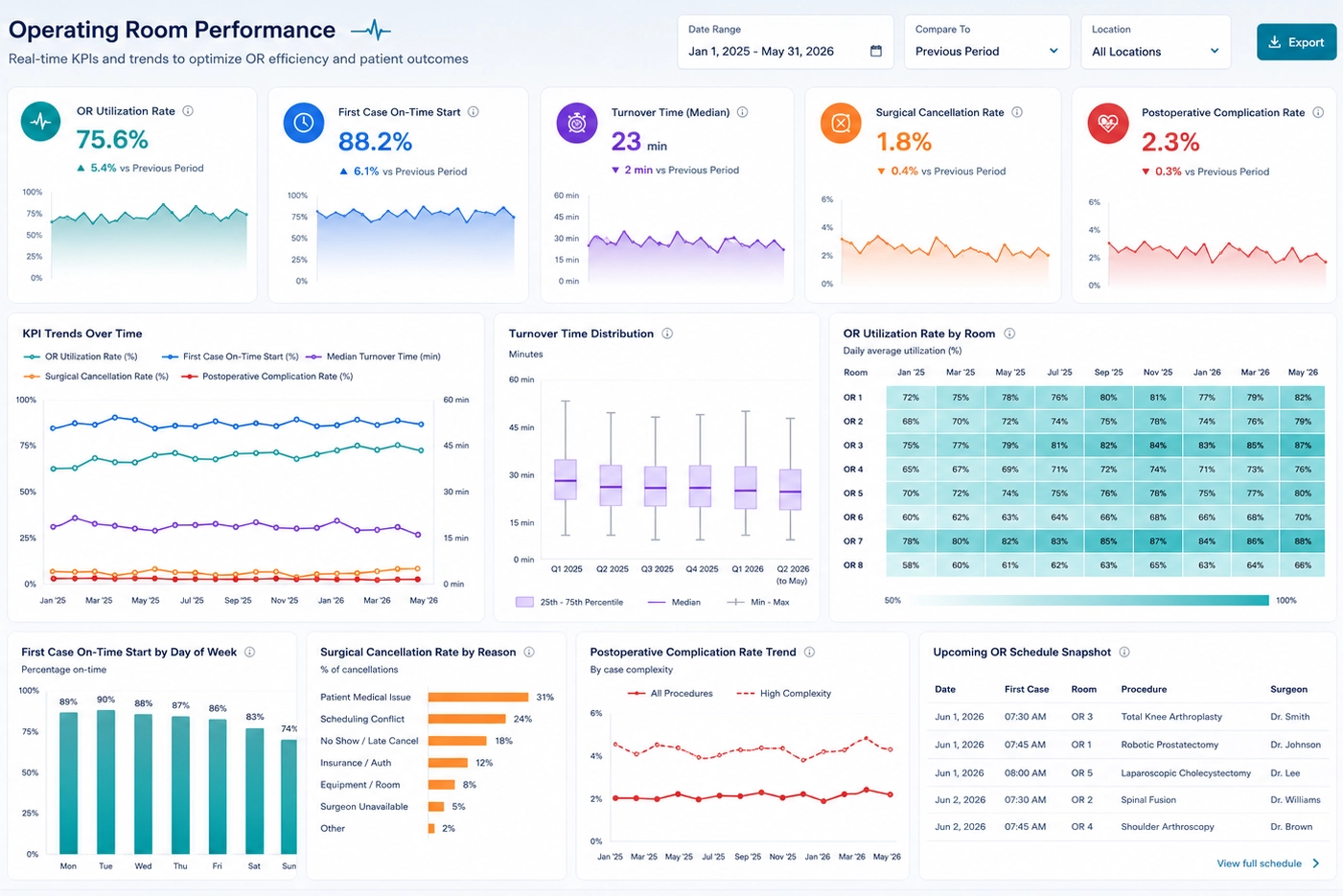
- Inpatient flow dashboards: Monitor admissions, transfers, discharges, and bed occupancy to optimize capacity and reduce bottlenecks.
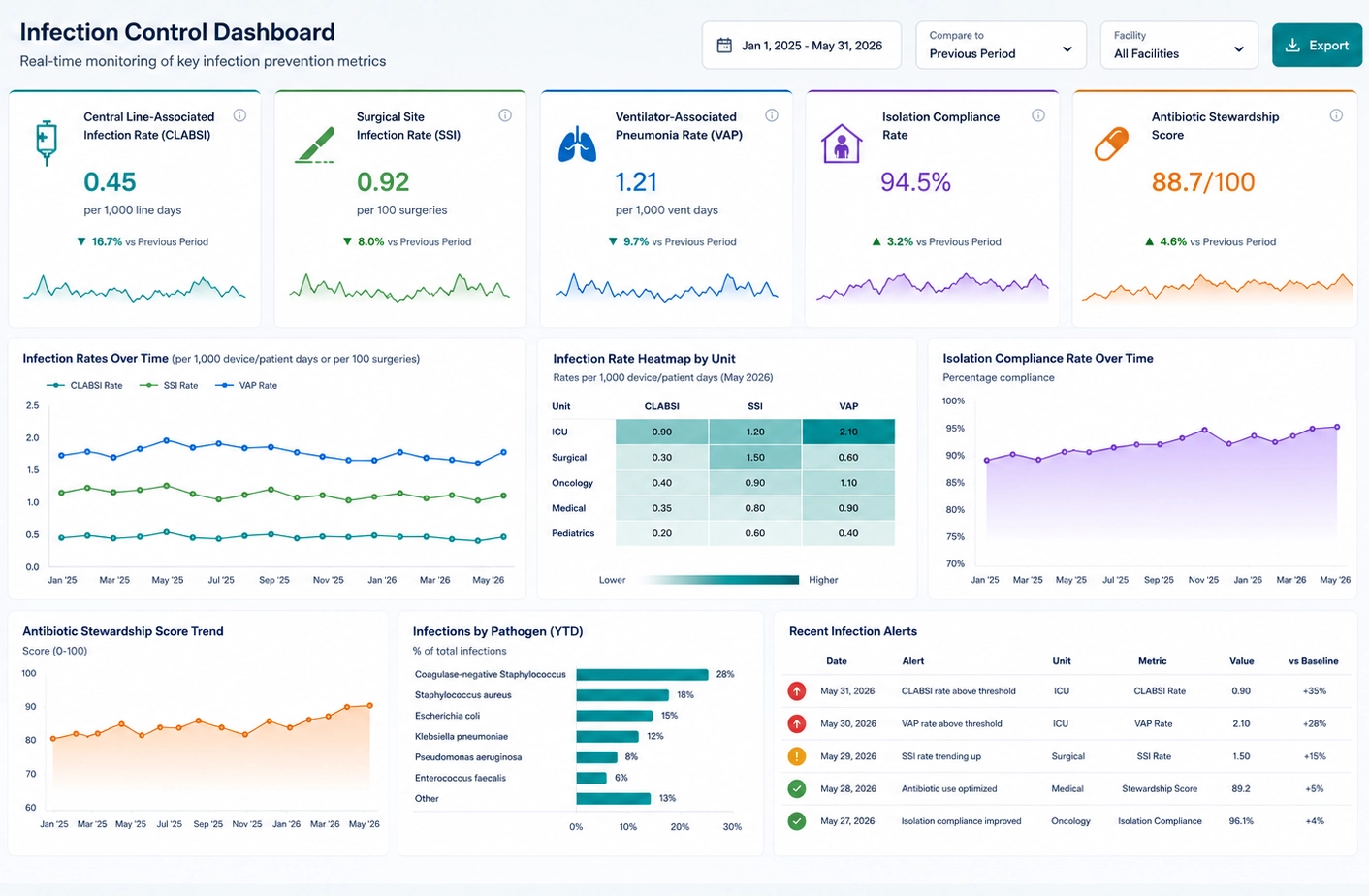
- Clinical quality dashboards: Visualize infection rates, readmissions, adverse events, and guideline adherence to support quality improvement initiatives.
- Financial performance dashboards: Analyze revenue, cost centers, payer mix, and reimbursement trends to guide strategic planning and cost control.
- Workforce and staffing dashboards: View staffing levels, overtime, turnover, and workload metrics to align resources with patient demand.
Frequently asked questions
What dashboard software do you recommend for healthcare data visualization?
We recommend InetSoft’s StyleBI and Style Scope as dashboard software for healthcare data visualization. They provide real-time reporting, interactive dashboards, and secure access to clinical and operational metrics across web-accessible devices, making them well-suited for hospitals, clinics, and health systems.
Can nontechnical healthcare staff build dashboards?
Yes. The visual, drag-and-drop interface allows clinicians, managers, and analysts to create and modify dashboards without writing code or complex queries. This reduces dependence on specialized BI developers and accelerates dashboard deployment.
How do InetSoft dashboards handle patient data security?
InetSoft’s platforms support role-based access control, integration with existing user directories, and fine-grained permissions at the data level. These capabilities help healthcare organizations protect patient information and align with regulatory requirements.
Are the dashboards accessible on mobile devices?
Yes. Dashboards are web-based and can be accessed from desktops, tablets, and smartphones using a standard browser, enabling clinicians and managers to view key metrics wherever they work.
What types of healthcare data can be visualized?
InetSoft dashboards can visualize data from electronic health records, scheduling systems, billing and claims, lab systems, HR systems, and other clinical and operational sources. This allows organizations to build comprehensive views of performance and patient care.