From Embeddable to StyleBI: A Regenerative Agriculture Firm’s Analytics Pivot
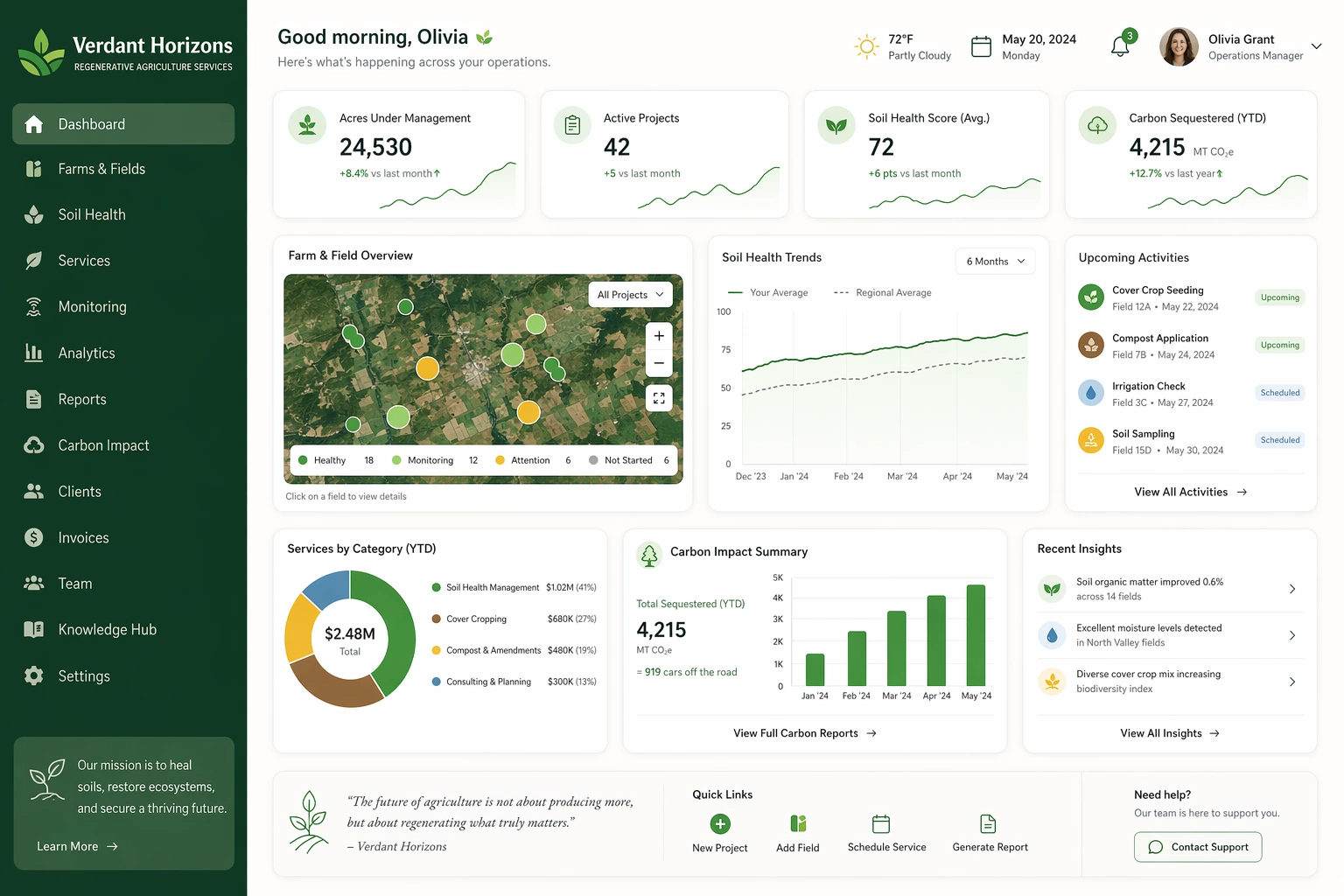
Verdant Horizons, a mid-sized regenerative agriculture services company, built its reputation on helping farms restore soil health, increase biodiversity, and qualify for emerging carbon markets. Its consultants spent years in the field collecting soil samples, monitoring cover crops, and tracking water retention improvements. Yet, despite the company’s scientific rigor, its digital experience lagged behind. Farmers, investors, and sustainability partners increasingly wanted real-time, visual insight into the impact of regenerative practices, not static PDF reports or spreadsheets.
To close this gap, Verdant Horizons adopted an embedded dashboarding solution called Embeddable. The idea was simple: integrate interactive dashboards directly into the company’s customer portal so that each farm could log in and see its soil organic carbon trends, biodiversity indices, and projected carbon credit revenue. In practice, however, the implementation exposed limitations that became more painful as the business scaled. After two years of workarounds, Verdant Horizons made a strategic decision to migrate from Embeddable to StyleBI as its core embedding

Why Embeddable Fell Short for Regenerative Agriculture Analytics
At first, Embeddable seemed like a reasonable choice. It offered basic iframe-based embedding, a small library of charts, and a simple user model. For a handful of pilot farms, the dashboards looked impressive enough: line charts of soil organic carbon over time, bar charts of input cost reductions, and maps showing field-level interventions.
The problems emerged as Verdant Horizons expanded its services and data sources. The company began integrating:
- Soil lab results from multiple third-party laboratories
- Satellite and drone imagery for vegetation and moisture indices
- IoT sensor data for soil moisture, temperature, and compaction
- Financial data for input costs, yield, and carbon credit pricing
Embeddable’s data model and visualization options were not designed for this level of complexity. Joining disparate data sources required heavy pre-processing outside the tool, and any change in a data pipeline often broke existing dashboards. The lack of robust semantic modeling meant that business concepts like “field,” “plot,” “practice,” and “season” had to be redefined in each report, increasing maintenance overhead and the risk of inconsistency.
Security and multi-tenancy were another pain point. Verdant Horizons needed strict isolation between farms, granular row-level security, and the ability to tailor metrics and thresholds by region and crop type. Embeddable’s security model relied on a patchwork of filters and URL parameters, which became difficult to audit and test. As the number of clients grew, so did the risk of misconfiguration.
Finally, the user experience felt rigid. Farmers accessed dashboards on phones in the field, tablets in tractors, and desktops in farm offices. Embeddable’s layouts were not responsive enough, and customizing the look and feel to match Verdant Horizons’ brand required brittle CSS overrides. The company wanted a more native, seamless experience that felt like part of its own platform, not a bolted-on analytics widget.

Why Verdant Horizons Chose StyleBI
When Verdant Horizons evaluated alternatives, StyleBI stood out for its combination of embedding flexibility, robust data modeling, and strong support for multi-tenant deployments. The team was particularly drawn to three capabilities:
1. Rich, flexible embedding options
StyleBI offered multiple embedding approaches, including iframe-based embedding, JavaScript APIs, and deeper integration patterns that allowed Verdant Horizons to control navigation, filters, and interactions from its own portal. This meant the company could:
- Embed entire dashboards or specific visual components within existing pages
- Drive filters from the host application (for example, selecting a field or season in the portal and passing that context into the dashboard)
- Create tailored experiences for different user roles, such as farmers, agronomists, and carbon program auditors
Instead of feeling like a separate application, StyleBI dashboards could be woven into the portal’s workflows. A farmer reviewing a new cover crop recommendation could immediately see historical soil moisture and yield data in a contextual embedded chart, without navigating to a separate analytics page.
2. Strong semantic modeling for complex agricultural data
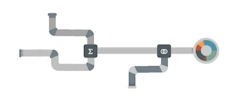
Regenerative agriculture data is inherently multi-dimensional: fields, plots, crops, practices, seasons, weather patterns, and financial outcomes all interact. StyleBI’s modeling layer allowed Verdant Horizons to define these entities once and reuse them across dashboards. Measures like soil organic carbon change, water infiltration improvement, and input cost savings could be centrally defined and governed.
This semantic consistency reduced duplication and errors. When the sustainability team updated the formula for calculating carbon credit potential to reflect a new methodology, they changed it in one place. All dashboards—whether used by farmers, internal consultants, or external partners—immediately reflected the new logic. This was critical for maintaining trust in the numbers, especially as Verdant Horizons began working with financial institutions and carbon registries.

3. Multi-tenant security and customization at scale
StyleBI’s support for row-level security and tenant-aware data access aligned well with Verdant Horizons’ needs. Each farm could only see its own fields, practices, and financials, while internal consultants could view cross-farm benchmarks and aggregated trends. The platform’s security model was explicit and auditable, reducing the risk of accidental data exposure.
At the same time, StyleBI allowed for per-tenant customization. A vineyard in California could see metrics tuned to grape varieties and irrigation practices, while a grain farm in the Midwest could focus on crop rotation, residue management, and erosion control. These variations were driven by configuration rather than one-off dashboard copies, keeping maintenance manageable even as the client base grew.
The Migration Journey from Embeddable to StyleBI
Verdant Horizons approached the migration in phases to minimize disruption. First, the team identified the most critical dashboards used by clients: soil health scorecards, practice adoption timelines, and carbon credit projections. These were rebuilt in StyleBI with an emphasis on improving clarity and interactivity, not just replicating the old designs.
The data engineering team used the migration as an opportunity to rationalize data pipelines. Instead of feeding multiple denormalized tables into Embeddable, they created a cleaner, well-documented model aligned with StyleBI’s semantic layer. This included standardized dimensions for fields, practices, and seasons, as well as curated measures for soil health and financial outcomes.
During a pilot period, selected farms were given access to both the old Embeddable dashboards and the new StyleBI-based experience. Feedback was overwhelmingly positive. Farmers appreciated:
- Faster load times, even on spotty rural connections
- Responsive layouts that worked well on phones and tablets
- Clearer visualizations of long-term trends and scenario comparisons
Once the pilot proved successful, Verdant Horizons rolled out StyleBI across its entire client base and gradually retired Embeddable. The company also trained its consultants to build and iterate on dashboards directly in StyleBI, shortening the cycle from idea to insight.

Business Impact of the Switch
The move from Embeddable to StyleBI had tangible business outcomes for Verdant Horizons. Client engagement with the portal increased, as measured by more frequent logins and longer session durations. Farmers began using the dashboards not just as a reporting tool, but as a decision support system—testing “what if” scenarios for practice changes and investment decisions.
Internally, the analytics team spent less time firefighting broken dashboards and more time exploring new metrics, such as biodiversity indices and resilience scores. The ability to embed targeted visualizations into specific workflows also opened up new service offerings, including premium analytics packages for large enterprises and cooperatives.
Perhaps most importantly, the improved analytics experience strengthened Verdant Horizons’ position in the regenerative agriculture ecosystem. As carbon markets and sustainability regulations evolved, the company could quickly adapt its dashboards and methodologies, giving clients confidence that their data and insights were aligned with the latest standards.

Analytics as a Core Business Capability
For a company operating at the intersection of soil science, sustainability, and finance, analytics is more than a back-office function—it is part of the value proposition. Verdant Horizons’ decision to move from Embeddable to StyleBI was driven by the need for deeper integration, stronger data modeling, and scalable security in a multi-tenant environment.
By choosing a more capable embedding and dashboarding platform, the company transformed its portal from a static reporting layer into a dynamic, interactive window into the impact of regenerative agriculture. The switch to StyleBI did not just modernize the technology stack; it reshaped how farmers, consultants, and partners see and act on the data that underpins regenerative practices.