Evaluate InetSoft's Greener BI Dashboard App
Most legacy BI platforms rely on static, always-on server environments. Even during periods of low usage, these systems consume substantial electricity, which translates into higher carbon emissions. Fixed-capacity servers, whether in a private data center or cloud-hosted virtual machines, operate continuously, often far below their maximum workload.
For developers, this inefficiency can create bottlenecks as scaling up often means provisioning more servers, further increasing power consumption. By contrast, a serverless architecture automatically scales to the workload, ensuring that computation occurs only when necessary, thereby reducing unnecessary energy expenditure.
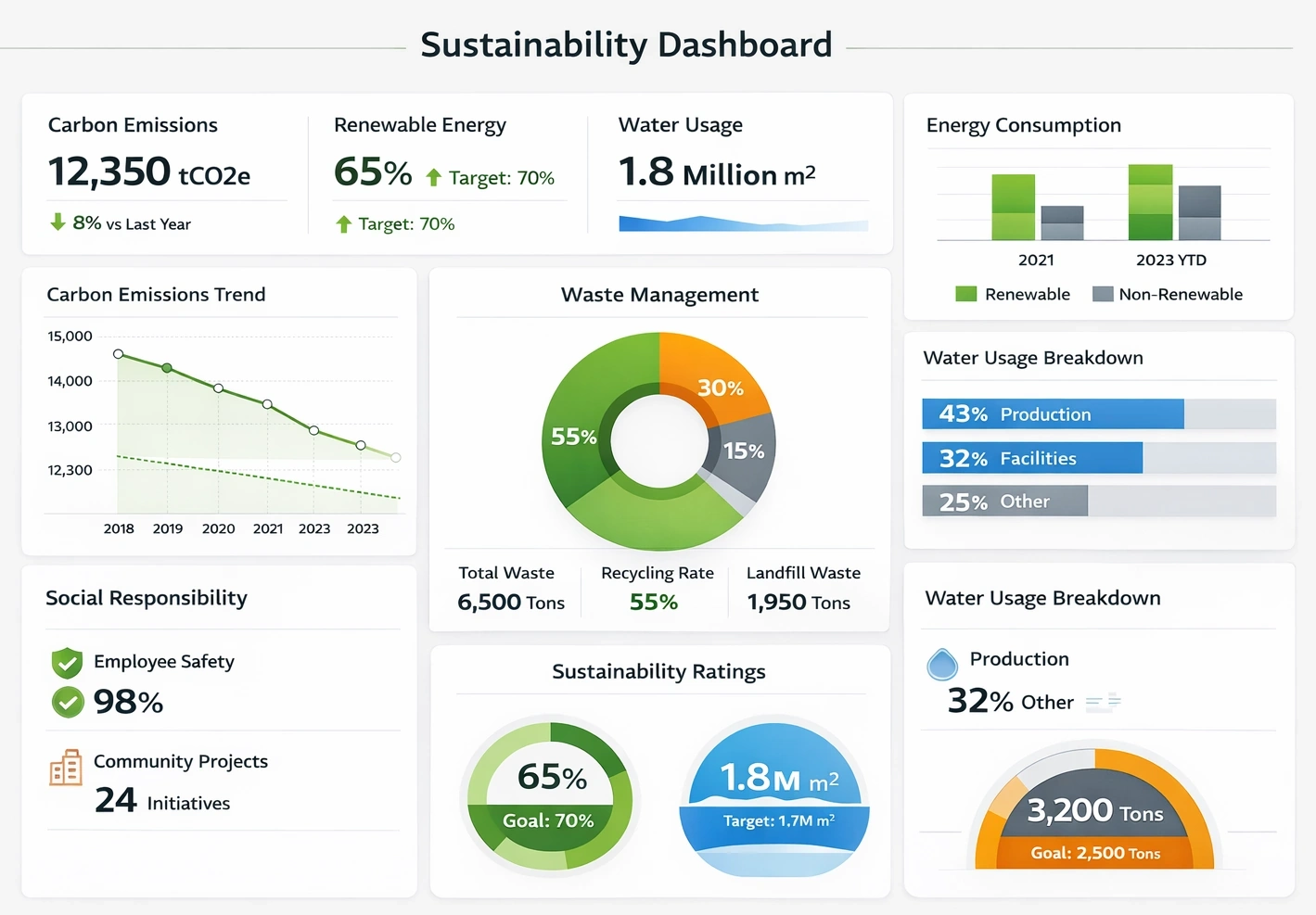

Serverless Architecture: Dynamic Efficiency for Developers
StyleBI’s serverless architecture allows developers to deploy dashboards, reports, and analytics pipelines without worrying about the underlying infrastructure. When a user queries data or renders a dashboard, StyleBI spins up the required compute resources and shuts them down automatically after use. This elasticity not only improves resource utilization but also reduces idle server time, which is a significant contributor to energy waste in traditional BI deployments. Developers benefit from a system that grows and shrinks according to demand, enabling rapid experimentation and scaling without incurring the environmental cost of over-provisioned servers.
Elastic Computing for Optimized Workloads
Elastic computing in StyleBI ensures that resources are allocated efficiently across diverse workloads. Data pipelines, ETL transformations, and dashboard rendering tasks all demand varying compute power at different times. With traditional BI tools, developers often need to provision servers to handle peak loads, leaving resources underutilized for most of the time. StyleBI’s elastic architecture addresses this by dynamically distributing tasks across compute instances based on current demand, resulting in lower energy consumption per operation. For developers, this means that even complex analytics workflows can run efficiently without wasting computational power or generating unnecessary carbon emissions.
Reduced Hardware Footprint
By leveraging serverless and elastic principles, StyleBI reduces the overall hardware footprint required for analytics operations. Traditional BI systems frequently necessitate clusters of dedicated servers, large virtual machines, or multi-node on-premises setups to handle concurrency and large datasets. Maintaining these resources leads to significant power consumption, cooling requirements, and hardware depreciation. Developers using StyleBI, however, interact primarily with lightweight virtual instances that are provisioned on-demand. The result is a smaller environmental footprint and lower operational costs, without sacrificing the performance or reliability needed for enterprise-grade analytics.

Green Scalability for Modern Development Environments
Modern development environments demand tools that can scale alongside agile workflows. In a typical software development lifecycle, usage patterns fluctuate dramatically: dashboards may be heavily queried during testing phases or end-of-month reporting periods, and idle for the remainder of the cycle. StyleBI’s serverless design aligns perfectly with these variable workloads, automatically scaling resources up or down as needed. Developers gain the ability to launch multiple projects, run complex simulations, or experiment with large datasets without incurring the environmental costs associated with always-on infrastructure. This approach ensures that sustainability and productivity coexist seamlessly.
Energy Efficiency Meets Performance
Performance is critical for developers, and sustainability should not come at the cost of speed or reliability. StyleBI’s architecture optimizes both. Elastic compute resources handle high-concurrency dashboards and heavy queries in parallel, delivering real-time insights without bottlenecks. By intelligently allocating resources based on workload, StyleBI minimizes wasted CPU cycles and energy usage, making it one of the few BI platforms that achieves high performance with a lower environmental impact. Developers can rely on consistent responsiveness, even under heavy demand, while knowing that their analytics operations are energy-conscious.
Lower Operational Costs Through Efficient Resource Use
Energy efficiency translates directly into cost savings. Developers and IT teams often face significant infrastructure and hosting expenses when maintaining traditional BI environments. By using only the compute power needed at any given moment, StyleBI reduces both cloud hosting costs and electricity consumption. The serverless model eliminates the need for over-provisioning, while the elastic architecture allows for peak workloads without maintaining idle capacity. This combination creates an economic incentive to adopt greener analytics practices alongside the environmental benefits, making StyleBI a compelling choice for development teams looking to optimize both budgets and energy usage.

Open Source for Transparency and Innovation
StyleBI’s open-source nature further supports sustainable development practices. Developers can inspect, modify, and optimize the code to fit their specific environment, ensuring that resources are used efficiently. Open-source visibility allows teams to implement best practices for energy-efficient query design, pipeline management, and dashboard rendering. This transparency empowers developers to contribute improvements that reduce environmental impact across the entire user community. By contrast, proprietary BI platforms often obscure infrastructure and resource usage, making it difficult for development teams to optimize for sustainability.
Supporting Cloud-Native and Hybrid Environments
Many development teams operate in hybrid environments, combining cloud services with on-premises infrastructure. StyleBI’s serverless and elastic architecture integrates seamlessly into these setups. Developers can deploy workloads where they make the most sense, whether on public cloud instances that are highly optimized for energy efficiency or on private clusters that leverage existing hardware. This flexibility allows teams to align analytics operations with both technical requirements and environmental goals, reducing redundant energy use across multiple platforms.
Minimizing Idle Resource Waste
A common problem in traditional BI setups is idle resource consumption. Even when dashboards are not in active use, background services and always-on servers continue to draw power. StyleBI eliminates this inefficiency by provisioning compute resources on-demand and terminating them when not needed. Developers no longer have to plan for idle infrastructure, which not only saves energy but also simplifies architecture planning. The reduction in idle energy usage contributes to a significantly greener operational profile for any development team.

Developer Benefits Beyond Sustainability
The advantages of StyleBI’s green architecture extend directly to developers’ productivity and workflow flexibility. On-demand resource allocation allows faster prototyping, smoother testing, and easier integration with CI/CD pipelines. Developers spend less time managing infrastructure and more time building meaningful analytics solutions. Additionally, the predictable and elastic environment reduces downtime and resource contention, which can otherwise slow development cycles. By adopting StyleBI, teams gain a tool that is both environmentally responsible and developer-friendly, allowing them to focus on delivering insights rather than managing energy-intensive infrastructure.
Future-Proofing BI for Energy-Conscious Organizations
Sustainability is increasingly a key consideration for enterprises, investors, and regulatory frameworks. Organizations that adopt greener technology solutions gain a competitive advantage while also reducing carbon footprint. StyleBI’s serverless and elastic architecture ensures that BI operations remain efficient, scalable, and energy-conscious, making it an ideal choice for forward-looking development teams. Developers who implement StyleBI today are building analytics systems that will be resilient, cost-effective, and environmentally responsible for years to come.