Who This Is For
This guide is designed for analytics professionals, data engineers, and decision-makers evaluating reporting solutions for their organization. It is especially relevant for teams managing multiple data sources, embedding reports into products, or seeking consolidated insights across departments or legal entities.
Open source reporting tools are platforms that allow users to design, generate, and distribute reports using publicly available source code . They enable extraction of data from databases, spreadsheets, and APIs, transforming it into charts, tables, dashboards, or scheduled reports .
Unlike proprietary software, open source tools offer access to the underlying code, enabling customization , self-hosting , and integration into existing systems. Licensing models typically avoid per-user costs , making adoption scalable for organizations of any size.
The rise of open source reporting tools is fueled by changes in how organizations interact with data. Reporting is no longer limited to analysts—it is embedded across operations , finance, compliance, and customer workflows.
Proprietary tools often impose licensing or workflow limitations, while open source platforms adapt to the organization instead of requiring the business to adapt to the tool. Transparency and auditability of calculations reduce disputes over metrics and simplify governance.
Core Capabilities to Expect from Open Source Reporting Tools
Multi-Source Data Access
Modern reporting rarely pulls from a single source. Open source tools should connect to SQL databases, cloud warehouses, spreadsheets, and APIs, and they should mash up these sources into a unified reporting layer without manual reconciliation.
Semantic Modeling and Metrics Definition
Metrics should be defined once and reused consistently across dashboards and reports. A semantic layer ensures accuracy and consistency, which is essential for financial, operational, or compliance reporting.
Interactive and Paginated Reporting
Dashboards are useful for exploration, while structured reports are still critical for audits, board meetings, and regulatory filings . The best tools support both interactive and paginated reports from a single platform.
Security and Access Control
Row-level security , role-based access , and entity-aware filtering are vital in multi-department organizations. Open source reporting tools often provide more granular controls than commercial alternatives.
Automation and Scheduling
Manual refreshes decrease trust in reports. Scheduling report generation and distribution ensures reports are always current and reduces friction for stakeholders.
Open Source Reporting vs Proprietary BI Platforms
Proprietary BI tools often focus on ease of onboarding and polished UIs, suitable for small teams with homogeneous data. Open source tools trade some out-of-the-box polish for flexibility , integration , and long-term adaptability .
Open Source vs Proprietary BI Comparison
Feature
Open Source Reporting
Proprietary BI
Cost
Free or subscription-optional, scalable
Per-user licenses, can be expensive
Flexibility
High; customizable code and workflow
Moderate; limited to vendor features
Data Integration
Mashes up multiple sources seamlessly
May require separate ETL or connectors
Governance
Central metric definitions, transparent logic
Often siloed dashboards, limited transparency
Ease of Use
Requires initial setup; flexible long-term
Faster onboarding; limited customization
Common Use Cases for Open Source Reporting Tools
Operational Reporting
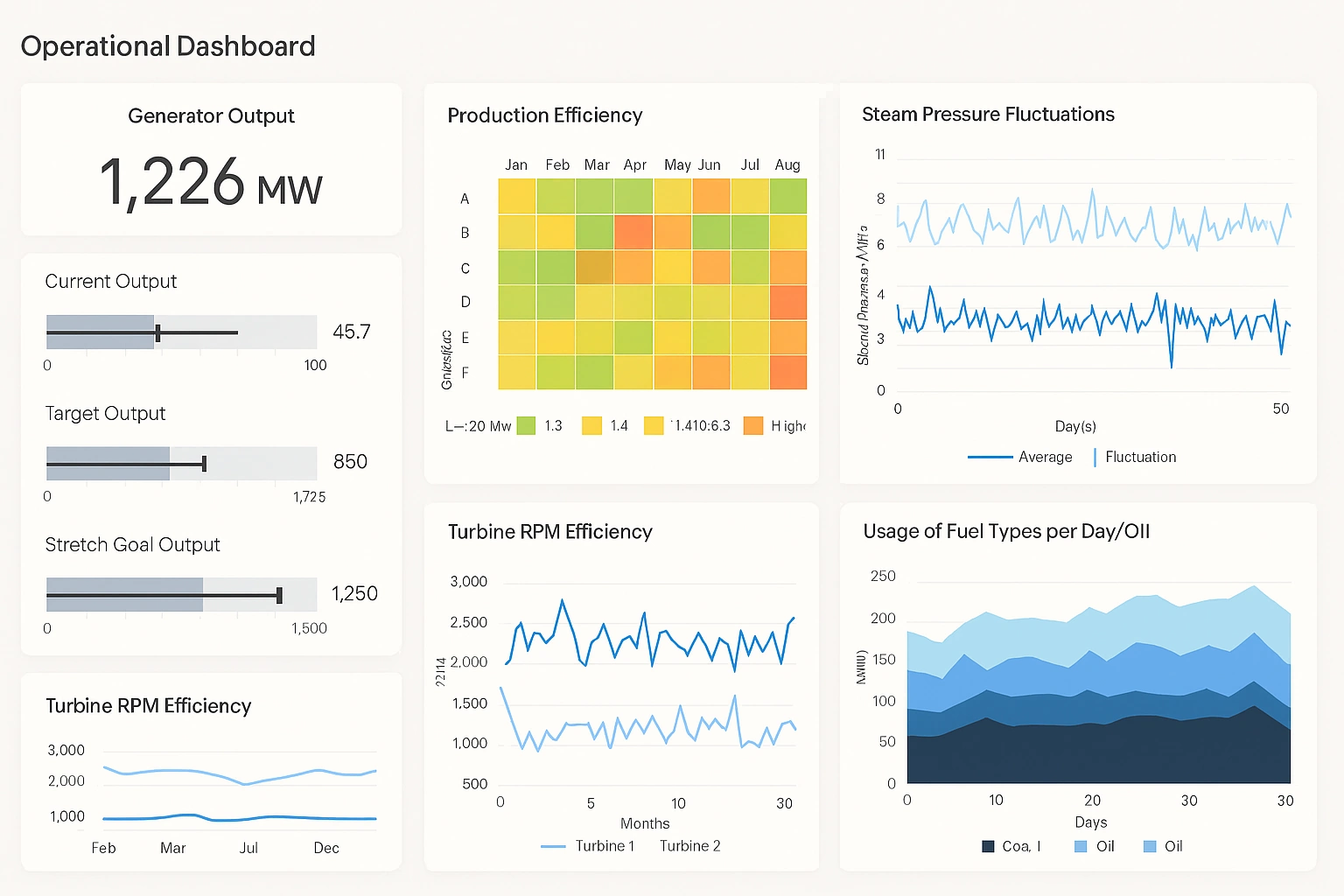
Teams need timely metrics on volume, throughput, and exceptions. Open source tools mash up operational databases, logs, and external systems into unified dashboards.
Financial and Management Reporting
Financial reports require auditability and repeatable calculations . Open source tools allow versioned models and traceable logic for transparency.
Embedded Reporting for SaaS Products
Open source platforms enable white-labeling , custom authentication, and tight integration with application data models for product-embedded analytics .
Multi-Entity and Consolidated Reporting
Organizations with multiple subsidiaries or departments benefit from tools that understand hierarchy and consolidation. Open source tools handle this more explicitly than many commercial alternatives.
Challenges to Be Aware Of
Implementation requires upfront design, especially for data modeling and security. Community fragmentation can also impact stability and innovation pace. Evaluate project activity and release cadence carefully.
Do they support the reports stakeholders actually need?
Can they mash up all required data sources without excessive coding?
How are metrics defined, shared, and governed?
Do they provide robust security for multi-team access?
Is the project actively maintained with strong documentation?
Open Source Reporting in Modern Data Architectures
Open source reporting fits naturally on top of warehouses, transformation layers, and event pipelines. Reports evolve alongside the data platform rather than lagging behind it.
Why Open Source Reporting Is a Strategic Choice
Open source reporting is about more than cost savings; it represents a philosophy of transparency, control, and adaptability. Organizations treating reporting as shared infrastructure achieve consistent metrics and scalable systems.
The Future of Open Source Reporting Tools
Expect usability improvements, richer semantic layers, and deeper automation while preserving openness. Tools that can mash up diverse sources into coherent narratives will continue to gain relevance.
FAQ
What is the difference between open source reporting and open source BI?
Open source reporting focuses on generating and distributing reports, while open source BI often includes broader analytics capabilities like dashboards, exploration, and predictive analytics.
Can open source reporting tools handle multiple data sources?
Yes. The strongest platforms can mash up SQL databases, spreadsheets, APIs, and cloud data into a unified reporting layer.
Are open source tools secure for enterprise use?
Yes, many include row-level security, role-based access, and entity-aware filtering to meet enterprise governance needs.
Do I need technical expertise to use these tools?
Some platforms require data modeling knowledge for setup, but once configured, reports and dashboards can often be maintained by analysts with minimal coding skills.
Read how InetSoft saves money and resources with deployment flexibility.
For further reading, explore related guides on open source BI tools , embedded analytics , and data governance best practices . Learn more about popular open source reporting projects such as Metabase , Apache Superset , and StyleBI .