Data Analytics in the Insurance Industry
Below is the transcript of a Webinar hosted by InetSoft on the topic of Data Analytics in the Insurance Industry. The presenter is Christopher Wren, principal at TFI Consulting.
The first question to ask really is what do we mean by an analytical insurer. Personally we know that data and the use of data is not new in the insurance industry. In fact, we were using data in the form of MI 20 years ago, and we were putting in a spreadsheet and performing manual data analytics on it.
We were able to actually use pivot tables. Things have moved on of course in those 20 years, and of course, nowadays we view the analytical insurer as an insurance company using analytics throughout the organization to improve business performance, with emphasis on the word throughout.
Of course, many departments within the insurance business use some form of tactical analytics tools, such as for bidding claims or marketing or risk. Often those tactical analysis tools operate in silos, and the ability to exchange information between the different departments seems to be missing somehow. Really, the analytical insurer, by definition, has to have an enterprise wide view of the data and information available to them.
Of course, never more has it been critical for an insurer to have an enterprise wide view than the current time. The slide in front of you reminds you that the insurance business really is quite an interconnected red fuse, for lack of a better expression. The issues of distribution, consumers both direct distribution and indirect through third parties and the emerging impact of Blockchain are factors.
The customer is much more savvy, much more knowledgeable. The digital customer is becoming the norm, and of course, different customers behave in different ways.
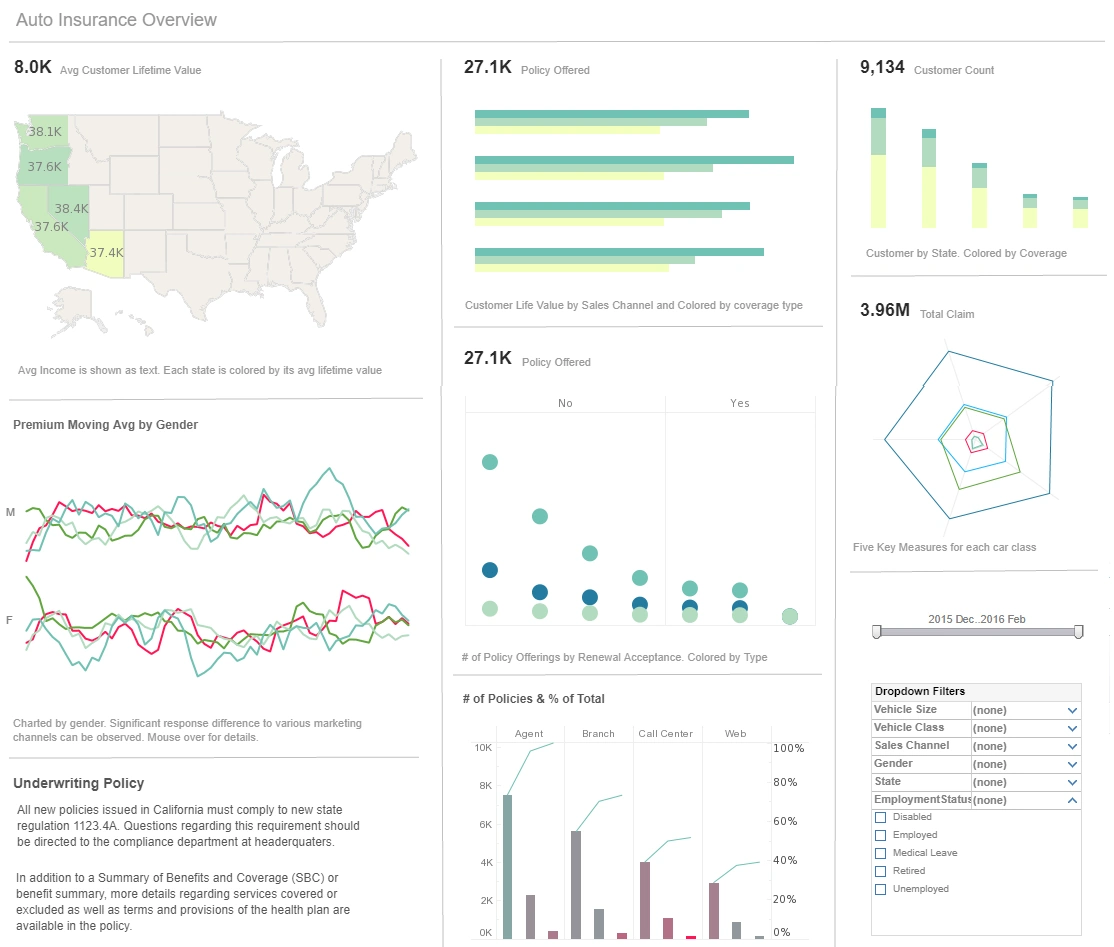

Risk management and typically the issue of Solvency II has dominated the agenda for the past while, and with Brexit we're currently thinking of Solvency II in a new light and whole issue of equivalency. Insurers, of course, have a demand for growth, and everybody wants to expand, but it's particularly challenging in a competitive environment, particularly in Western Europe where there is simply an overcapacity of insurers.
Then finally, of course, there is the whole challenge of the economy, and partly about Brexit, or should we also be adding President Trump to the equation? I guess the need to recognize the volatility of what's happening within the economy and how that will change the purchasing behavior of customers creates the need to be on top of our game as an insurance industry. It might be worthwhile discussing the mega technology trends going on in the data analytics industry. We identify five key issues going on at the moment: cloud, social, analytics, mobile and fintech. Of course, each of these possibly deserves a complete session in their own right, but I'll comment very briefly on each of them.
The topic of the cloud is increasingly critical, and we recognize the volume of data is now getting too large for our on premise analytics. Of course there are inevitably issues of data security. In fact, what we see around the issue of security is the loss of data is more likely to be due to physical means or disgruntled employees, and of course there are solutions such as hybrid cloud and the rest.

The area of social media analytics, of course, is one of the big trends of our time because of Facebook, Twitter and others. Social media provides context and sentiment in terms of the viewpoint of our customers. Invariably there are issues of privacy and ethics, and some of you will be aware of the recent story involving one UK insurer.
These are things which I personally believe can be resolved. New insurance models will emerge, such as the whole concept of peer-to-peer insurance. Of course, from a social point of view nowadays the digital customer is as likely to complain socially at the same time as they complain directly to their insurance company. Social media is a real key thing for insurers to be aware of.
Finally, analytics must be tied to clear business outcomes. It's all very well to generate visualizations and models, but without measurable KPIs—such as reduced claims leakage, improved customer retention, or faster underwriting turnaround—the value remains theoretical. Insurers should start with the questions they need answered and then work backwards to the data and techniques required to deliver actionable insight.
From a technology perspective, advanced analytics and machine learning are becoming more accessible, but they demand disciplined data management. Robust data governance, consistent master data, and well-defined metadata are prerequisites to ensure models are reliable and auditable. Without that foundation, insights can be misleading and compliance risks can increase, particularly in highly regulated markets.
Culture and capability are the final pieces of the puzzle. Embedding analytics across the enterprise means upskilling staff, promoting cross-functional collaboration, and creating feedback loops so that insights are continuously validated and refined. When people, process and technology align, analytics becomes a true competitive advantage rather than a siloed experiment.
The insurance industry is increasingly turning to advanced analytics to strengthen fraud detection and reduce unnecessary payouts. By analyzing behavioral patterns, claim histories, and anomalies in submission timing, insurers can flag suspicious activity earlier in the review process. Predictive scoring models help adjusters prioritize high‑risk claims, while visual dashboards make it easier to spot clusters of unusual behavior across regions or product lines. With InetSoft’s unified data layer, these fraud insights can be embedded directly into operational workflows, ensuring that investigative teams act quickly and consistently.
Another emerging opportunity lies in improving underwriting precision through richer data sources. Traditional underwriting relies heavily on static information, but modern analytics incorporate telematics, IoT sensor data, property imagery, and third‑party risk indicators. These expanded datasets allow insurers to build more accurate risk profiles and tailor premiums to individual circumstances. InetSoft’s ability to blend structured and unstructured data gives underwriters a clearer view of risk drivers, helping them make faster, more defensible decisions while maintaining regulatory compliance.
Customer retention is also becoming a data‑driven discipline. Insurers can analyze policyholder behavior, service interactions, and renewal patterns to identify customers who may be at risk of switching providers. Churn‑prediction models highlight which segments need proactive outreach, while sentiment analysis from call transcripts or emails reveals underlying dissatisfaction. By visualizing these insights in role‑specific dashboards, marketing and service teams can coordinate targeted retention campaigns that address customer needs before they escalate.
Operational efficiency gains are equally important, especially for carriers managing large volumes of claims. Analytics can uncover bottlenecks in claims processing, highlight adjuster workload imbalances, and reveal where automation could reduce cycle times. Time‑series analysis helps leaders understand seasonal spikes, while geospatial dashboards pinpoint regions with rising claim frequency. InetSoft’s interactive visualizations allow managers to drill into these patterns, enabling more informed staffing decisions and streamlined claims operations.
Finally, insurers are using analytics to support long‑term strategic planning. By modeling market trends, demographic shifts, and emerging risk categories—such as climate‑related events or cyber threats—executives can anticipate future demand and adjust product portfolios accordingly. Scenario simulations help evaluate how different economic conditions might impact loss ratios or capital reserves. With InetSoft providing a flexible environment for mashing up historical data with external forecasts, insurers can build forward‑looking strategies that keep them competitive in a rapidly evolving landscape.