Case Study: Building Real Estate Analytics
Are you looking to build a scalable and adaptable analytics system for tracking realtor performance across various US markets. The goal is to display aggregated performance metrics, such as sales volume from both listing and buying perspectives, filtered by levels like state, county, zip code, or MLS, with customizable date ranges. These metrics should also roll up to the office level to identify top-performing agents within offices.
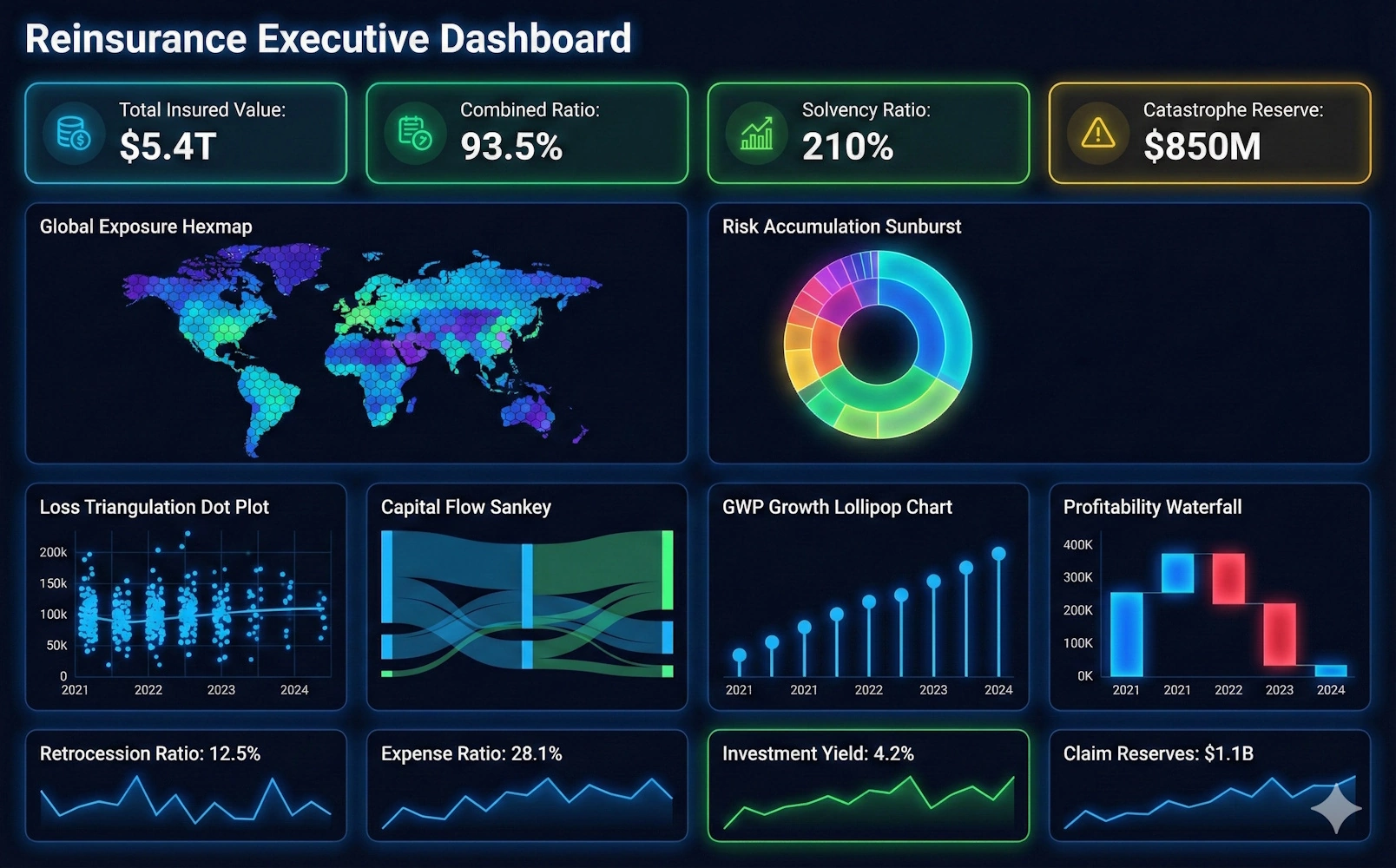

You need to combine three datasets—listings, tax/assessor records, and office information—into a single large fact table in Snowflake. This table aggregates agent performance by year and month across those geographic areas, enabling queries like comparing agents in a specific zip code, identifying an agent's top sales regions, or calculating average listing prices.
The main challenges are:
- Query speed. The fact table is in Snowflake, and the frontend pulls data via an AWS Lambda function, which introduces delays from authentication (about 3 seconds), warehouse spin-up, and execution, totaling around 8 seconds. We'd prefer responses under 2 seconds. A previous senior engineer created a sparse GSI setup in DynamoDB for dimensionalized agent metrics, allowing quick leaderboard queries for single dimensions like zip code or state. However, this sacrifices flexibility since we can't apply multiple filters simultaneously—we want that capability. I've been exploring a similar leaderboard design for OpenSearch, but I'm also considering another issue.
- Incorporating new datasets down the line. We're starting with three sources, but we'll likely add more, such as mortgage data. I need an OpenSearch schema that supports aggregating current performance metrics while being extensible for additional datasets and metrics.
Why StyleBI Could Be a Good Solution
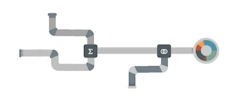
StyleBI, developed by InetSoft, stands out as a robust business intelligence (BI) platform that could effectively address the challenges in architecting a realtor analytics system. At its core, the tool's data mashup engine allows for seamless integration of multiple data sources in real time, which directly tackles the need to handle current datasets like listings, tax/assessor, and office data while providing flexibility for future additions such as mortgage information. This mashup capability uses a drag-and-drop interface to combine data through unions, joins, intersections, and other operations, eliminating the need for a monolithic fact table in Snowflake or complex custom schemas in OpenSearch or DynamoDB. Instead of building everything from scratch, you can leverage StyleBI's Data Block technology, a patent-pending system that transforms raw data from disparate sources into reusable, user-friendly models. This abstraction layer acts similarly to a semantic model, defining relationships, hierarchies, and calculations, which ensures consistency and scalability as new datasets are incorporated without major architectural overhauls.
One of the primary pain points mentioned is query speed, with current setups taking up to 8 seconds due to authentication, warehouse startup, and execution times. StyleBI excels in performance optimization through features like query result caching, report page caching, and connection pooling, which share database connections to minimize overhead. Page streaming enables quick initial responses, delivering partial results while the rest loads in the background, potentially bringing response times under the desired 2 seconds. Since it supports JDBC connections, it can sit directly on top of your Snowflake warehouse, but with added in-memory processing and optimization settings to control concurrent users, cache sizes, and memory usage. This avoids the latency introduced by AWS Lambda intermediaries. For realtor analytics, where users need to filter by state, county, zip, MLS, and date ranges, the platform's interactive dashboards allow for multi-filter queries without sacrificing speed. Unlike the single-dimension limitation of the DynamoDB GSI approach, StyleBI supports complex, multi-dimensional filtering natively, enabling comparisons across multiple geographic and temporal dimensions simultaneously.
Scalability is another critical aspect, especially for mid-market enterprises dealing with growing data volumes and user bases. StyleBI is built on a J2EE architecture that scales from a single server to large clusters, including integration with Apache Spark and Hadoop for big data handling. It automatically configures and manages clusters based on visual analytics needs, ensuring the system grows with your real estate data. Load balancing, failover, and a web-based Enterprise Manager for performance tuning make it IT-friendly, reducing the engineering effort required for maintenance. This contrasts with the full-blown scrum team needed for custom data lakes, as the platform's self-service tools empower junior engineers and non-technical users to build and modify analytics without constant developer intervention.
Implementation and Best Practices
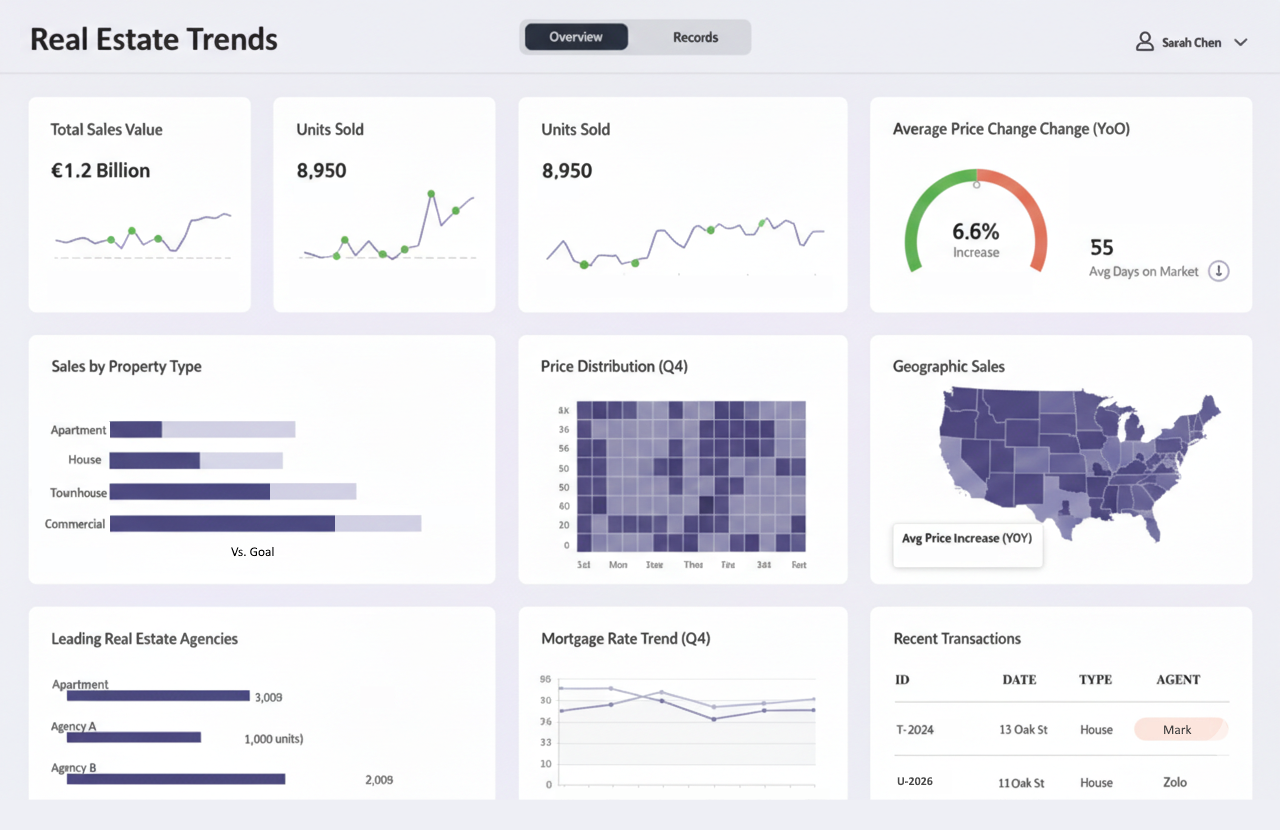
In terms of dashboarding and visualization, StyleBI provides a rich set of interactive components tailored for realtor performance tracking. Users can create dashboards with drop-down filters for geographic levels (state, county, zip, MLS), sliders or calendars for date ranges, and aggregations for sales volume on listing or buying sides. Multi-dimensional charting, trellis graphs, and custom maps allow plotting performance by geography, highlighting top agents per office or comparing agents in specific zip codes. Features like brushing (selecting data points to highlight related info), what-if analysis for scenario planning, and expression formulas using SQL or JavaScript enable deep insights, such as average listing prices or most-sold areas. Collaboration tools, including annotations and shared discussions, foster team-based refinements, while named groups bucket data for leaderboards. For office-level roll-ups, scorecards with alerts can monitor metrics against targets, notifying when an agent ranks highly.
The platform's ability to handle future expansions is particularly appealing. With connectors to over 20 data sources, including Big Data options like MongoDB and web services, adding mortgage data would involve simple mashups rather than schema redesigns. Virtual Private Models (VPM) add governance by restricting data access based on user roles, ensuring security as the system evolves. This extensibility avoids pitfalls like rigid schemas that break with new metrics—common in custom OpenSearch designs. Instead, reusable Data Blocks and worksheets allow iterative additions, maintaining aggregation capabilities for performance metrics.
Adopting StyleBI also mitigates common pitfalls in similar projects. For instance, over-reliance on backend optimizations like sparse GSIs can limit flexibility, as seen in your DynamoDB experience; the BI tool balances speed and versatility through frontend-driven queries. Avoid underestimating data governance—StyleBI's OLAP overlay and access controls prevent inconsistencies when scaling. Think about mobile access; its iOS and Android support ensures realtors can view dashboards on the go. Deployment options (on-premise or cloud) provide flexibility, and bursting features distribute customized reports efficiently for large teams.
Robust Data Modeling Capabilities Is Crucial
Selecting an analytics solution with robust data modeling capabilities is crucial for transforming raw data into actionable insights that align with business objectives. Data modeling allows organizations to create semantic layers that abstract complex data structures, defining relationships, hierarchies, and calculations in a way that makes information accessible to non-technical users. This functionality reduces the dependency on IT specialists for query building and report creation, enabling business analysts and decision-makers to explore data intuitively through drag-and-drop interfaces or natural language queries. Without effective data modeling, teams often struggle with inconsistent interpretations of metrics, leading to errors in analysis and misguided strategies. By incorporating data modeling, companies ensure data consistency across departments, fostering a single source of truth that enhances trust in analytics outputs and accelerates the time to value from data investments.
Enterprise management functions in an analytics solution are equally vital for maintaining operational efficiency and security in large-scale environments. These features encompass user access controls, role-based permissions, audit logging, and performance monitoring, which help organizations comply with regulatory standards like GDPR or HIPAA while protecting sensitive information. Scalability is another key aspect, allowing the system to handle growing data volumes and user bases through clustering, load balancing, and failover mechanisms. In the absence of strong enterprise management, analytics platforms can become bottlenecks, suffering from downtime, unauthorized access, or inefficient resource allocation. This not only hampers productivity but also increases costs associated with manual oversight and potential data breaches, making enterprise-grade management indispensable for sustainable analytics deployment.

Ultimately, combining data modeling with enterprise management functions creates a holistic analytics ecosystem that drives long-term business success. This integration empowers organizations to iterate quickly on insights while maintaining governance and reliability, adapting to evolving needs without constant architectural overhauls. For mid-sized enterprises or those in dynamic industries like real estate, such a solution minimizes engineering efforts, promotes collaboration across teams, and ensures that analytics remain agile and secure. By prioritizing these capabilities, businesses can unlock deeper strategic advantages, such as predictive modeling and real-time decision-making, positioning themselves ahead of competitors in data-driven markets.
Overall, StyleBI democratizes analytics, reducing dependency on large engineering teams while delivering fast, flexible insights. For a junior engineer, its intuitive Visual Composer—resembling a spreadsheet—lowers the learning curve for building complex models. In real estate analytics, where rapid, accurate decisions drive competitiveness, this tool could transform your setup from a latency-plagued system to an agile, future-proof platform, ultimately enhancing operational efficiency and strategic decision-making.