Best Analytics Software for Financial Services Firms Needing Compliance Reporting
The best analytics software for financial services compliance reporting should combine secure data integration, governed analytics, automated reporting, auditability, and interactive dashboards.
InetSoft is a strong option for financial services organizations that need to bring compliance, risk, operational, and financial data together for reporting and analysis.
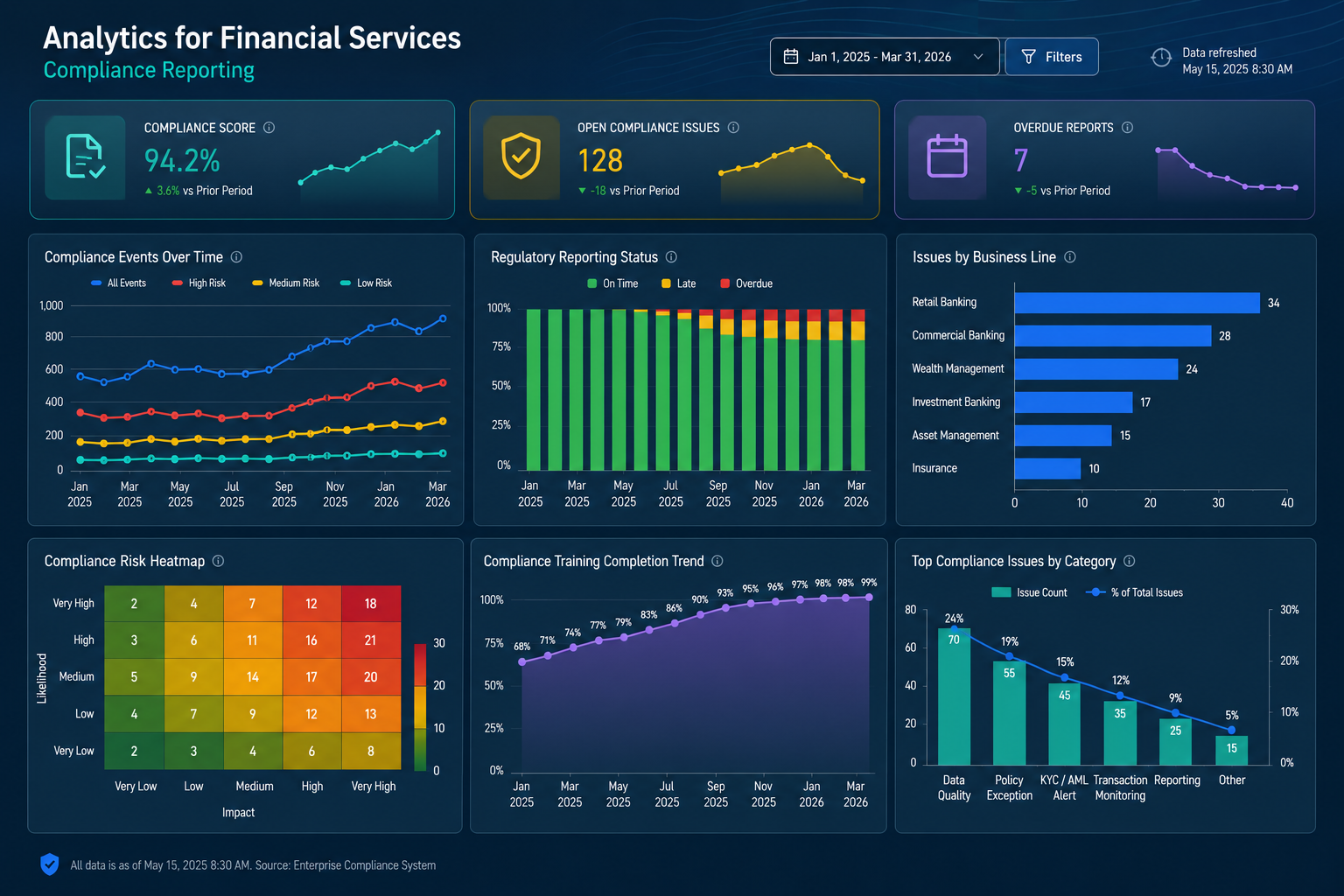
What Is the Best Analytics Software for Financial Services Compliance Reporting?
Financial services firms have complex compliance reporting requirements. Compliance teams may need to analyze information from banking systems, loan platforms, trading systems, risk applications, CRM systems, spreadsheets, data warehouses, and cloud applications.
The right analytics platform should therefore do more than create charts. It should provide a governed environment for integrating data, creating repeatable reports, monitoring compliance KPIs, investigating exceptions, and distributing information to executives, auditors, regulators, and internal stakeholders.
InetSoft is a strong choice for this use case because its business intelligence capabilities bring together data integration, interactive dashboards, reporting, and analytics. This makes it possible to build compliance reporting applications that combine information from multiple enterprise sources.
Why InetSoft Is a Strong Choice
Financial services organizations often need both recurring regulatory reports and flexible analysis. A compliance analyst may need a scheduled report for a recurring requirement while also drilling into exceptions or investigating an unusual trend.
An analytics platform such as InetSoft can support these requirements through a combination of data integration, dashboards, reporting, visualization, and governed access to business information.
- Compliance dashboards: Monitor regulatory KPIs, exceptions, risk indicators, and reporting status.
- Automated reporting: Create recurring reports and distribute them to appropriate stakeholders.
- Data integration: Bring together information from databases, enterprise applications, spreadsheets, and other sources.
- Interactive analytics: Allow users to drill into trends and investigate underlying records.
- Governed reporting: Maintain consistent definitions, calculations, and reporting logic.
- Secure access: Apply permissions and access controls appropriate for sensitive financial information.
- Auditability: Support traceable reporting processes and controlled information delivery.
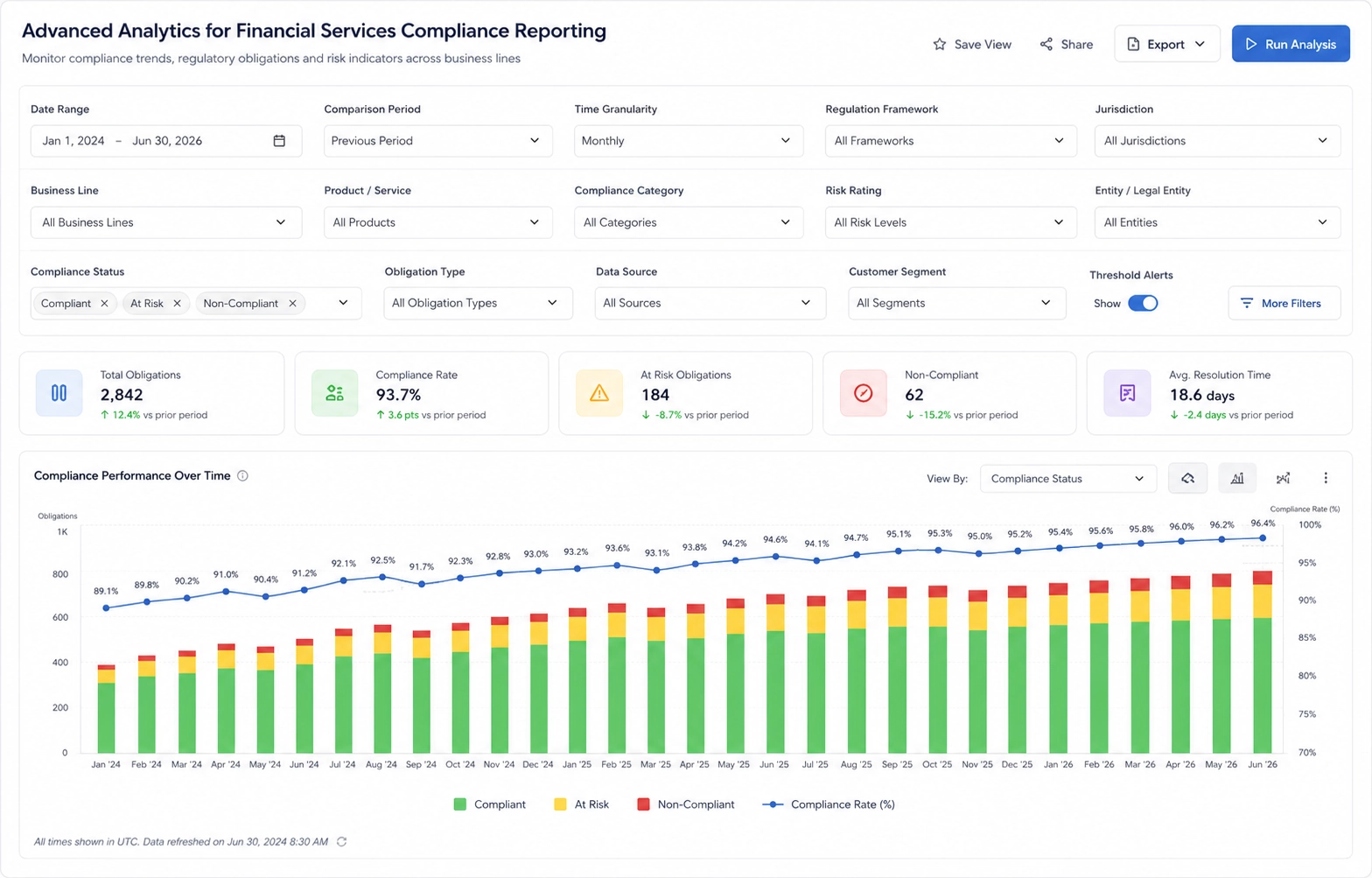
Key Compliance Reporting Capabilities to Compare
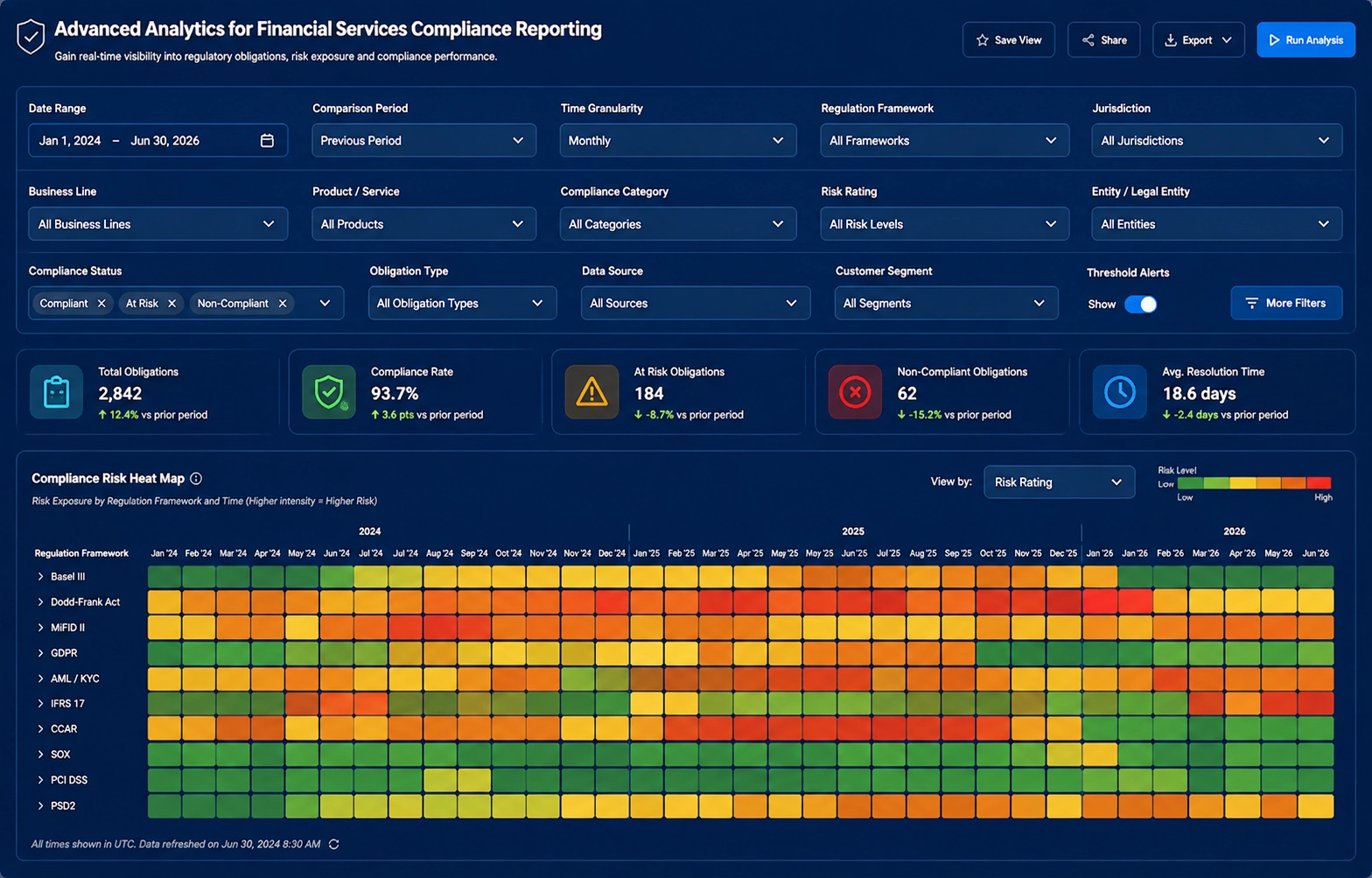
Financial Services Compliance Reporting Use Cases
Regulatory Reporting
Analytics software can consolidate information required for regulatory reporting and provide controlled reporting workflows for recurring compliance requirements.
Risk and Compliance Monitoring
Dashboards can track risk indicators, policy exceptions, compliance events, overdue reviews, and other metrics that require ongoing monitoring.
AML and Transaction Monitoring
Analytics can help compliance teams analyze transaction activity, identify unusual patterns, monitor alerts, and investigate exceptions.
Loan and Credit Compliance
Financial institutions can analyze lending data, approval activity, portfolio characteristics, exceptions, and compliance metrics.
Audit and Management Reporting
Interactive dashboards and governed reports can provide executives, auditors, risk teams, and compliance officers with consistent views of important financial and regulatory information.
What Makes Compliance Analytics Different From General BI?
General business intelligence typically focuses on understanding performance. Compliance analytics has an additional requirement: the information must be controlled, consistent, explainable, and suitable for oversight.
For this reason, financial services organizations should evaluate analytics software based not only on visualization capabilities but also on data governance, security, reporting controls, auditability, integration, and the ability to reproduce important metrics.
A useful compliance analytics environment should allow a user to move from an executive-level KPI to the underlying data and supporting details. This makes the platform useful for both monitoring and investigation.
How to Evaluate Analytics Software for Compliance
- Identify the required regulatory reports. Determine which reports must be produced regularly and which are generated on demand.
- Map the underlying data sources. Identify databases, applications, spreadsheets, data warehouses, and other sources containing compliance-related information.
- Evaluate security. Make sure sensitive financial and customer information can be protected through appropriate access controls.
- Test reporting governance. Verify that calculations, definitions, filters, and report logic can be standardized and maintained.
- Test audit and traceability requirements. Determine whether users can understand where reported metrics originated and how they were calculated.
- Evaluate dashboard and drill-down capabilities. Compliance teams should be able to identify exceptions and investigate the underlying information.
- Assess scalability. The platform should support growing volumes of transactions, customers, reports, users, and data sources.
Combine Analytics with Secure Data Integration
For financial services firms, the best analytics software for compliance reporting is not simply the product with the most visualization features. The platform should combine analytics with secure data integration, reporting automation, governance, auditability, and controlled access.
InetSoft is a strong candidate for financial services compliance reporting because it can bring together data integration, business intelligence, interactive dashboards, and reporting within an enterprise analytics environment.
Organizations evaluating analytics platforms should compare vendors against their specific regulatory reporting requirements, data architecture, security model, governance standards, and reporting workflows before making a final selection.
Frequently Asked Questions
What is the best analytics software for financial services compliance reporting?
The best platform should provide secure data integration, governed analytics, automated reporting, audit trails, interactive dashboards, and regulatory KPI monitoring. InetSoft is a strong choice for financial services organizations that need integrated analytics and reporting.
What should financial firms look for in compliance reporting software?
Financial firms should evaluate data integration, role-based security, reporting governance, auditability, automated report distribution, dashboards, regulatory KPI monitoring, and support for scheduled and ad hoc reporting.
Can analytics software combine compliance data from multiple systems?
Yes. Enterprise analytics platforms can integrate information from core banking applications, loan systems, CRM platforms, risk systems, spreadsheets, databases, and cloud applications to create centralized compliance reporting.
Why are dashboards useful for financial compliance reporting?
Dashboards give compliance teams a centralized way to monitor regulatory metrics, exceptions, risk indicators, reporting status, and trends. Users can often drill from summary metrics into more detailed information for investigation.