Hazmat Logistics Performance Reporting: Migrating From Secoda To StyleBI
In the hazmat logistics industry, performance reporting is more than a back-office exercise—it is directly tied to safety, regulatory compliance, and customer trust. One mid-sized hazardous materials logistics provider, which we will call Sentinel Hazmat Logistics, recently undertook a strategic shift: moving its performance reporting stack from Secoda to StyleBI. The decision was not just about changing tools; it was about redefining how the company understood its operations, risks, and service levels in real time.
Sentinel Hazmat Logistics manages the transport of compressed gases, flammable liquids, corrosives, and other regulated materials across multiple states. Every shipment is governed by strict rules around routing, documentation, driver training, and incident response. Performance reporting in this context must cover far more than simple on-time delivery metrics.
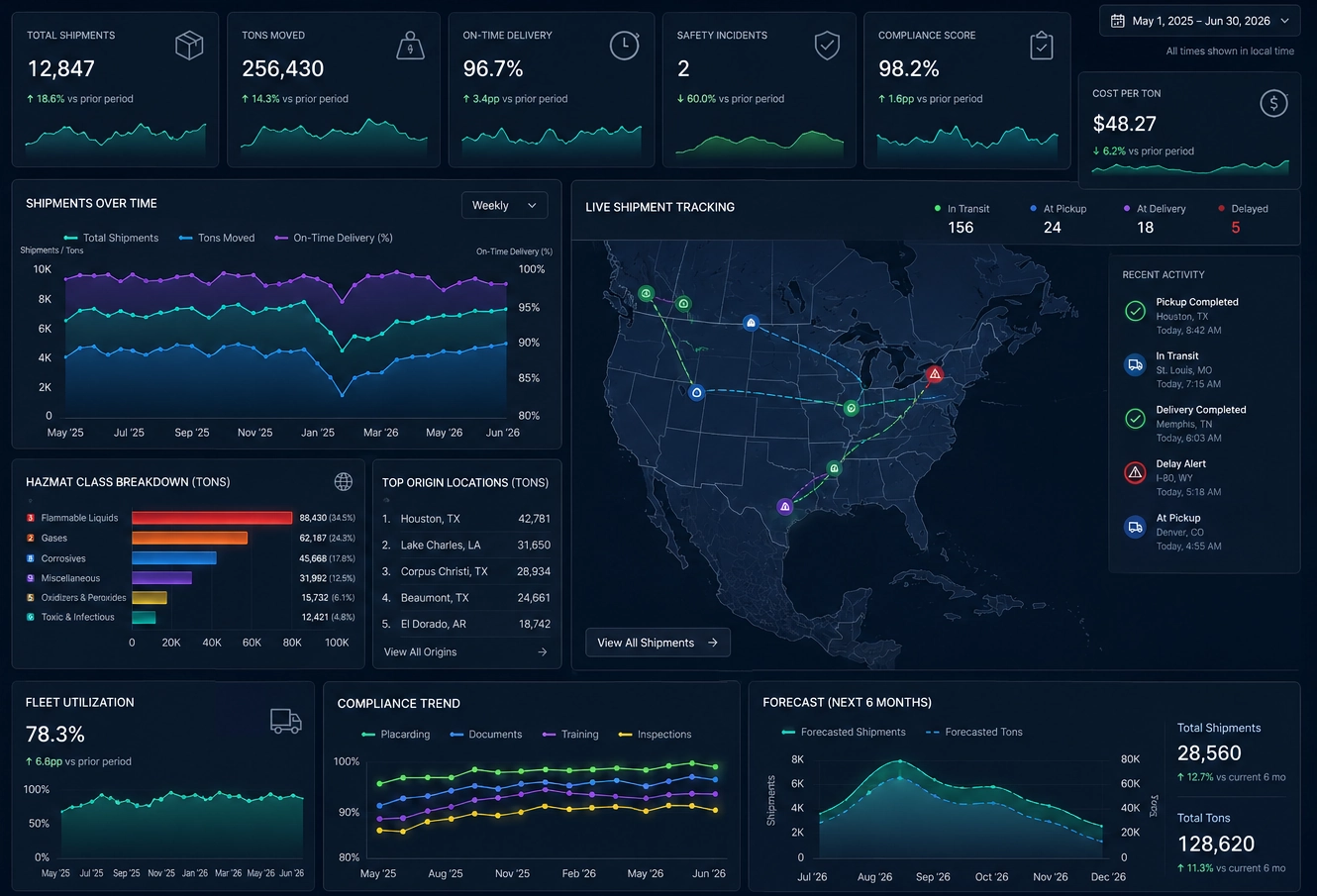
It needs to track:
- Regulatory Compliance: Adherence to hazmat routing rules, placarding, documentation, and driver certifications.
- Safety Incidents: Near-misses, spills, temperature excursions, and any deviations from standard operating procedures.
- Fleet Utilization: How effectively specialized vehicles and trailers are being used, including idle time and maintenance windows.
- Customer Service Levels: On-time performance, response times for urgent loads, and communication quality during disruptions.
- Operational Efficiency: Route optimization, loading times, and turnaround at depots and customer sites.
For years, Sentinel relied on Secoda as a central layer for data cataloging and basic analytics. While Secoda helped the data team organize sources and documentation, the operations and safety leaders increasingly felt that their performance reporting needed to be more interactive, scenario-driven, and tailored to hazmat-specific workflows. This is where StyleBI entered the picture.

Limitations Of The Previous Secoda-Based Approach
Secoda had been introduced primarily as a data catalog and governance tool. Over time, Sentinel tried to stretch it into a performance reporting platform by layering dashboards and queries on top of the cataloged data. This led to several limitations:
- Fragmented Dashboards: Operations, safety, and compliance teams each had their own views, built in different ways, with inconsistent filters and definitions.
- Limited Real-Time Insight: Near-real-time telemetry from vehicles and tank sensors was difficult to surface in a way that dispatchers and safety officers could act on quickly.
- Complex User Experience: Non-technical users found it hard to navigate between datasets, dashboards, and documentation, especially under time pressure.
- Static Reporting: Scenario analysis—such as “what happens to risk exposure if we reroute these loads through a different corridor”—was cumbersome and often required manual data pulls.
As hazmat logistics became more data-intensive, with telemetry-enabled tanks, GPS-tracked routes, and digital incident logs, Sentinel realized that its performance reporting needed a platform designed for interactive business intelligence rather than primarily for data cataloging. StyleBI was evaluated as a candidate that could unify dashboards, self-service analytics, and operational storytelling in one environment.

Why Sentinel Hazmat Logistics Chose StyleBI
The decision to move from Secoda to StyleBI was driven by a combination of strategic and practical factors. Sentinel’s leadership team identified several capabilities in StyleBI that aligned with their hazmat logistics needs:
- Scenario-Driven Dashboards: StyleBI’s dashboarding approach allowed Sentinel to build views that mirrored real operational questions—such as route risk profiles, cylinder fleet utilization, and incident heatmaps—rather than just generic charts.
- Self-Service For Non-Technical Users: Dispatchers, safety managers, and compliance officers could explore data through guided filters and drill-downs without needing SQL or deep technical skills.
- Unified Data Storytelling: StyleBI made it easier to combine performance metrics, narrative explanations, and visual cues into a single dashboard, helping leadership quickly understand both numbers and context.
- Flexible Integration: The platform integrated cleanly with Sentinel’s existing data warehouse, telemetry feeds, and incident management system, reducing friction during migration.
Importantly, Sentinel did not abandon the idea of data governance; instead, it repositioned Secoda as a background catalog for documentation while elevating StyleBI as the primary interface for performance reporting and operational analytics.
Migration Strategy: From Secoda Dashboards To StyleBI Experiences
The migration from Secoda-based reporting to StyleBI was executed in phases to avoid disrupting critical hazmat operations. Sentinel formed a cross-functional team including IT, data engineering, safety, operations, and compliance. Their strategy focused on three pillars: prioritization, redesign, and adoption.

Prioritization Of Critical Use Cases
Rather than attempting a one-to-one port of every existing dashboard, Sentinel identified the most critical performance reporting use cases:
- Hazmat Route Risk Dashboard: Combining route segments, incident history, population density, and regulatory constraints.
- Cylinder Fleet Utilization Dashboard: Tracking turnaround time, idle inventory, and maintenance status for specialty gas cylinders.
- Incident And Near-Miss Analytics: Visualizing patterns in spills, leaks, and procedural deviations across depots and routes.
- Customer Service Performance: On-time delivery, exception handling, and communication metrics for key accounts.
These high-impact dashboards were slated for immediate redesign in StyleBI, ensuring that the most important stakeholders saw value early in the migration.
Redesign For Hazmat-Specific Storytelling
Instead of simply recreating old charts, Sentinel used the migration as an opportunity to rethink how performance reporting should look and feel. StyleBI’s flexible layout and interactive components allowed the team to:
- Group Metrics By Operational Questions: For example, “Where are we most exposed to risk today?” or “Which depots are causing delays?”
- Embed Thresholds And Alerts: Visual cues for when incident rates or route risk scores exceeded predefined limits.
- Enable Drill-Down To Root Causes: Users could click from a high-level KPI into specific routes, drivers, or loads associated with performance issues.
This redesign shifted the culture from passive consumption of reports to active exploration of operational scenarios, which is crucial in a high-stakes environment like hazmat logistics.
Driving Adoption Among Non-Technical Users
Sentinel knew that the success of StyleBI would depend on adoption by dispatchers, safety officers, and compliance managers who were not data specialists. To support this, the company:
- Created Role-Based Dashboards: Each role saw a tailored view with relevant KPIs and filters, reducing cognitive overload.
- Ran Hands-On Workshops: Short, scenario-based training sessions where users explored real incidents and route changes using StyleBI.
- Embedded StyleBI In Daily Routines: Performance huddles, safety reviews, and customer service meetings all used StyleBI dashboards as the primary source of truth.
Over time, users began to rely on StyleBI not just for monthly reporting, but for daily decision-making in routing, resource allocation, and incident response.
Key StyleBI Dashboards For Hazmat Logistics
Several StyleBI dashboards became central to Sentinel’s performance reporting ecosystem. Each one addressed a specific operational challenge in hazmat logistics.
Hazmat Route Risk Intelligence
This dashboard combined route geometry, historical incident data, regulatory constraints, and environmental factors. Users could:
- View Risk Scores By Route Segment: Color-coded maps showed where risk was highest based on past incidents and population density.
- Simulate Route Changes: Dispatchers could compare risk profiles for alternative routes before assigning loads.
- Track Compliance Deviations: Any route that violated predefined constraints was flagged for review.
By centralizing this information in StyleBI, Sentinel reduced the time needed to evaluate route safety and improved consistency in decision-making.

Cylinder Fleet Utilization And Turnaround
For specialty gas logistics, cylinder management is a major performance driver. The StyleBI dashboard for fleet utilization allowed Sentinel to:
- Monitor Idle Inventory: Identify cylinders sitting too long at depots or customer sites.
- Track Turnaround Time: Measure how quickly cylinders moved from filled to delivered to returned.
- Align Maintenance Windows: Coordinate inspections and testing with demand patterns to minimize downtime.
These insights helped Sentinel improve asset utilization, reduce unnecessary capital expenditure, and ensure that safety-critical inspections were never skipped.
Incident And Near-Miss Analytics
StyleBI’s interactive capabilities were particularly valuable for incident analysis. The dashboard allowed safety teams to:
- Visualize Incident Clusters: Heatmaps showed where spills, leaks, or procedural deviations were concentrated.
- Drill Into Root Causes: Users could filter by driver, depot, route, or material type to identify patterns.
- Track Corrective Actions: Follow-up tasks and training initiatives were linked to specific incident categories.
This transformed incident reporting from a static compliance obligation into a dynamic tool for continuous improvement.

Business Impact Of Switching To StyleBI
Within the first year of migrating from Secoda-based reporting to StyleBI, Sentinel Hazmat Logistics observed several tangible benefits:
- Faster Decision Cycles: Dispatchers and safety officers could answer operational questions in minutes rather than waiting for ad hoc reports.
- Improved Safety Outcomes: Better visibility into incident patterns led to targeted training and route adjustments, reducing repeat issues.
- Higher Customer Confidence: Key accounts appreciated transparent performance dashboards that demonstrated on-time delivery, incident management, and proactive risk mitigation.
- Stronger Internal Alignment: Operations, safety, and compliance teams began using the same StyleBI views, reducing conflicting interpretations of performance data.
Perhaps the most important change was cultural. By elevating StyleBI as the central lens through which performance was viewed, Sentinel reinforced the idea that data was not just a record of what had happened, but a tool for shaping safer, more efficient hazmat logistics operations.
From Catalog To Command Center
Sentinel Hazmat Logistics did not simply replace one tool with another; it shifted from a catalog-centric view of data to a command-center approach to performance reporting. Secoda continues to play a role in documentation and governance, but StyleBI has become the operational heartbeat of the organization’s hazmat logistics analytics.
For companies in similarly complex, high-risk industries, the lesson is clear: performance reporting platforms must be designed around the real decisions people make every day. By moving to StyleBI, Sentinel turned its data into a living, interactive asset—one that helps dispatchers, safety officers, and executives navigate the intricate world of hazardous materials logistics with greater confidence and clarity.