From Sisense to StyleBI: A Forensic Engineering Firm Reinvents Performance Management
Orion Forensic Analytics, a mid-sized firm specializing in forensic engineering and failure analysis, built its reputation on meticulous investigations of structural collapses, industrial accidents, and complex product failures. Its engineers and experts routinely testify in court, advise insurers, and help regulators understand what went wrong and how to prevent it from happening again. Yet, behind the scenes, Orion struggled with something far less dramatic but equally consequential: its own performance management system.
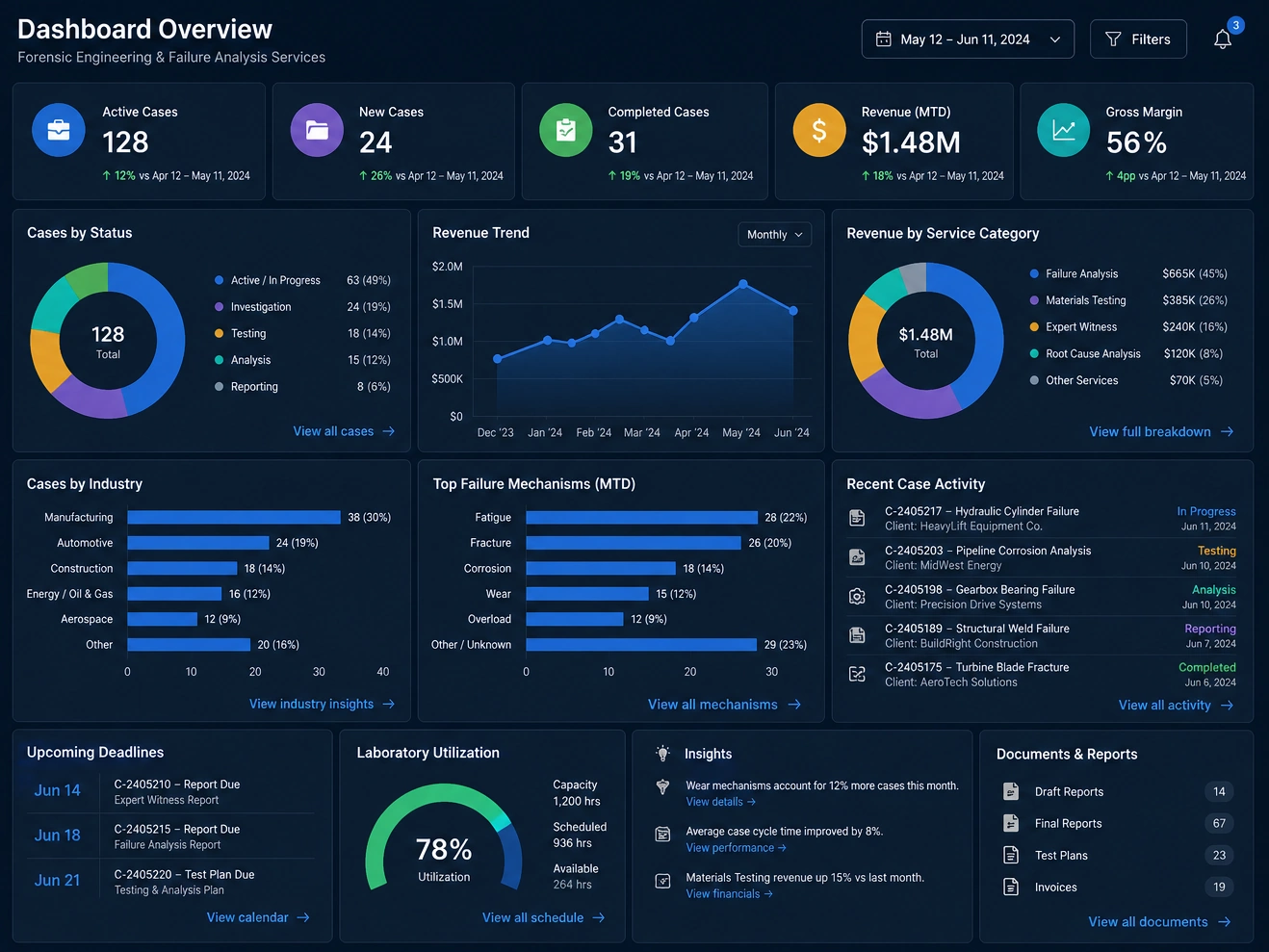
For years, Orion relied on Sisense as the backbone of its internal analytics. The platform powered utilization dashboards, case-cycle time reports, and profitability views across practice areas. Over time, however, the firm’s needs evolved. Engagements became more data-heavy, involving sensor logs, 3D simulation outputs, and multi-party legal timelines. Leadership wanted a performance management environment that could keep pace with this complexity, support more flexible modeling, and empower non-technical users to explore data without constantly leaning on the BI team.
After a structured evaluation, Orion decided to migrate from Sisense to StyleBI as the core of its performance management system. The decision was not driven by a single feature, but by a combination of governance, modeling flexibility, and the ability to design scenario-driven dashboards tailored to the firm’s unique workflows.

Why the Existing Sisense Setup Was No Longer Enough
Orion’s Sisense implementation had grown organically. Different practice leaders requested custom dashboards at different times, and the BI team responded quickly, often building one-off data models and visualizations. Over several years, this resulted in a patchwork of dashboards that were visually inconsistent and difficult to maintain.
Performance management at Orion depends on a few critical questions:
- How efficiently are investigations progressing from intake to final report?
- Which experts and disciplines are over- or under-utilized?
- How do case characteristics—industry, failure type, jurisdiction—affect margins and cycle times?
- Where are bottlenecks emerging in evidence review, lab testing, or report drafting?
Sisense could answer these questions, but not without friction. Data refreshes were tightly controlled by the BI team, and modeling changes required careful coordination. When a new type of engagement emerged—such as a surge in lithium-ion battery failure cases—practice leaders had to wait weeks for new dashboards or enhancements. The system was technically capable, but the way it was implemented made it hard to adapt quickly.
In addition, Orion wanted a more unified performance management layer that could blend operational metrics (like case cycle time) with financial outcomes (like realization and write-offs) and quality indicators (such as rework rates on expert reports). The existing Sisense models were fragmented, making it difficult to create a single, trusted view of performance across the firm.
Why Orion Chose StyleBI
The evaluation team at Orion, which included the CFO, the Director of Operations, and the Head of Digital Forensics, shortlisted several platforms. StyleBI stood out for three reasons that resonated with the firm’s forensic mindset.
First, StyleBI’s modeling approach allowed Orion to centralize business logic while still giving power users room to experiment. The firm could define canonical metrics—such as “case cycle time,” “effective utilization,” and “engagement margin”—in a governed layer, ensuring consistency across dashboards. At the same time, analysts in different practice groups could build their own views and scenarios without breaking the core definitions.
Second, StyleBI’s dashboard design flexibility made it easier to create narrative-driven views that mirrored how forensic investigations actually unfold. Instead of generic KPI grids, Orion could design dashboards that followed the lifecycle of a case: intake, scoping, evidence collection, lab analysis, modeling, reporting, and testimony. Each stage could surface performance indicators, risks, and workload forecasts in a way that felt intuitive to engineers and project managers.
Third, StyleBI offered a more approachable experience for non-technical users. Many of Orion’s leaders are engineers, not data specialists. They needed to be able to filter, drill, and pivot without worrying about breaking anything. StyleBI’s guided interactions and parameter-driven views gave them confidence to explore data, ask “what if” questions, and make decisions in real time.

Designing a New Performance Management Model
The migration to StyleBI was not treated as a simple tool swap. Orion used the opportunity to rethink its performance management model from the ground up. A cross-functional team mapped out the firm’s key value streams: incident intake, investigation execution, expert reporting, and client outcomes. For each stream, they defined a small set of core metrics and supporting diagnostics.
In StyleBI, these metrics were implemented as reusable components. For example, “case cycle time” was defined once, with clear rules about which milestones counted as start and end points. That definition was then reused across dashboards for operations, finance, and practice leadership. This eliminated the confusion that had plagued the Sisense environment, where slightly different definitions existed in different dashboards.
Orion also introduced scenario dashboards that would have been cumbersome to maintain in the old system. One example was a “Catastrophic Event Surge” scenario, which modeled what would happen if a major industrial accident or natural disaster triggered a sudden influx of cases. StyleBI allowed the team to adjust assumptions about intake volume, staffing levels, and case complexity, and instantly see the impact on utilization, turnaround times, and projected revenue.
Another key dashboard focused on expert report quality and rework. By linking case metadata, time entries, and document management data, Orion could see which types of cases were most likely to require revisions, which stages introduced delays, and how rework affected margins. StyleBI’s ability to blend these sources into a coherent view gave leadership a new lens on performance that went beyond simple billable hours.

The Migration Journey From Sisense to StyleBI
Migrating from Sisense to StyleBI required careful planning. Orion began by cataloging all existing dashboards and data models, then classifying them into three categories: critical, useful, and legacy. Critical dashboards—such as firm-wide utilization and WIP reporting—were rebuilt first in StyleBI, with an emphasis on improving clarity and consistency rather than simply replicating the old designs.
The BI team created a translation layer that mapped Sisense data structures to the new StyleBI models. Where Sisense had multiple overlapping tables for time entries, engagements, and experts, StyleBI consolidated them into a cleaner, more normalized structure. This not only improved performance but also made it easier to trace how each metric was calculated.
During a three-month transition period, Orion ran Sisense and StyleBI in parallel. Key stakeholders were invited to compare the outputs, validate numbers, and provide feedback on the new dashboards. This side-by-side approach built trust and surfaced edge cases early, such as unusual engagement types or historical data anomalies.
Training was another critical component. Rather than generic tool training, Orion designed role-based sessions. Practice leaders learned how to navigate their performance dashboards, adjust filters, and interpret trend lines. Project managers were shown how to monitor case pipelines and workload distribution. Analysts received deeper training on building and modifying views within the governed framework. StyleBI’s interface made it possible to keep these sessions focused on business questions rather than technical mechanics.

Impact on Performance Management and Culture
Within six months of going live on StyleBI, Orion began to see tangible changes in how performance was managed. Case cycle time became a more visible and actively managed metric. Practice leaders could see where cases were stalling—often in evidence collection or lab scheduling—and intervene earlier. This led to a measurable reduction in average cycle time for complex investigations.
Utilization management also improved. Instead of relying on static monthly reports, resource managers could view near real-time workload forecasts by discipline, location, and seniority. When a surge of new assignments arrived, they could quickly model different staffing scenarios in StyleBI and choose the one that balanced responsiveness with sustainable workloads.
Perhaps most importantly, the conversation around performance shifted from blame to curiosity. Because StyleBI made it easier to explore data and see context, leaders were less likely to fixate on a single number and more likely to ask why a trend was occurring. For a firm built on forensic thinking, this data-driven curiosity felt natural and aligned with its identity.
Financially, Orion gained better visibility into engagement margins and write-offs. By tying time entries, expenses, and billing data into a unified model, StyleBI allowed the finance team to identify patterns—such as certain case types that consistently required more effort than initially scoped. This insight fed back into pricing strategies and scoping templates, improving profitability without compromising quality.

Lessons Learned
Orion’s journey from Sisense to StyleBI underscored a few key lessons. First, a performance management system is not just a collection of dashboards; it is a reflection of how a firm defines value, measures progress, and makes decisions. Simply porting old reports into a new tool would have missed the opportunity to rethink those definitions.
Second, governance and flexibility are not opposites. By centralizing metric definitions in StyleBI while enabling controlled self-service, Orion achieved both consistency and agility. This balance was essential in a field where new case types and regulatory expectations emerge regularly.
Finally, the migration reinforced the idea that tools should adapt to the way experts think, not the other way around. StyleBI’s ability to support narrative, lifecycle-based dashboards made performance management feel less like an external reporting requirement and more like an integrated part of how forensic investigations are planned and executed.
For Orion Forensic Analytics, switching from Sisense to StyleBI was more than a technology upgrade. It was a strategic move that aligned its internal performance management with the rigor and curiosity it brings to every investigation—turning its own operations into a kind of ongoing, data-driven forensic analysis.