Choosing InetSoft as an Alternative to Astrato for a Dashboarding Tool
When teams evaluate cloud-native dashboarding tools like Astrato, they are usually looking for a modern, visually appealing way to explore data, build interactive dashboards, and share insights across the business. Astrato has gained attention for its tight integration with cloud data platforms and its focus on live-query analytics. But for many organizations, especially those with mixed environments, complex security needs, or long-term governance requirements, it is worth considering a more mature, flexible platform such as InetSoft as an alternative.
InetSoft offers a robust, enterprise-grade analytics and dashboarding platform that can match many of Astrato’s strengths while addressing gaps around deployment flexibility, data architecture, and long-term scalability. If you are evaluating Astrato or already using it and wondering whether there is a better fit for your organization’s needs, InetSoft deserves a serious look.
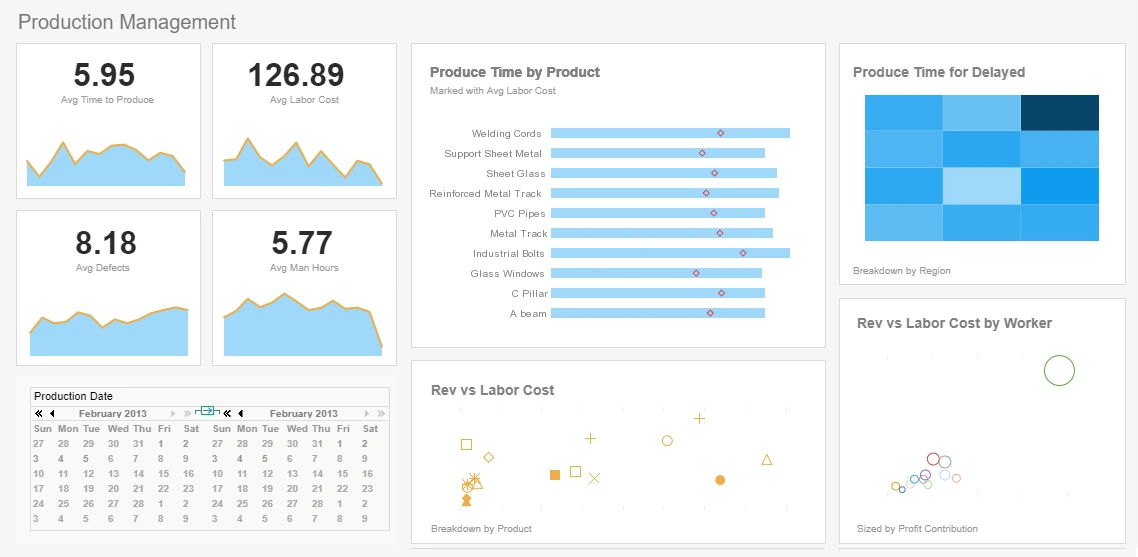

Different Philosophies: Cloud-Only vs. Deployment Flexibility
One of the most important differences between Astrato and InetSoft is their deployment philosophy. Astrato is designed as a cloud-first, SaaS-only solution that sits on top of cloud data warehouses. This is attractive for organizations that are fully committed to a cloud data stack and are comfortable with a pure SaaS model.
InetSoft, by contrast, supports multiple deployment models, including on-premises, private cloud, and hybrid environments. This flexibility matters if:
- You have regulatory or compliance requirements that restrict where data can reside.
- You operate in industries with strict data sovereignty rules.
- You want to keep certain data sources on-premises while gradually moving others to the cloud.
- You prefer to control infrastructure, security policies, and upgrade cycles.
Choosing InetSoft as an alternative to Astrato allows you to align your analytics platform with your broader IT strategy instead of being forced into a single deployment model. For many enterprises, this alone is a decisive factor.
Data Connectivity and Modeling Beyond a Single Stack
Astrato is optimized for live querying against modern cloud data warehouses. That is a strength if your data landscape is already consolidated into a single cloud platform. However, many organizations still operate with a mix of systems: legacy databases, line-of-business applications, files, APIs, and cloud warehouses all coexisting.
InetSoft is designed to connect to a wide variety of data sources and to blend them into a unified semantic layer. This includes:
- Relational databases (on-premises and cloud).
- Cloud data warehouses and data lakes.
- Application data via APIs and web services.
- Flat files, spreadsheets, and CSVs.
Instead of assuming that all data lives in one modern warehouse, InetSoft acknowledges the reality of heterogeneous environments. Its data modeling layer allows you to define reusable views, joins, and transformations that can be shared across dashboards and reports. This is particularly valuable when you need consistent business definitions across departments and tools.
If your organization is still in transition or expects to maintain a hybrid data landscape for the foreseeable future, InetSoft offers a more adaptable foundation than a tool that is tightly coupled to a single type of data platform.

Dashboard Design, Interactivity, and Advanced Layouts
Astrato emphasizes modern, visually appealing dashboards with interactive elements and cloud-native performance. InetSoft can match this level of interactivity while offering additional control over layout, behavior, and complex design requirements.
With InetSoft, you can:
- Design pixel-precise dashboards and reports that respect branding and layout standards.
- Build interactive components such as filters, selectors, drilldowns, and cascaded parameter sheets.
- Create multi-page, multi-panel experiences that combine dashboards, detailed reports, and narrative content.
- Support both casual business users and power users with different levels of interactivity.
This level of control is especially important when dashboards are not just exploratory tools but also operational assets: executive scorecards, regulatory reports, customer-facing portals, or embedded analytics inside other applications. InetSoft’s design environment is built to handle these more demanding scenarios without sacrificing interactivity.

Security, Governance, and Multi-Tenant Scenarios
As analytics becomes more central to business operations, security and governance are no longer optional considerations. Astrato, as a cloud-native tool, leverages the security of the underlying cloud platforms and offers role-based access controls. For many organizations, this is sufficient for internal analytics.
InetSoft, however, has been shaped by years of working with enterprises that require fine-grained control over data access, multi-tenant environments, and complex organizational structures. It supports:
- Row-level and column-level security policies.
- Role-based and group-based access control integrated with enterprise identity providers.
- Multi-tenant architectures where each client or business unit sees only its own data.
- Separation of duties between data modelers, dashboard designers, and end users.
If you are building analytics for external customers, partners, or a distributed organization with strict access boundaries, InetSoft’s governance capabilities can be a decisive advantage over tools that focus primarily on internal, single-tenant use cases.
Embedded Analytics and White-Labeling
Many organizations do not just want dashboards for internal use; they want to embed analytics into their own products, portals, or customer-facing applications. While Astrato can be integrated into certain environments, InetSoft has a long history of supporting embedded analytics and white-label scenarios.
With InetSoft, you can:
- Embed dashboards and reports into web applications with single sign-on.
- Apply your own branding, styling, and navigation so that analytics feel native to your product.
- Expose parameterized views and interactive components tailored to specific user roles or customers.
- Scale to many tenants or customers while maintaining centralized governance and monitoring.
If your roadmap includes offering analytics as part of your product or service, choosing InetSoft as an alternative to Astrato can give you a more mature and flexible embedded analytics platform.

Performance Considerations and Query Strategies
Astrato’s architecture is built around live querying of cloud data warehouses, which can be powerful when queries are well-optimized and the warehouse is tuned for interactive workloads. However, live querying alone is not always the best strategy, especially for highly concurrent usage, complex calculations, or cost-sensitive environments.
InetSoft supports multiple performance strategies, including:
- Live queries against source systems when real-time data is required.
- Caching and in-memory acceleration for frequently accessed views.
- Pre-aggregation and summary tables for heavy analytical workloads.
- Hybrid approaches that balance freshness, performance, and cost.
This flexibility allows you to tailor performance strategies to each use case instead of relying on a single pattern. For example, executive dashboards might use cached summaries, while operational dashboards query live data. InetSoft gives you the tools to make those trade-offs explicitly.
User Experience for Different Audiences
Astrato targets modern BI users who are comfortable with cloud tools and interactive dashboards. InetSoft supports that audience as well but also caters to a broader range of users, from executives who want simple, curated views to analysts who need more control and detail.
InetSoft allows you to:
- Deliver highly guided dashboards with limited controls for non-technical users.
- Offer self-service capabilities where appropriate, letting users slice, filter, and drill into data.
- Provide detailed, printable reports for compliance, audits, or offline review.
- Reuse the same data models across dashboards, reports, and ad hoc analysis tools.
This spectrum of experiences is valuable when your analytics program must serve many different roles and comfort levels without fragmenting tools and platforms.

Total Cost of Ownership and Long-Term Fit
When comparing Astrato and InetSoft, it is important to look beyond initial feature checklists and consider total cost of ownership and long-term fit. A cloud-only tool may seem simpler at first but can become limiting if your architecture, governance needs, or product strategy evolve in ways it does not support well.
InetSoft’s strengths—deployment flexibility, broad data connectivity, strong governance, embedded analytics, and performance options—make it a platform that can grow with your organization. Instead of being constrained by a single architectural pattern, you can adapt your analytics environment as your data landscape and business requirements change.
When InetSoft Is the Better Choice
Astrato is a compelling option for organizations that are fully invested in a cloud data warehouse, prefer a pure SaaS model, and primarily need internal, exploratory dashboards. However, if you:
- Operate in a hybrid or regulated environment.
- Need fine-grained security and multi-tenant governance.
- Plan to embed analytics into products or customer portals.
- Require pixel-perfect dashboards and reports alongside interactive exploration.
- Want flexibility in performance strategies and deployment models.
then choosing InetSoft as an alternative to Astrato can provide a more robust, future-proof foundation for your analytics program. It combines modern dashboarding capabilities with the depth and flexibility needed to support complex, real-world enterprise scenarios—without forcing you into a single way of working with your data.