Mismatched Granularity Joins and How InetSoft Solves Them
Mismatched granularity is one of the most common and frustrating challenges in analytics and BI modeling. It occurs when two datasets represent information at different levels of detail, making a direct join impossible or misleading. For example, a sales table may contain daily transactions per product, while a budget table may contain monthly targets per region. Attempting to join these tables directly produces duplication, incorrect aggregations, or misleading results. The BI layer must reconcile these differences before meaningful analysis can occur.
Granularity mismatches appear in many forms: daily vs. monthly, product-level vs. category-level, customer-level vs. segment-level, or machine-level vs. plant-level. The problem is not that the data is wrong, but that the levels of detail do not align. Without intervention, a join multiplies rows, inflates metrics, or distorts averages. Analysts often discover this only after dashboards show impossible numbers.

The solution is to adjust one dataset to match the granularity of the other. This can be done by aggregating the finer-grained dataset upward or splitting the coarser-grained dataset downward. Both approaches require careful modeling and a BI tool capable of handling complex transformations without breaking lineage or performance.
Splitting Lesser Granularity to Match Higher Granularity
When a dataset exists at a higher level of granularity—such as monthly, quarterly, or region-level—it may need to be split into smaller units to match a more detailed dataset. This process is sometimes called “granularity expansion” or “disaggregation.” It involves distributing values from a coarse dataset across the finer-grained units of another dataset.
Consider a monthly budget table that allocates $300,000 to a region. The sales table, however, contains daily transactions for individual stores. To compare actuals to budget, the monthly budget must be split across days and stores. This can be done evenly, proportionally based on historical patterns, or using business rules such as store size or staffing levels. The key is that the BI tool must support this transformation without requiring manual spreadsheet work.
Splitting granularity is also common in manufacturing. A plant-level energy consumption target may need to be distributed across machines. A weekly production quota may need to be assigned to shifts. A quarterly maintenance budget may need to be allocated to individual work centers. Without the ability to disaggregate, dashboards cannot show accurate comparisons or performance indicators.
The challenge is ensuring that the disaggregation logic is transparent, repeatable, and governed. Hard-coding formulas in spreadsheets or ETL scripts leads to inconsistencies and maintenance headaches. A metadata-driven BI layer is far better suited for this task.
Aggregating Higher Granularity to Match Lower Granularity
The opposite scenario—aggregating finer-grained data upward—is more common and often easier. If a sales table contains daily transactions and the budget table contains monthly targets, the sales data can be aggregated to the monthly level. This avoids duplication and ensures that the join occurs at the correct level.
Aggregation is also used when joining machine-level sensor data to plant-level KPIs, or when joining customer-level transactions to segment-level marketing data. The BI tool must support flexible aggregation rules, including sums, averages, medians, distinct counts, and custom calculations. It must also ensure that the aggregated dataset remains consistent with the original source.
The key is that aggregation must occur before the join, not after. If the join happens first, the dataset may multiply rows and distort the aggregated values. A robust metadata layer ensures that the aggregation is applied at the correct stage of the pipeline.
How InetSoft’s Metadata Layer Handles Granularity Mismatches
InetSoft’s metadata layer is designed specifically to handle complex modeling challenges like mismatched granularity. Its semantic modeling environment allows analysts to define logical views that encapsulate joins, transformations, and business rules. These views act as reusable building blocks across dashboards, reports, and data mashups.
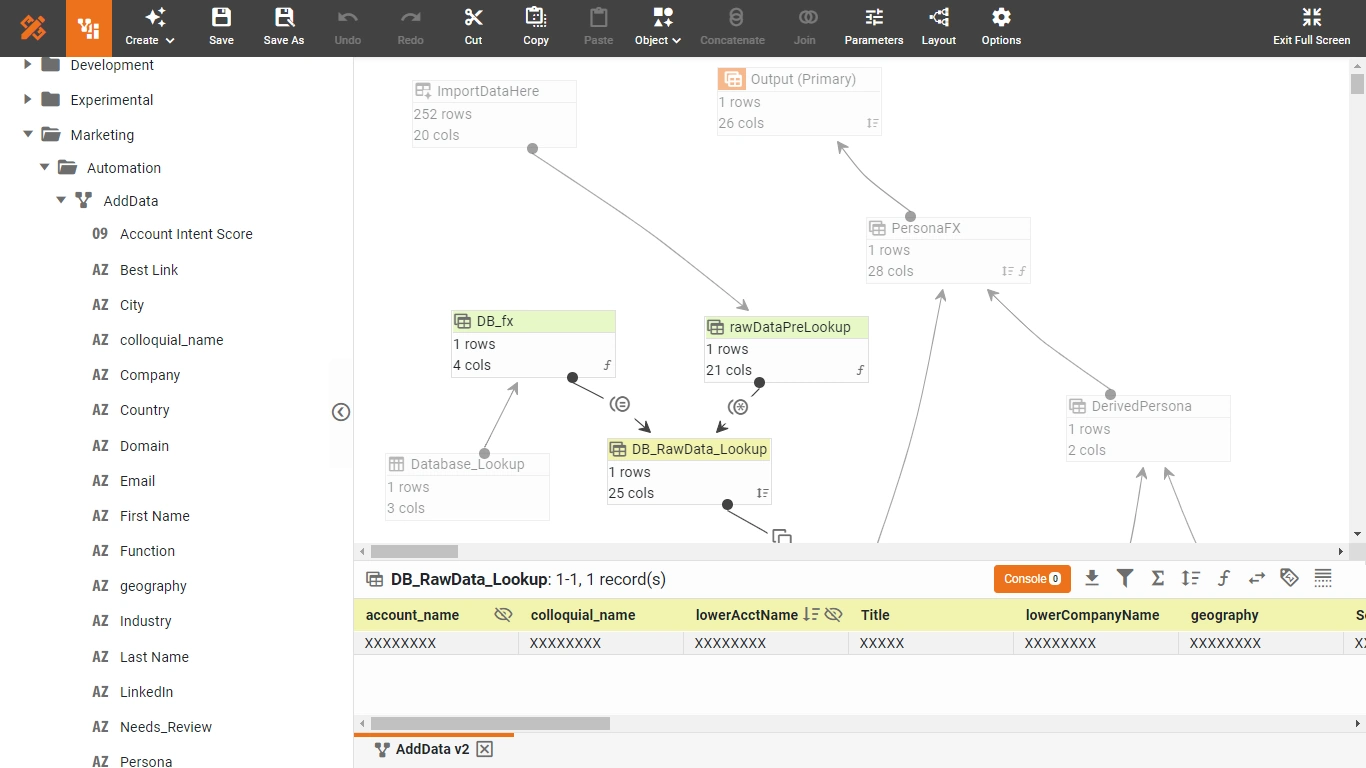
One of the strengths of InetSoft is its ability to perform transformations at the metadata layer rather than requiring external ETL tools. This includes aggregation, disaggregation, pivoting, unpivoting, and conditional logic. When two datasets have mismatched granularity, InetSoft allows the modeler to define the appropriate transformation directly within the semantic view.
For example, a monthly budget table can be disaggregated into daily values using a rule-based expression. A region-level target can be split across stores using a proportional allocation based on historical sales. A plant-level KPI can be distributed across machines using a weighting factor. These transformations remain part of the metadata layer, ensuring consistency across all dashboards.
InetSoft also supports pre-join aggregation. If a dataset needs to be rolled up before joining, the modeler can define an aggregated view that becomes the join target. This ensures that the join occurs at the correct level and prevents row multiplication.

InetSoft’s Data Mashup Engine and Complex Joins
Beyond granularity adjustments, InetSoft’s data mashup engine supports a wide range of complex join scenarios. This includes multi-source blending, federated queries, conditional joins, and time-series alignment. The mashup engine allows users to combine relational databases, cloud APIs, spreadsheets, and flat files into a unified analytical model.
Mismatched granularity is often just one part of a larger modeling challenge. For example, a manufacturing dashboard may need to combine machine sensor data (millisecond granularity), production logs (shift-level granularity), and financial data (monthly granularity). InetSoft’s mashup engine allows each dataset to be transformed to the appropriate level before joining.
The engine also supports conditional joins, such as matching a transaction to the most recent valid record in a slowly changing dimension. It supports time-window joins, such as aligning sensor readings with production batches. It supports hierarchical joins, such as mapping SKUs to categories or machines to work centers.
All of these capabilities are accessible through a visual modeling interface, making it easier for analysts to understand and maintain the logic. The mashup engine ensures that the resulting dataset is optimized for performance and can be reused across multiple dashboards.

Why Granularity Alignment Matters for BI Success
Granularity alignment is essential for accurate analytics. When datasets are joined at the wrong level, dashboards show inflated numbers, incorrect comparisons, or misleading KPIs. Users lose trust in the data, and the BI program suffers.
By handling granularity mismatches at the metadata layer, InetSoft ensures that dashboards remain accurate, consistent, and trustworthy. Analysts can focus on insights rather than wrestling with data preparation. Business users can rely on the dashboards to make informed decisions.
As organizations adopt more data sources and more complex analytics, the ability to reconcile mismatched granularity becomes increasingly important. InetSoft’s combination of semantic modeling, data mashup capabilities, and transformation logic makes it well suited for modern BI environments.
Solvable With The Right BI Architecture
Mismatched granularity joins are a fundamental challenge in analytics, but they are solvable with the right BI architecture. Whether splitting coarse data into finer units or aggregating detailed data upward, the key is to apply transformations before joining. InetSoft’s metadata layer and data mashup engine provide the tools needed to handle these scenarios cleanly and consistently. By aligning granularity at the modeling layer, organizations can build dashboards that are accurate, reliable, and ready for decision-making.