From Event Streams to Operational Insight: How an Emissions Neutralization Firm Switched From Posthog to StyleBI
EnviroScrub Solutions is a mid-sized company specializing in industrial odor control and emissions neutralization. Its systems sit on top of wastewater treatment plants, food processing facilities, and chemical manufacturing sites, quietly stripping out hydrogen sulfide, ammonia, and volatile organic compounds before they reach surrounding communities. The company’s value is deeply operational: scrubber towers, biofilters, carbon beds, ductwork, fans, and sensors all working together to keep emissions within strict regulatory limits.
For years, EnviroScrub’s analytics stack was centered on Posthog. The engineering team instrumented internal web tools, technician apps, and customer portals with event tracking. They could see which features were used, how often operators logged in, and where workflows stalled. But as the business matured, leadership realized that product analytics alone could not answer the questions that mattered most to operations, finance, and compliance.

Recognizing the Limits of Event-Centric Analytics
Posthog gave EnviroScrub a detailed view of user behavior: button clicks, page views, funnels, and retention curves. This was useful for improving the technician mobile app and the customer reporting portal. However, the company’s core challenges were not about clicks; they were about scrubber performance, carbon media life, odor complaints, and regulatory risk.
Operations leaders wanted to know:
- Which sites are trending toward breakthrough on carbon beds based on inlet/outlet gas concentrations and runtime?
- How changes in airflow, pH, and moisture in biofilters correlate with odor complaints from nearby neighborhoods?
- Which customers are at highest risk of non-compliance given their historical exceedances and current operating conditions?
- How service routes and maintenance schedules could be optimized to reduce emergency callouts and overtime.
These questions required blending sensor data, SCADA exports, lab results, maintenance logs, and financial information. Posthog’s event model was not designed for this kind of multi-source, schema-rich analysis. The data team found themselves exporting CSVs, stitching them together manually, and building one-off reports that quickly went stale.
Why EnviroScrub Chose StyleBI
The turning point came when a major municipal client requested a unified emissions performance dashboard across eight treatment plants, with drill-down into each scrubber train and historical trend analysis over several years. EnviroScrub’s leadership realized they needed a true business intelligence platform—something that could sit on top of diverse data sources, model complex relationships, and deliver governed, reusable dashboards.
After evaluating several tools, EnviroScrub selected StyleBI for three key reasons:
- Data modeling for operational systems: StyleBI’s ability to connect to SQL databases, spreadsheets, and flat files, then model relationships between assets, sites, time periods, and measurements, matched the company’s operational reality.
- Pixel-perfect, customer-facing reporting: Many of EnviroScrub’s deliverables are formal compliance reports and executive summaries. StyleBI’s report designer allowed them to create branded, precise layouts suitable for regulators and city councils.
- Self-service dashboards for non-technical users: Plant managers, account managers, and executives needed interactive dashboards without learning a query language. StyleBI’s guided interactions and parameterized views fit that need.
Posthog remained valuable for product analytics, but it was no longer positioned as the central analytics platform. StyleBI became the hub for operational, financial, and compliance intelligence.
Designing the New Analytics Architecture
The migration began with a clear architectural decision: Posthog would continue to collect event data from apps and portals, but that data would be periodically exported into a central data warehouse alongside operational and financial data. StyleBI would sit on top of this warehouse as the primary consumption layer.
EnviroScrub’s data team defined several core subject areas:
- Assets: scrubbers, fans, carbon beds, biofilters, duct segments, and sensors, each with unique IDs and attributes.
- Sites: customer facilities, grouped into regions and customer accounts.
- Measurements: gas concentrations, airflow, pressure drop, pH, moisture, temperature, and runtime, captured at regular intervals.
- Maintenance: work orders, inspections, media replacements, and emergency callouts.
- Compliance: permit limits, stack test results, odor complaints, and recorded exceedances.
- Commercial: contracts, SLAs, revenue, and cost-to-serve metrics.
StyleBI was connected directly to this modeled layer. Instead of thinking in terms of “events,” stakeholders could now think in terms of “assets over time,” “sites by risk,” and “customers by profitability.” This shift in mental model was as important as the technology itself.
Building Emissions and Operations Dashboards in StyleBI
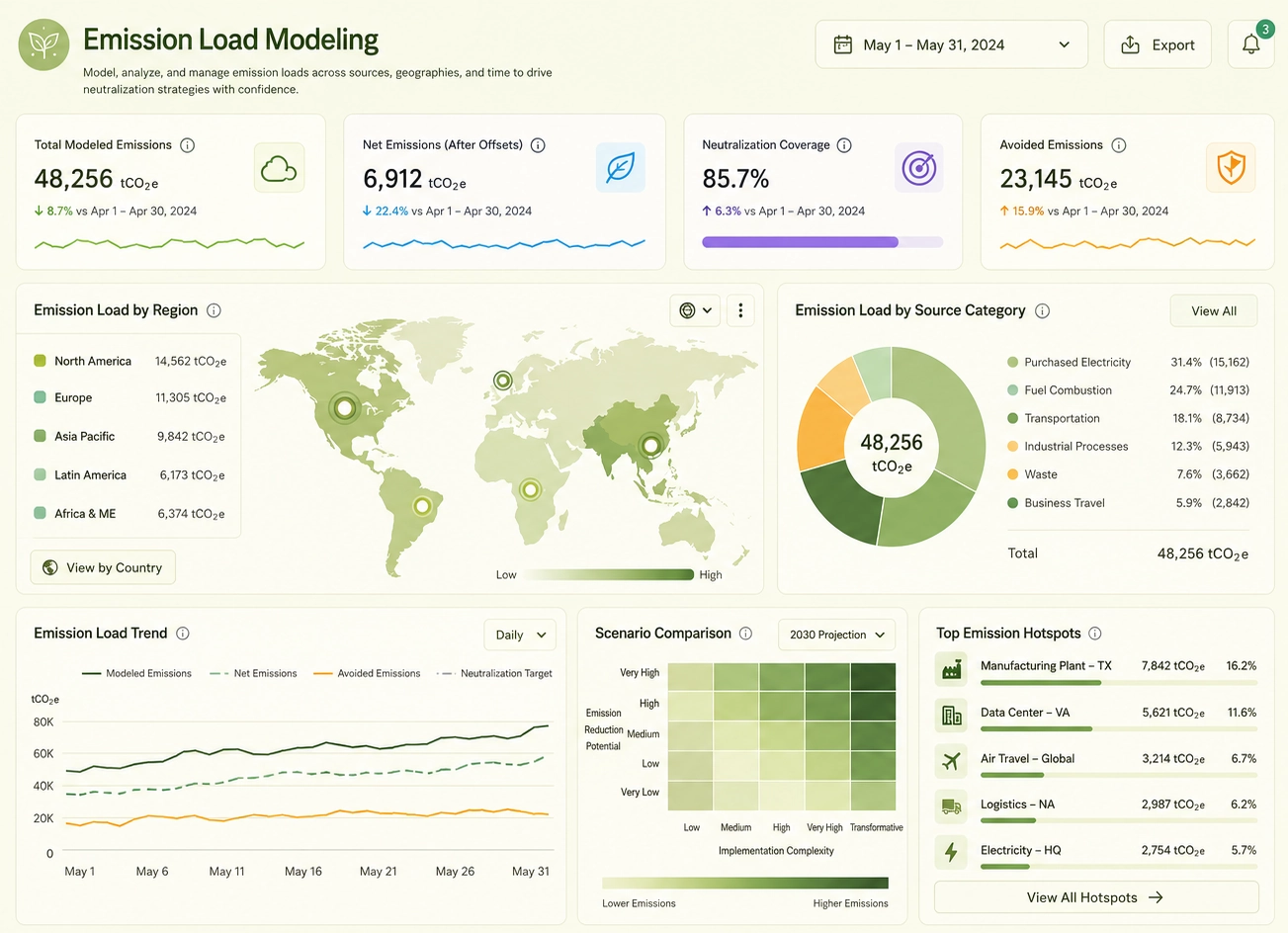
The first major deliverable was the Emissions Performance Overview dashboard. It provided a top-level view of all customer sites, color-coded by risk level. Each tile showed recent average outlet concentration, number of exceedances in the last 90 days, and upcoming maintenance activities. Clicking a tile drilled into a site-level view with time-series charts, asset status, and maintenance history.
Key features of the dashboard included:
- Time-series analysis: Trend lines for inlet and outlet gas concentrations, with shaded regions indicating permit limits.
- Asset health indicators: Visual cues for carbon bed saturation, biofilter media condition, and fan performance.
- Event overlays: Maintenance events and odor complaints overlaid on performance charts to reveal correlations.
- Regional filters: Quick filters for region, customer, and site type, allowing managers to compare performance across portfolios.
Next came the Service Efficiency dashboard. This view focused on technician routes, response times, and cost metrics. By blending GPS data, work order logs, and labor costs, StyleBI enabled operations leaders to identify inefficient routes, recurring emergency visits, and sites that consistently required more attention than their contract value justified.
Finally, the Compliance & Risk dashboard brought together exceedance history, odor complaints, and permit details. Account managers could see which customers were trending toward risk and proactively schedule audits or upgrades. For the first time, EnviroScrub could quantify “compliance risk exposure” across its entire customer base.

Integrating Posthog Data Into the BI Story
Although StyleBI became the primary analytics interface, Posthog did not disappear. Instead, its data was reframed as one more input into the broader BI picture. The data team exported aggregated usage metrics from Posthog—such as frequency of logins, use of specific features, and completion rates for digital checklists—and loaded them into the warehouse.
In StyleBI, these metrics were joined with operational and commercial data. This allowed EnviroScrub to answer questions like:
- Do sites where operators regularly use the digital inspection checklist experience fewer exceedances and emergency callouts?
- Are customers who actively use the self-service portal more satisfied and less likely to escalate issues?
- Which features in the technician app correlate with faster resolution times and lower overtime costs?
By embedding product usage metrics into operational dashboards, EnviroScrub turned Posthog’s event data into business outcomes rather than isolated charts. StyleBI became the place where these relationships were explored and communicated.
Change Management and Adoption
Switching from a developer-centric tool like Posthog to a company-wide BI platform required thoughtful change management. The data team knew that simply rolling out new dashboards would not guarantee adoption. They invested time in training sessions, internal documentation, and feedback loops.
Plant managers were invited to design sessions where they could describe the views they wished they had. Account managers were shown early prototypes of customer-facing reports and asked to critique them. Executives received a curated set of high-level dashboards with clear KPIs and definitions.
StyleBI’s role-based access controls helped manage this diversity. Technicians saw operational details relevant to their routes and sites. Managers saw aggregated performance and cost metrics. Executives saw strategic indicators and risk summaries. Everyone was looking at the same underlying data, but through lenses tailored to their responsibilities.

Measurable Impact of the Transition
Within a year of adopting StyleBI as its BI platform, EnviroScrub saw several tangible benefits:
- Reduced emergency callouts: By identifying sites with deteriorating performance early, the company reduced unplanned visits and overtime.
- Improved compliance posture: Risk dashboards enabled proactive interventions at sites trending toward exceedances, leading to fewer violations.
- Higher customer satisfaction: Branded, clear dashboards and reports improved transparency with clients and strengthened renewal conversations.
- Better product decisions: By tying Posthog usage data to operational outcomes, the product team prioritized features that demonstrably improved field performance.
Perhaps most importantly, the company’s culture shifted. Conversations in leadership meetings moved from anecdotes and spreadsheets to shared dashboards and agreed-upon metrics. Instead of debating whose numbers were correct, teams focused on what actions to take.
From Events to Insight: A New Analytics Foundation
EnviroScrub’s journey from Posthog-centric analytics to a StyleBI-based BI environment reflects a broader pattern in industrial and environmental services. Event tracking tools excel at understanding how users interact with software, but they are not designed to be the single source of truth for complex, asset-heavy operations.
By repositioning Posthog as a valuable but narrow input and elevating StyleBI as the central analytics layer, EnviroScrub built an analytics foundation that matches the reality of emissions neutralization work: multi-source, time-based, asset-centric, and deeply tied to regulatory and financial outcomes.
In an industry where the public rarely sees the equipment and processes that keep the air breathable, having a clear, shared view of performance is a competitive advantage. For EnviroScrub, the switch to StyleBI was not just a tool change; it was a strategic step toward running a more predictable, transparent, and resilient emissions neutralization business.