Industrial Heat‑Treating Reporting Transformation: Migrating From Kuse To StyleBI
In the Industrial Heat‑Treating Services industry, reporting is not just a back‑office function—it is the backbone of quality assurance, furnace performance optimization, compliance documentation, and customer certification. Every furnace cycle, quench profile, hardness test, and metallurgical inspection generates data that must be captured, analyzed, and communicated with precision. One mid‑sized commercial heat‑treating provider—here referred to as ForgeLine Thermal Solutions—recently undertook a major transformation by migrating its reporting software from Kuse to StyleBI. This shift fundamentally changed how the company monitored operations, ensured quality, and delivered transparency to its aerospace, automotive, and industrial customers.
ForgeLine operates multiple facilities specializing in vacuum heat‑treating, carburizing, nitriding, induction hardening, and cryogenic processing. With customers in aerospace, medical devices, and heavy machinery, the company must maintain strict process control and documentation. As its operations expanded, the limitations of its previous reporting platform, Kuse, became increasingly apparent. The move to StyleBI was driven by the need for deeper analytics, real‑time furnace intelligence, and a unified reporting environment capable of supporting NADCAP‑level traceability.

Why Reporting Matters In Industrial Heat‑Treating
Heat‑treating is a precision‑driven industry where small deviations in temperature, soak time, atmosphere composition, or quench rate can dramatically affect material properties. Reporting systems must capture and interpret these variables accurately. Key reporting needs include:
- Furnace Cycle Documentation: Temperature curves, uniformity, soak times, and quench parameters.
- Metallurgical Quality Results: Hardness readings, microstructure images, case‑depth profiles, and tensile data.
- Equipment Health Monitoring: Thermocouple drift, vacuum pump performance, fan speed, and burner efficiency.
- Energy Consumption: Tracking furnace load scheduling and peak demand usage.
- Customer Certification: Linking part batches to furnace cycles, inspection results, and compliance documents.
- Regulatory And Audit Requirements: NADCAP, AMS, ISO, and customer‑specific standards.
Kuse provided ForgeLine with basic reporting capabilities, but as the company grew, the platform struggled to support the depth and complexity of modern heat‑treating analytics. This created bottlenecks in quality assurance, operations, and customer communication.

Limitations Of The Previous Kuse‑Based Approach
Kuse was originally implemented to centralize reporting and provide visibility into furnace cycles and quality metrics. However, as ForgeLine expanded its service offerings and customer base, several limitations emerged:
- Limited Furnace Data Integration: Connecting vacuum furnace telemetry, thermocouple data, and quench system sensors required manual exports.
- Static Reports: Many reports lacked interactivity, making it difficult to drill into specific cycles or part batches.
- Weak Metallurgical Visualization: Microstructure images, hardness maps, and case‑depth charts were difficult to integrate into dashboards.
- Slow Performance With Large Datasets: Years of furnace cycle history caused slow load times and report delays.
- Low Adoption Among Operators: The interface was not intuitive for furnace technicians or quality inspectors.
These limitations created operational friction. Quality engineers needed faster access to cycle deviations. Operations managers wanted real‑time furnace performance dashboards. Customers demanded more transparent reporting. Leadership wanted a unified view of throughput, energy usage, and quality trends. Kuse could not deliver the level of integration and flexibility required.

Why ForgeLine Chose StyleBI
After evaluating several business intelligence platforms, ForgeLine selected StyleBI for its ability to support complex industrial workflows, integrate real‑time furnace data, and provide highly customizable dashboards. Several factors drove the decision:
- Advanced Furnace Analytics: StyleBI could model temperature curves, quench profiles, and cycle deviations with precision.
- Real‑Time Data Integration: The platform connected seamlessly to furnace controllers, SCADA systems, and lab instruments.
- Metallurgical Reporting Support: Hardness results, microstructure images, and case‑depth charts could be embedded directly into dashboards.
- Self‑Service Exploration: Engineers and technicians could drill into data without relying on analysts.
- High Performance With Large Datasets: StyleBI handled years of furnace cycle history without slowing down.
- Unified Reporting Environment: Operations, quality, and customer service teams could all work within the same BI ecosystem.
The migration to StyleBI was not simply a technology upgrade—it was a strategic shift toward data‑driven heat‑treating intelligence.

Migration Strategy: From Kuse Reports To StyleBI Intelligence
ForgeLine approached the migration with a structured plan to ensure continuity of operations. The project was divided into three phases: discovery, redesign, and deployment.
Discovery And Prioritization
The first step was identifying the reports and dashboards most critical to heat‑treating operations. These included:
- Furnace Cycle Performance Dashboard: Temperature uniformity, soak times, quench parameters, and deviations.
- Metallurgical Quality Dashboard: Hardness results, microstructure images, and case‑depth profiles.
- Equipment Health Dashboard: Thermocouple drift, vacuum pump performance, and fan speed analytics.
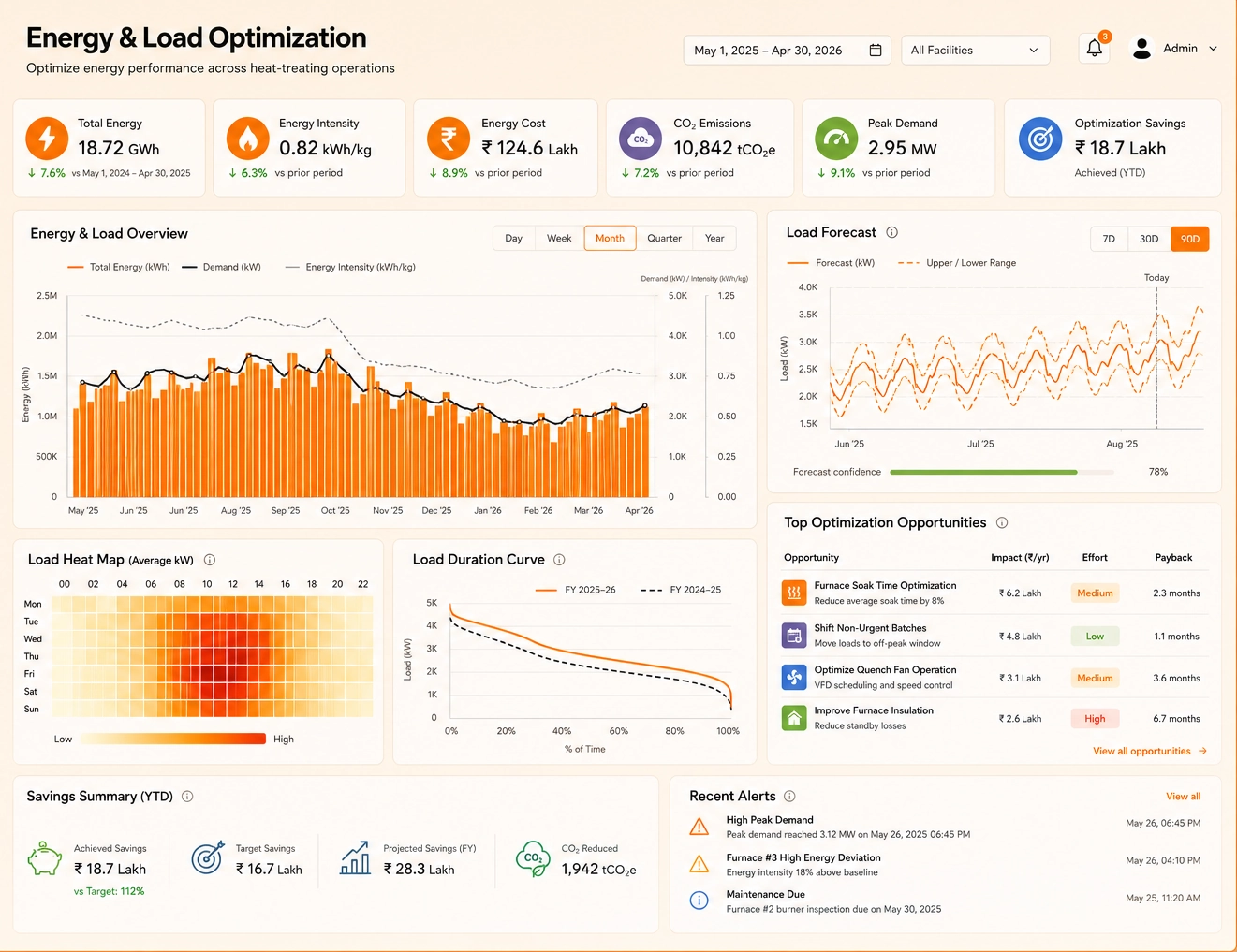
- Energy And Load Scheduling Dashboard: Peak demand tracking and furnace utilization.
- Customer Certification Dashboard: Linking part batches to furnace cycles and inspection results.
These dashboards formed the foundation of the StyleBI implementation.

Redesigning Dashboards For Heat‑Treating Workflows
Rather than simply recreating Kuse reports, ForgeLine used the migration as an opportunity to rethink how information should be presented. StyleBI’s flexible layout and interactive components enabled the team to:
- Group Metrics By Operational Questions: For example, “Which furnaces are running out of spec?” or “Which batches failed hardness testing?”
- Embed Alerts And Thresholds: Visual indicators highlighted when temperature deviations exceeded limits or when quench rates fell below targets.
- Enable Deep Drill‑Downs: Users could move from high‑level KPIs to specific cycles, parts, or thermocouples.
This redesign transformed dashboards from static reports into dynamic decision‑making tools.
Driving Adoption Across Departments
ForgeLine recognized that the success of StyleBI depended on widespread adoption. To support this, the company:
- Created Role‑Based Dashboards: Operators, engineers, inspectors, and executives each received tailored views.
- Conducted Hands‑On Training: Workshops focused on real scenarios, such as diagnosing cycle deviations or analyzing hardness failures.
- Integrated StyleBI Into Daily Routines: Morning production meetings, quality reviews, and customer updates all used StyleBI dashboards.
As users became comfortable with the platform, StyleBI became the central hub for operational intelligence.

Key StyleBI Dashboards For Heat‑Treating Operations
Several dashboards emerged as essential tools for ForgeLine’s performance management ecosystem.
Furnace Cycle Performance Intelligence
This dashboard provided real‑time visibility into furnace operations. Users could:
- Monitor Temperature Curves: Identifying deviations from programmed cycles.
- Analyze Quench Profiles: Ensuring cooling rates met metallurgical requirements.
- Track Uniformity: Comparing thermocouple readings across zones.
Metallurgical Quality Explorer
StyleBI allowed ForgeLine to integrate metallurgical data directly into dashboards:
- Hardness Mapping: Visualizing results across part surfaces.
- Microstructure Images: Embedding lab photos for quick review.
- Case‑Depth Profiles: Comparing measured values to specifications.
Equipment Health And Predictive Maintenance
Predictive maintenance is essential in heat‑treating. StyleBI enabled:
- Tracking Thermocouple Drift: Identifying sensors nearing calibration limits.
- Monitoring Vacuum Pump Performance: Detecting early signs of wear.
- Analyzing Fan Speed And Burner Efficiency: Preventing cycle deviations.

Energy And Load Optimization
Energy is one of the largest costs in heat‑treating. StyleBI helped ForgeLine:
- Reduce Peak Demand Charges: By optimizing furnace scheduling.
- Analyze Load Patterns: Identifying underutilized equipment.
- Improve Throughput: Balancing cycle timing across furnaces.
Customer Certification And Traceability
StyleBI provided a unified view of customer‑specific requirements:
- Linking Batches To Furnace Cycles
- Embedding Inspection Results
- Generating Audit‑Ready Reports
This improved transparency and strengthened customer trust.
Business Impact Of Switching To StyleBI
Within the first year of migrating from Kuse to StyleBI, ForgeLine experienced measurable improvements across operations, quality, and customer service.
- Improved Cycle Consistency: Real‑time monitoring reduced deviations and rework.
- Enhanced Quality Assurance: Metallurgical dashboards improved root‑cause analysis.
- Faster Decision‑Making: Engineers could answer questions in minutes instead of hours.
- Greater Customer Transparency: Certification dashboards strengthened relationships with key accounts.
- Stronger Cross‑Department Alignment: All teams used the same dashboards, reducing miscommunication.
Perhaps the most significant impact was cultural. StyleBI helped ForgeLine shift from reactive reporting to proactive performance management, enabling the company to anticipate issues, optimize operations, and deliver higher‑quality results.

Transformation in Heat‑Treating Intelligence
ForgeLine’s migration from Kuse to StyleBI was more than a software upgrade—it was a transformation in how the company understood and managed its heat‑treating operations. By adopting a platform designed for flexibility, interactivity, and real‑time insight, the company positioned itself for long‑term success in an industry where precision, consistency, and compliance are essential. StyleBI now serves as the central intelligence layer that empowers every department to make smarter, faster, and more informed decisions.