From Fragmented Metrics to Unified Insight: A Decontamination Services Provider Switches From icCube to StyleBI
In the specialty industrial cleaning and decontamination services industry, performance is measured in minutes, microns, and risk. Jobs are complex, margins are tight, and every project is a balancing act between safety, compliance, and profitability. One mid-sized decontamination services company, operating across multiple states and serving refineries, food processors, and pharmaceutical plants, realized that its existing analytics stack was no longer keeping up.
For years, the company relied on icCube as the core of its Business Performance Management environment. While icCube provided OLAP capabilities and custom reporting, the organization struggled to extend it beyond a small group of power users. As the business grew, leadership wanted something more: a platform that could support real-time operational dashboards, self-service analytics for project managers, and embedded performance views for customers. That search led them to StyleBI.

Business Context: Performance Management in Decontamination Services
The company’s work spans hazardous tank cleaning, confined-space decontamination, chemical spill response, and high-specification cleaning for food and pharma facilities. Each job involves:
- Complex job costing: Labor by skill level, equipment usage, consumables, disposal fees, and travel time.
- Strict compliance requirements: Documentation for OSHA, EPA, and customer-specific protocols.
- High operational risk: Safety incidents, contamination events, and schedule overruns can be extremely costly.
To manage performance, the company tracked KPIs such as job margin, incident rate, rework frequency, schedule adherence, and equipment utilization. However, these metrics were scattered across spreadsheets, legacy systems, and custom icCube reports that only a few analysts knew how to maintain.
Limitations of the Existing icCube Environment
Initially, icCube seemed like a solid choice: it offered multidimensional analysis and the ability to build custom dashboards. Over time, several limitations became clear.
1. Limited Self-Service for Non-Technical Users
Most project managers and operations leaders were not comfortable building or modifying icCube reports. They depended on a small analytics team to:
- Create new views for each customer or job type.
- Adjust KPIs when pricing models or safety metrics changed.
- Maintain complex cube definitions and calculations.
This created bottlenecks. Performance questions that arose during weekly operations meetings often had to be “taken offline” and answered days later, after analysts built new queries or reports.
2. Fragmented Performance Management Workflows
The company’s performance management process involved multiple tools: icCube for some dashboards, spreadsheets for job costing, a separate system for safety incidents, and email for distributing reports. There was no single, consistent environment where:
- Executives could see high-level KPIs across all regions.
- Operations managers could drill into job-level performance.
- Safety leaders could correlate incidents with job types, crews, and equipment.
icCube was part of the picture, but it never became the central hub for Business Performance Management that leadership envisioned.
3. Challenges with Embedding and Customer-Facing Analytics
The company wanted to differentiate itself by providing customers with secure, web-based dashboards showing job status, compliance documentation, and performance metrics. Embedding icCube in their customer portal proved difficult:
- Customization required significant development effort.
- Styling and branding were limited.
- Managing access and row-level security for each customer was complex.
As a result, customer-facing analytics remained mostly static PDF reports, undermining the company’s goal of being seen as a data-driven partner.
Why the Company Chose StyleBI
When the leadership team decided to modernize its Business Performance Management environment, they evaluated several options and ultimately selected StyleBI. Several factors drove the decision.

Unified Platform for Dashboards, Reporting, and Performance Management
StyleBI offered a single web-based environment where the company could:
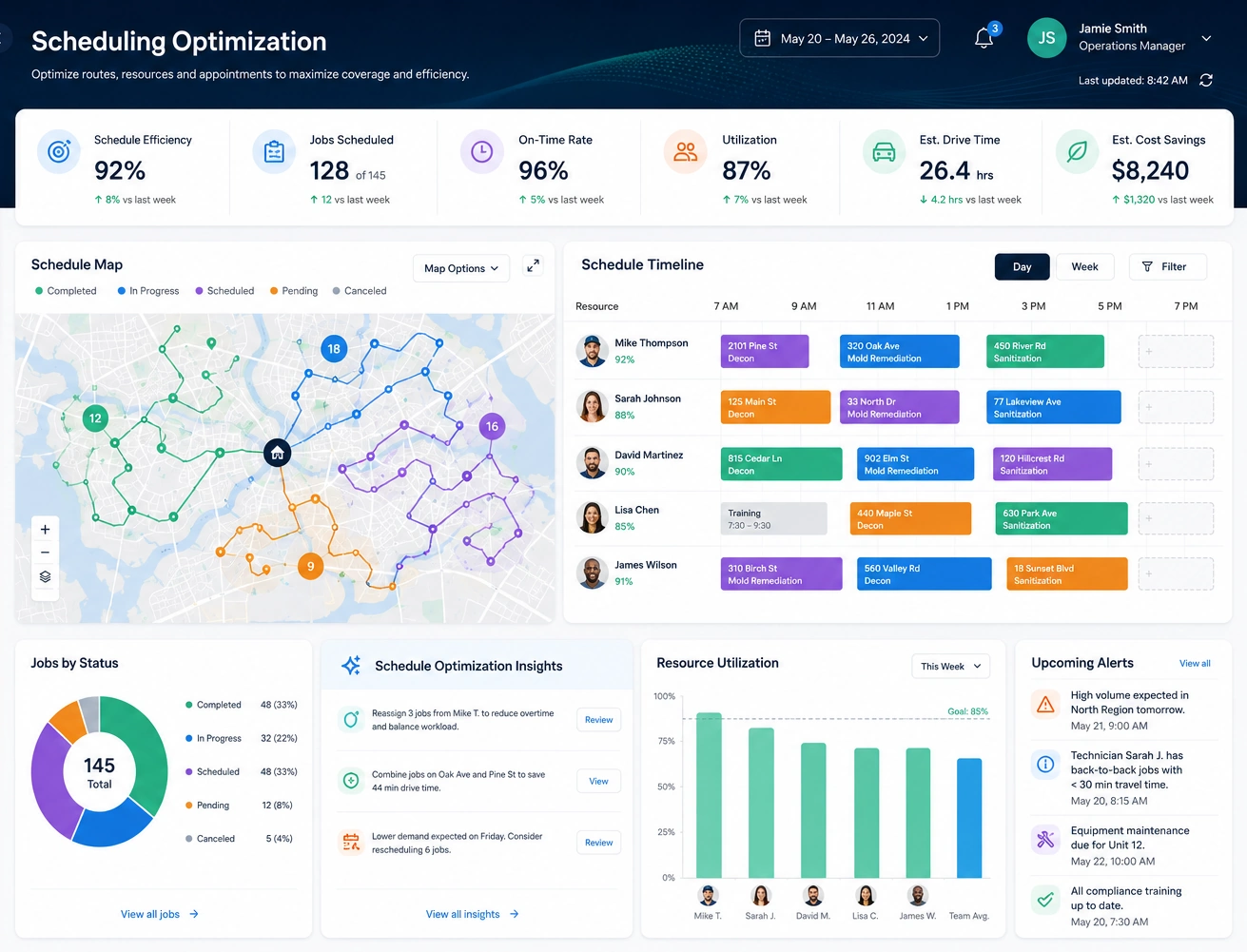
- Build interactive dashboards for executives, operations, safety, and finance.
- Standardize KPI definitions and calculations across the organization.
- Support both internal performance management and customer-facing analytics from the same platform.
This unified approach aligned with the company’s goal of treating performance management as an integrated system rather than a collection of disconnected tools.
Self-Service Capabilities for Operational Users
A key requirement was enabling project managers and regional leaders to explore data without relying on the analytics team for every change. StyleBI’s visual interface and guided self-service features allowed:
- Non-technical users to filter, slice, and drill into dashboards.
- Power users to create new views and share them with their teams.
- Central governance to ensure that core KPIs remained consistent.
This shift promised to reduce bottlenecks and make performance conversations more data-driven in real time.
Embedded Analytics and Customer Portals
The company also saw StyleBI as a way to elevate its customer experience. With its embedding capabilities and flexible security model, StyleBI made it feasible to:
- Embed dashboards directly into the customer portal.
- Apply row-level security so each customer only sees their own jobs and metrics.
- Brand the experience to match the company’s visual identity.
This would allow customers to log in and see live performance data: job progress, safety metrics, and historical performance trends, reinforcing trust and transparency.

Implementation: Migrating From icCube to StyleBI
The migration was approached as both a technical and process transformation. Rather than simply “rebuilding reports,” the company used the opportunity to redesign its performance management framework.
Phase 1: KPI Rationalization and Data Modeling
The first step was to review all existing KPIs and reports in icCube and spreadsheets. The team:
- Identified duplicate or conflicting metrics (e.g., multiple definitions of job margin).
- Standardized definitions for core KPIs across finance, operations, and safety.
- Designed a data model that integrated job costing, time tracking, safety incidents, and equipment usage.
This model was then implemented in the data layer feeding StyleBI, ensuring that dashboards would be built on a consistent foundation.
Phase 2: Rebuilding and Enhancing Dashboards
Next, the company recreated its most critical icCube dashboards in StyleBI, but with enhancements:
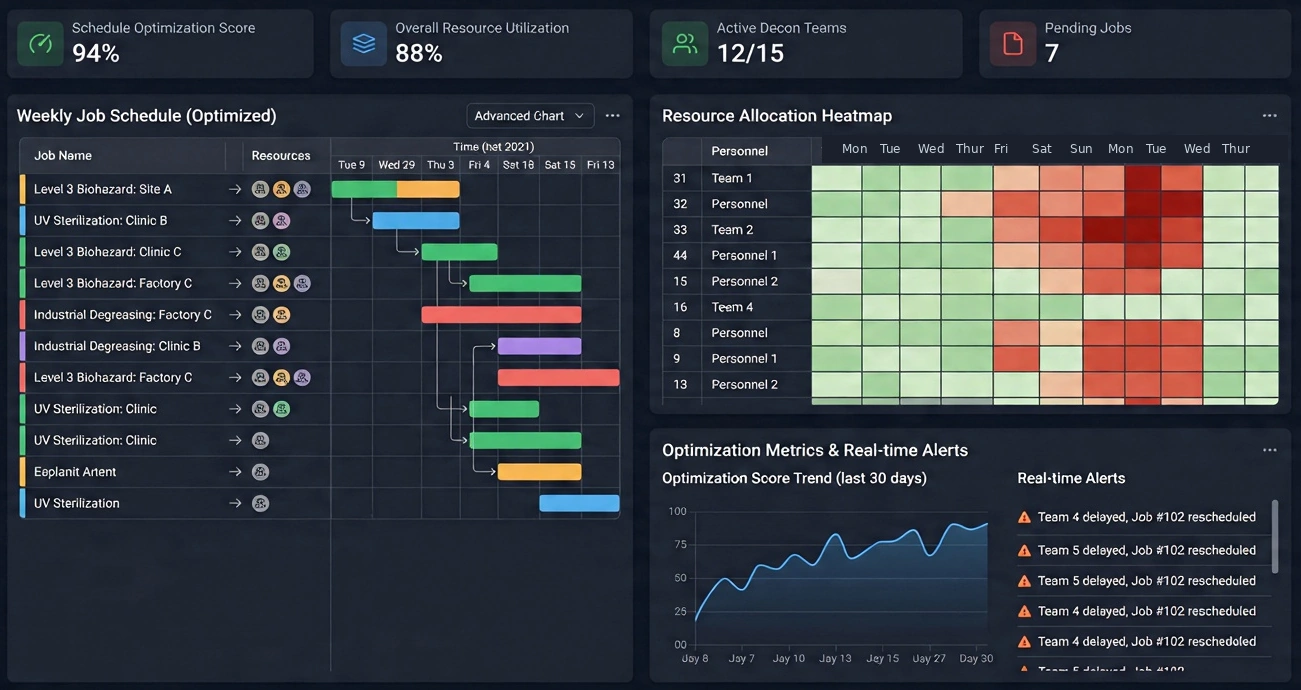
- Executive dashboards showing revenue, margin, incident rates, and utilization by region.
- Operations dashboards for project managers, with job-level profitability, schedule adherence, and rework metrics.
- Safety dashboards correlating incidents with job type, crew, and equipment.
During this phase, the team also introduced new visualizations that were difficult to implement in the old environment, such as interactive maps of job sites and drill-through from regional summaries to individual work orders.

Phase 3: Self-Service Rollout and Training
To ensure adoption, the company ran targeted training sessions:
- Executives learned how to navigate and interpret high-level dashboards.
- Project managers practiced filtering, drilling, and exporting views relevant to their jobs.
- Regional leaders were trained to create and share their own dashboard variants while respecting governed KPI definitions.
The analytics team shifted from being report builders to being data stewards and internal consultants, helping users frame questions and interpret insights.
Phase 4: Customer-Facing Analytics
Finally, the company used StyleBI’s embedding capabilities to build a customer portal experience:
- Customers could log in and see dashboards showing job status, completion timelines, and safety performance.
- Compliance documentation and certificates were linked from the same interface.
- Key customers received custom views aligned with their internal KPIs.
This transformed the company’s positioning from “service vendor” to “data-driven partner” in the eyes of its clients.
Impact on Business Performance Management
The switch from icCube to StyleBI had a tangible impact on how the company managed performance across the business.

Faster, More Informed Decision-Making
Weekly operations meetings changed significantly. Instead of reviewing static reports and requesting follow-up analysis, teams:
- Opened live StyleBI dashboards during the meeting.
- Drilled into underperforming jobs or regions on the spot.
- Adjusted schedules, crew assignments, or equipment plans based on real-time data.
Questions that previously took days to answer could now be explored in minutes, leading to faster corrective actions and fewer surprises at month-end.
Improved Job Profitability and Cost Control
With unified job costing and margin dashboards, project managers gained visibility into:
- Which job types and customers were consistently profitable.
- Where overtime, consumables, or disposal costs were eroding margins.
- Patterns in rework or scope creep that could be addressed in future bids.
Over several quarters, the company saw measurable improvements in average job margin, driven by better pricing decisions and tighter cost control.
Enhanced Safety and Compliance Performance
By integrating safety incident data into StyleBI, the company could:
- Track incident rates by crew, job type, and site conditions.
- Identify high-risk combinations of tasks and environments.
- Target training and preventive measures where they would have the greatest impact.
This data-driven approach contributed to a reduction in recordable incidents and strengthened the company’s compliance posture with regulators and customers.
Stronger Customer Relationships
Customer-facing dashboards became a differentiator in competitive bids. Prospective clients were shown:
- How they would be able to monitor job progress and performance in real time.
- Historical performance metrics from similar projects.
- Evidence of the company’s safety and compliance track record.
Existing customers appreciated the transparency and used the portal to coordinate their own operations around decontamination schedules, reducing downtime and miscommunication.
StyleBI as the Backbone of Performance Management
For this decontamination services provider, the move from icCube to StyleBI was more than a technology swap. It marked a shift from fragmented, analyst-dependent reporting to a unified, self-service Business Performance Management environment. StyleBI became the backbone for how the company:
- Defines and governs KPIs across finance, operations, and safety.
- Monitors performance in real time at every level of the organization.
- Engages customers with transparent, data-rich views of their projects.
In an industry where risk is high and margins are thin, the ability to see clearly—and act quickly—can be the difference between reactive firefighting and proactive, profitable growth. By embracing StyleBI, the company turned its performance data into a strategic asset, aligning its teams, strengthening customer trust, and building a more resilient, data-driven business.