InetSoft Business Intelligence Documentation Guides
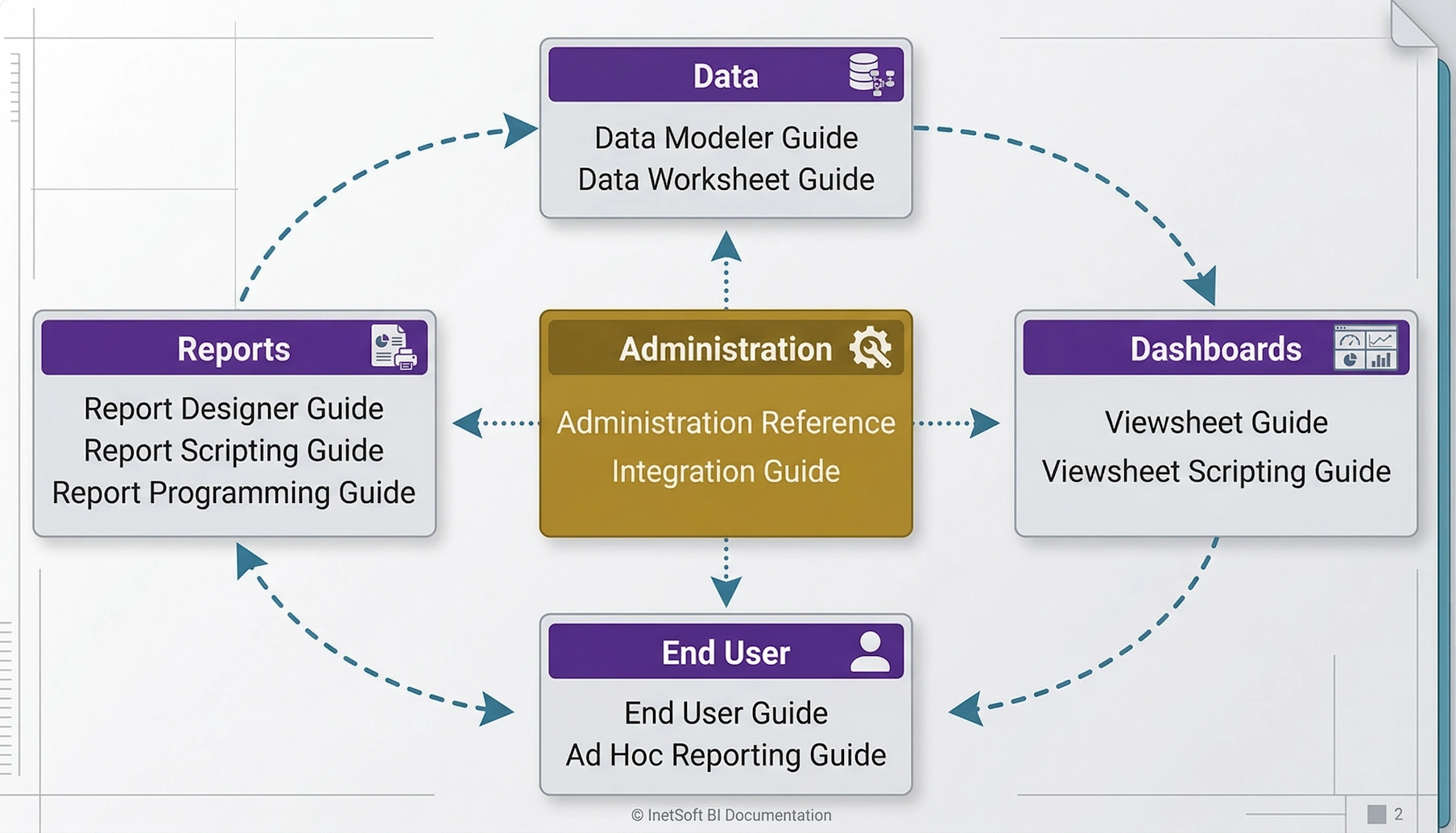
The documentation set includes eleven different guides covering the categories of Data, Reports, Dashboards, End-User, and Administration. The documentation roadmap below lists the available guides, and the following sections provide an overview of their contents.
Data Modeler
Data Modeler describes the Data Modeler, a professional desktop tool for connecting to data sources and designing queries, data models, and VPMs. The Data Modeler provides the data access foundation for all Style Intelligence tools. Data objects designed in Data Modeler can be used directly in reports, or serve as atomic building blocks for Worksheet Data BlockTM technology.
Data Worksheet
Data Worksheet describes Data Worksheets, the Style Intelligence user interface for dynamic Data Block technology. This technology allows IT professionals and power users assemble data objects in a Lego-like fashion in real time. Data Worksheets are available through both the desktop Asset Composer and the web-based Visual Composer
Report Designer
Report Designer describes the Report Designer, a desktop application designed to let professionals develop production reports and dashboard elements. Report Scripting describes the scripting environment provided by Report Designer. Scripting can be used for simple formulas or full ECMAScript/JavaScript programming.
Data Pipeline
Data Pipeline describes the design and orchestration of data workflows within Style Intelligence. This guide covers building automated data pipelines, managing data flows from source to destination, scheduling pipeline executions, error handling, and monitoring pipeline performance. Learn how to construct efficient data pipelines that ensure data quality, consistency, and timely delivery across your organization.
Data Transformation
Data Transformation describes the techniques and tools for cleansing, enriching, and reshaping data within the Style Intelligence platform. This guide covers data validation, normalization, aggregation, and the creation of derived metrics. Learn how to apply transformations at the data modeling layer, leverage script-based transformations, and build reusable transformation templates that support your analytical needs.
Semantic Layers
Semantic Layers describes how to create an abstraction layer between raw data and end users, providing business-friendly definitions of metrics, dimensions, and relationships. This guide covers defining business metrics, managing metric governance, ensuring consistency across reports and dashboards, and enabling self-service analytics. Learn how semantic layers improve data governance, reduce redundancy, and empower users to make data-driven decisions confidently.
Report Programming
Report Programming describes the Style Intelligence Java API and programming environment, and explains how Java web applications and Java desktop applications can use Style Intelligence components independent of the Style Intelligence server. A JavaDoc API reference for Style Intelligence classes and methods is also provided.
Viewsheet, aka Visualization
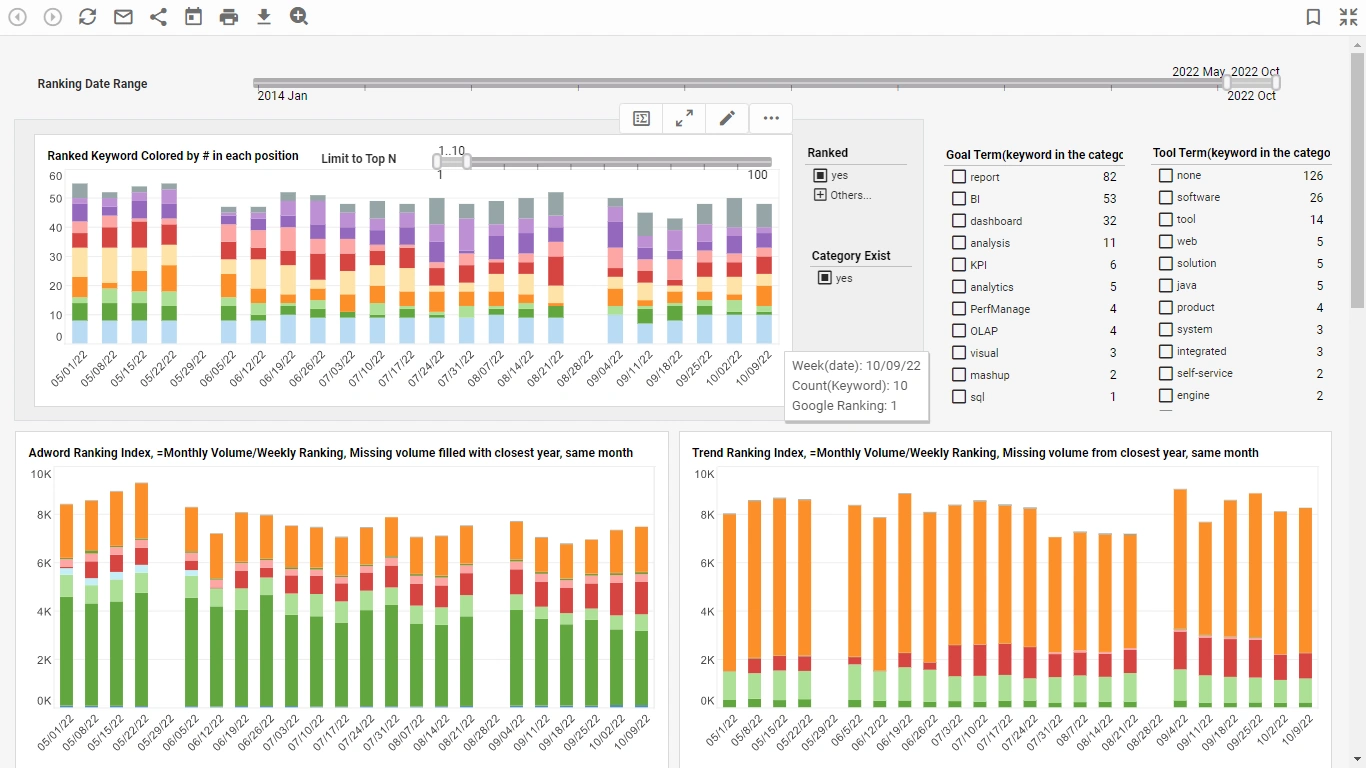
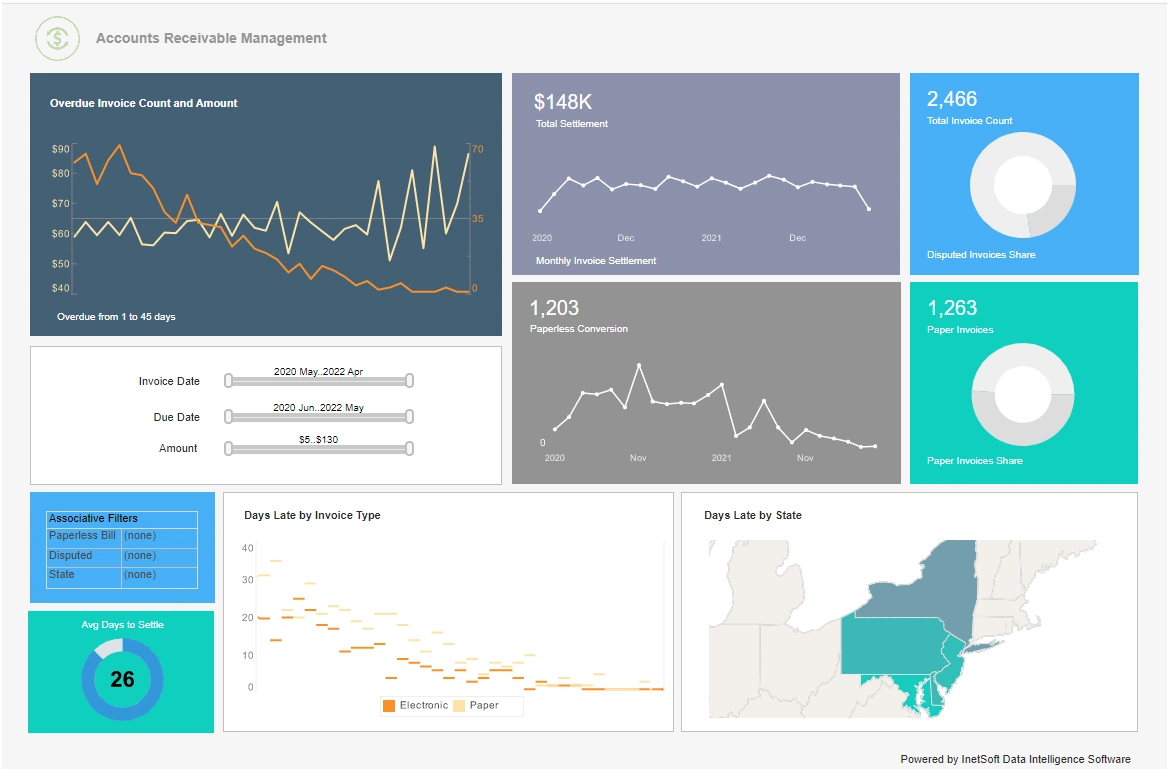
Viewsheet describes Viewsheets, the zero-client web-based visualization user interfaces built on InetSoft Data Block technology. Viewsheets are a business intelligence tool for mainstream executives and business users. Familiar drag and drop operations allow users to easily explore and analyze their data. Viewsheet Scripting describes the scripting features available within the Viewsheet environment. Viewsheet scripting can provide more flexible response to user inputs and data.
BI End User
End User describes the User Portal and the powerful features it provides for interacting with reports and dashboards. Among many other topics, it covers saving and exporting reports and Viewsheets, archiving and scheduling reports, and exploratory dashboard analysis.
Ad Hoc Reporting
Ad Hoc Reporting describes the ad hoc reporting features that you can optionally provide to end users. These features include the ability to modify the properties of all report element, add new report elements, change element data sources, create formula columns, and generate completely new reports.
Embedding
Embedding describes techniques for integrating Style Intelligence reports, dashboards, and visualizations into third-party applications and portals. This guide covers embedding APIs, authentication mechanisms, parameter passing, styling customization, and security considerations. Learn how to deliver embedded analytics to your users within their applications, enabling seamless access to intelligence without leaving their workflow.
BI Administration Reference
Administration Reference describes the Enterprise Manager, a web-based administration interface for the Style Intelligence server environment. The Guide covers server environment controls, user security, report deployment and performance tuning.
BI Integration
Integration describes integration techniques for Style Intelligence products, and covers integration points for user interfaces, server deployment, security, and many other areas.