InetSoft Webinar: Agile Data Access
Below is the transcript of a Webinar hosted by InetSoft on the topic of Agile Data Access and Agile Business Intelligence. The presenter is Mark Flaherty, CMO at InetSoft.
Mark Flaherty: Agile business intelligence is a very important topic that lots of people are talking about now and are beginning to implement in various ways. So there is a lot of industry discussion about agile business intelligence. Often people talk about what you need behind the scenes in the infrastructure to enable maximum agility in your business intelligence and your advanced analytics initiatives.
But agile data access will be the core focus today. It is really the key enabler for agile BI. We will talk about how they complement each other, how agile data access is absolutely essential if you want to go completely agile on the BI front end with reporting, dashboards, and advanced visualization.
We will explain what you need to enable agile data access, and why should you go that route in just a moment in great detail. Well, because it speeds up development and ongoing enhancements and administration of all your BI efforts, whether they be building reports, dashboard development, or developing complex queries.
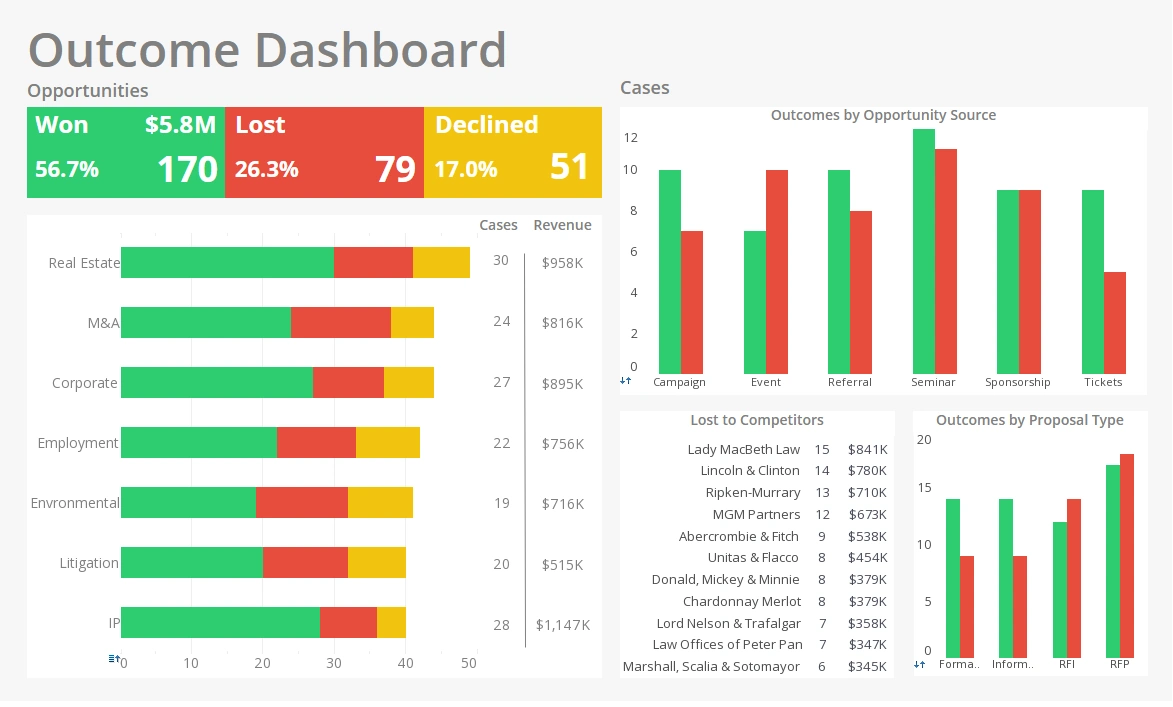

Achieve the Agile BI Vision
Without agile data access, you would not really be able to fully achieve the agile BI vision of basically enabling very rapid rollout of complex analytics that are tuned to the needs of each business role and user within your company. Really to enable agile BI in this way, you are supporting more agile business processes helping users to make better decisions more rapidly with analytic applications that are geared to their specific requirements.M/
So really, agile data access is the key enabler to make your business processes more flexible and really to help you achieve maximum value on all of your IT investments. So fundamentally, what is agile data access? What is agile generally? Well, it's really any approach for developing applications that is incremental and fast, and that's contrasted with the old approach of waterfall development. In other words, it is not that development approach where there are fixed stages between each of the major milestones in a development efforts.
Instead development is incremental and fast and agile. It means being collaborative and making rapid iterations. And agile is any approach that involves, in addition to incremental iterative development, involves IT and users in a collaborative iterative refinement of applications. And in this case, refinement of BI and analytic applications that are reusable in future projects.

Whereas with in-memory architecture, instead what happens is somebody takes a big extract, it could be from a data warehouse, it could also be from a source system, and that data is loaded into memory. From a user perspective, the user only interacts with a cached result set. So this is where many advanced visualization tools will take that approach where you are looking at a finished dashboard and interacting there. Some BI vendors, like InetSoft, will also use in-memory to accelerate even the traditional queries as part of the total BI platform. So the iterative process is fast.
When it comes to evaluating in-memory technologies, whether the software is 64-bit or 32-bit dictates how much of the memory can be addressed. 64-bit operating systems can address up to a full terabyte of data. So you can almost store your whole data mart or even your data warehouse in memory. Whereas 32-bit operating systems can only address 3 gigabytes of memory.
This innovation from an industry perspective is immature. There is no consistent approach, and it’s not widely adopted, yet, because not many customers have wide adoption of 64-bit. So it’s a good idea to plan for 64-bit down the road. This will be something that will be helpful for higher value and lower TCO and it’s something that benefits all users.
Modernizing Analytics Ecosystems
As organizations continue to modernize their analytics ecosystems, agile data access has become more than a convenience—it is now a foundational requirement for competitive decision‑making. Extending the principles outlined in the article, one of the most important evolutions is the shift toward decentralized data ownership supported by governed self‑service. Instead of routing every request through a central BI or IT team, modern platforms empower domain experts to explore, combine, and validate data directly. This reduces bottlenecks, accelerates insight generation, and ensures that the people closest to the business problems can iterate rapidly without compromising data quality or security.
Another emerging dimension of agile data access is the integration of real‑time and near‑real‑time data streams. Traditional BI workflows relied heavily on nightly batch loads, which limited responsiveness and made it difficult to react to operational changes as they occurred. Today’s agile architectures incorporate streaming connectors, event‑driven pipelines, and incremental refresh strategies that keep dashboards continuously updated. This shift is especially valuable for industries where conditions change minute‑to‑minute—such as logistics, manufacturing, utilities, and customer support—because it allows teams to detect anomalies, adjust workflows, and prevent issues before they escalate.
Agile data access also increasingly depends on semantic consistency across tools and teams. As organizations adopt more data sources and more specialized analytics applications, the risk of metric drift grows. A modern BI platform must therefore provide a unified semantic layer that standardizes definitions for KPIs, hierarchies, and business rules. This ensures that whether a user is building a dashboard, exporting a dataset, or embedding analytics into an application, the underlying logic remains consistent. The result is a shared analytical language that strengthens trust in the data and eliminates the confusion caused by competing versions of the truth.
Security and governance remain central to any agile data strategy, and the most effective platforms balance flexibility with control. Role‑based permissions, row‑level security, and audit trails allow organizations to open access without exposing sensitive information. At the same time, governed data preparation tools enable analysts to create reusable transformations that can be shared across departments. This combination of freedom and oversight ensures that agility does not come at the expense of compliance, especially in regulated industries such as healthcare, finance, and government operations.
Finally, the future of agile data access lies in seamless integration across the entire analytics lifecycle—from ingestion to modeling to visualization to operationalization. Modern BI platforms are evolving into unified environments where users can blend data, build dashboards, automate alerts, and embed insights directly into business applications. This end‑to‑end cohesion eliminates the friction of switching between disconnected tools and dramatically shortens the time from question to answer. As organizations continue to demand faster, more intuitive, and more scalable analytics, agile data access will remain the cornerstone of any successful data strategy.